



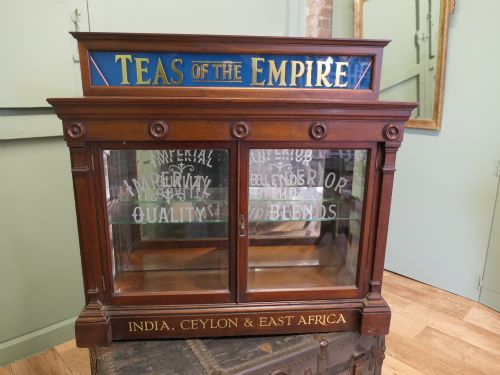



Counter Top Display Case
A counter top display case holds small wares for trade and collection, bringing shop history straight to a surface in your room.
Counter Top Display Case
A counter top display case sits upon a shop counter or table, designed to hold retail goods in clear view of customers. You will frequently meet Edwardian and Victorian commercial examples here, alongside pieces from the 1930s.
The forms range from simple glazed table top cabinets to bow end counters, pharmacy drawer units, and branded chocolate or pencil showcases. Walnut, mahogany, oak, and brass-framed structures dominate the selections.
Originating largely from commercial retail environments, these pieces served chemists, grocers, and haberdashers before finding a home in domestic interiors. They bridge functional shop history and tabletop display.
Quality and Construction Differences
The standard of timber selection and the precision of the brass framing separate standard commercial units from finer retail showpieces. Joinery execution in the corners and the clarity of the original glass panes indicate the original workshop tier.
Original maker branding, such as pharmacy names or chocolate house signage, adds distinct provenance. The integrity of internal linings like velvet or felt also marks the preservation level of a piece.
Counter Top Display Case Retail Price Guide 2026
Typical asking prices for counter top display case among the pieces listed under this phrase on Sellingantiques today, from the lower quarter to the upper quarter. They describe what is for sale here now, not the wider market.
Listings feature oak, mahogany, walnut, and brass alongside original felt and velvet linings.
Saml. Elliott & Sons·Quincy Showcase Works Illinois
The Counter Top Display Case Glossary
- Bow end
- A cabinet featuring a curved glass front at one or both ends. This technique offered wider viewing angles for retail customers.
- Bijouterie case
- A glass-topped table cabinet designed for small precious items and jewellery. They often feature hinged lids lined with velvet.
- Haberdashery
- Retail furniture associated with the sale of sewing goods and small textiles. These cases frequently housed cotton reels and ribbons.
- Showcase
- A large glass-fronted case built for commercial exhibition. They protected stock from dust and handling while remaining visible.
Counter Top Display Case: Frequently Asked Questions
What did they display originally?
These cabinets held small retail goods like cotton reels, chocolates, pencils, and chemist supplies. Shopkeepers used them on counters to tempt customers.
Today they serve the same exhibition purpose in homes for small collections and curiosities.
How do I date a case?
Look to the timber species, brass hardware style, and glazing methods. Edwardian and Victorian pieces often show denser hardwoods and traditional hand-cut joinery.
Commercial pieces from the 1930s introduce streamlined metal framing and different structural proportions.
Are the glass panels original?
Many retain their early float or cylinder glass with minor surface bubbles and waves. Replacement panes usually show modern uniformity and lack historical surface wear.
Inspect the edges where glass meets timber for signs of period putty and fitting.
How do I clean the wood?
Use a soft dry cloth to remove dust from the timber and brass framework. Avoid harsh modern chemical sprays that strip aged polish.
Feed dry hardwoods with a suitable traditional wax polish sparingly to maintain the surface sheen.