


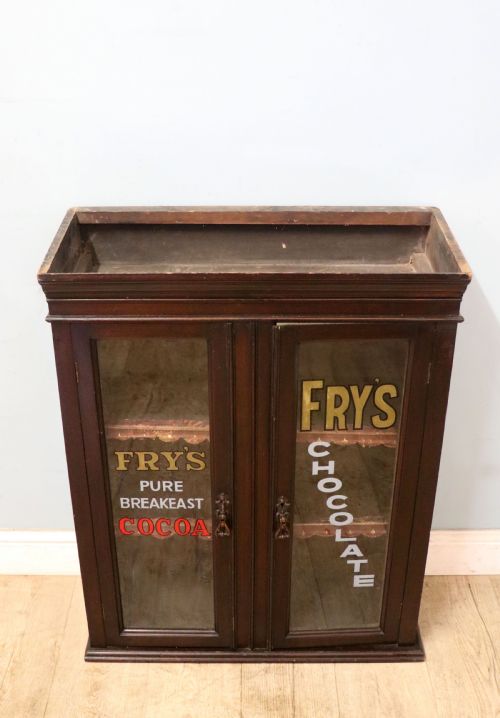


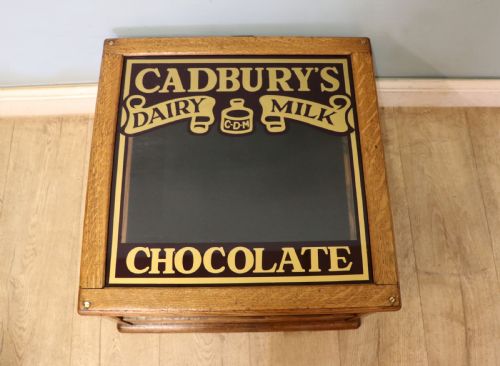

Vintage Chocolate Display Cabinet
These vintage chocolate display cabinets are glazed shop counters and commercial fittings designed to showcase confectionery.
Vintage Chocolate Display Cabinet
A vintage chocolate display cabinet is a commercial glazed shopfitting designed to showcase confectionery on a counter or in a retail space. When you search for a vintage chocolate display cabinet, you meet pieces originating from the Victorian period, the Edwardian era, and the 1920s and 1930s.
The most common forms on this page are countertop shop display cabinets and sweet shop display cabinets. These pieces frequently feature hand sign-written advertising for makers such as Fry's, Cadbury's, Rowntree's, and Terry's of York.
Many examples combine structural timber frames with extensive glass viewing panels to attract customers in a shop. Some pieces date from the Victorian period with later sign-written advertising applied to the glass or woodwork.
How they were made
Makers constructed these commercial cabinets using hardwoods such as mahogany, oak, American walnut, and general hardwood frames. Glazing panels were fitted to allow maximum visibility of the confectionary inside.
Hardware details included brass and nickel-plated metal components, alongside decorative elements like gold leaf lettering. Sign-writing was applied by hand directly to surfaces to display brand names like Cadbury's and Fry's.
Several Victorian carcasses carry later sign-writing, proving that old shop display cases were happily repurposed to sell more chocolate.
What varies in quality
Quality in these cabinets rests upon the choice of timber and the execution of the original shopfitting joinery. Finer pieces demonstrate robust hardwood construction with crisp proportions suited to busy Edwardian and Victorian retail environments.
The execution and survival of the hand sign-written advertising heavily influence the character of each piece. Original factory advertising differs from later sign-writing applied to older Victorian and Edwardian carcasses.
Fry s Chocolate·Cadbury s·Rowntree s Chocolates·Terry s of York
The Vintage Chocolate Display Cabinet Glossary
- Countertop
- A shop display case designed specifically to sit upon a retail counter for customer viewing. These pieces positioned confectionery at eye level.
- Shopfitting
- Permanent or semi-permanent furniture built for commercial retail interiors. This includes glazed cabinets made for Victorian and Edwardian sweet shops.
- Sign-written
- Lettering painted by hand onto glass or timber surfaces. It denotes the brand advertising applied to commercial cabinets.
- Hardwood
- Timber derived from broad-leaved trees, utilised for durable cabinet frames. Oak, mahogany, and walnut appear frequently in these listings.
Vintage Chocolate Display Cabinet: Frequently Asked Questions
What are vintage chocolate display cabinets?
These pieces are glazed commercial shopfitting cabinets built to display confectionery on retail counters. They originate from the Victorian and Edwardian periods through to the Art Deco era.
Many examples feature painted advertising for brands such as Fry's, Cadbury's, and Rowntree's. They were standard fixtures in sweet shops and grocers.
How were these cabinets used?
Retailers utilised them on shop counters to keep chocolates clean while remaining visible to purchasing customers. The glass panels protected stock from dust and handling.
Countertop placement ensured that confectionery caught the eye of buyers right at the point of sale.
How do I live with a shop cabinet?
These cabinets suit kitchens, living rooms, or hallways as display shelving for collections. Their glass panels and timber frames bring commercial history into domestic interiors.
Countertop models sit easily on sideboards, while larger shopfitting cases function well as standalone display furniture.
How do I tell periods apart?
Victorian and Edwardian pieces often employ traditional mahogany or walnut framing with conservative joinery. Pieces from the 1920s and 1930s incorporate Art Deco styling and alternative metal hardware.
Check for original construction methods versus later additions like applied sign-writing.