
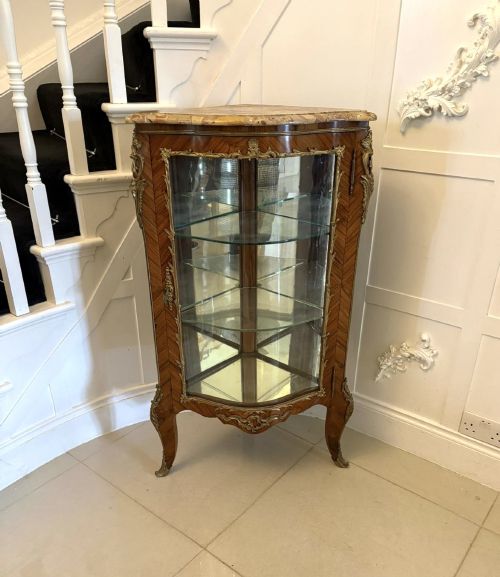


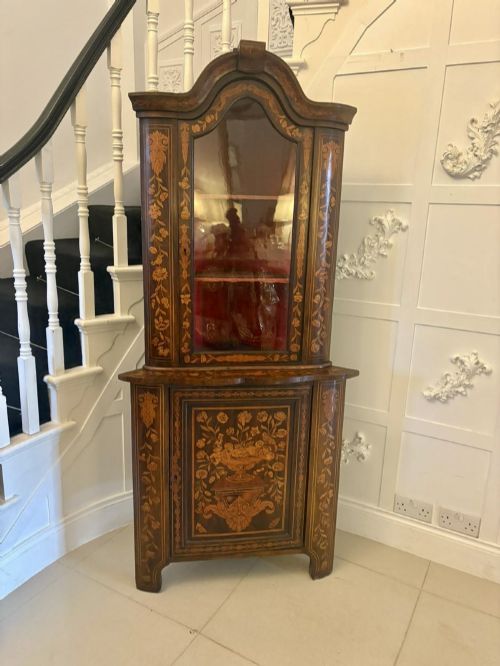
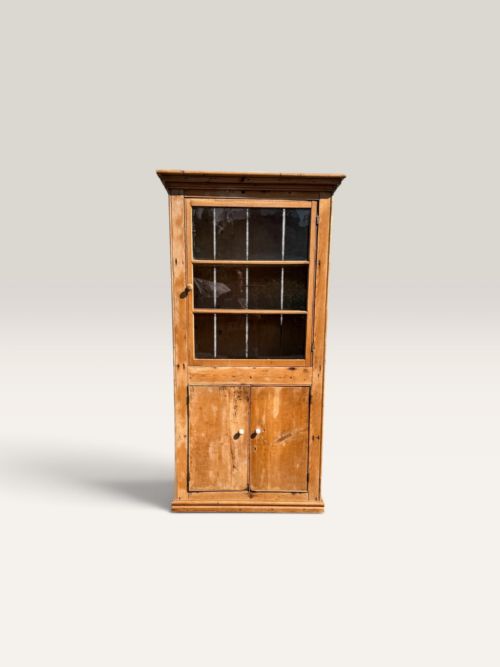
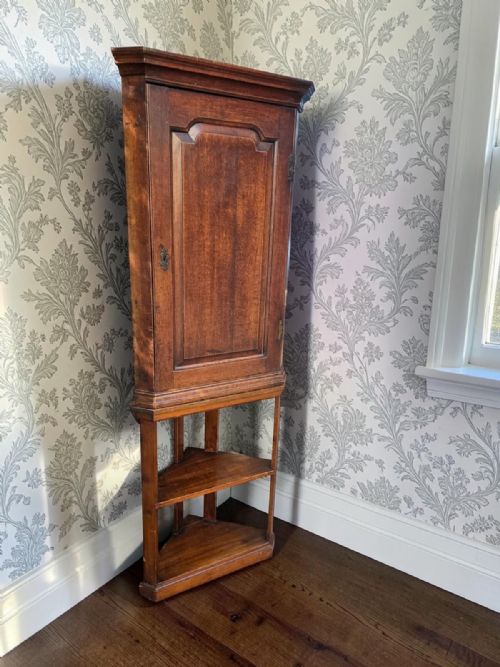
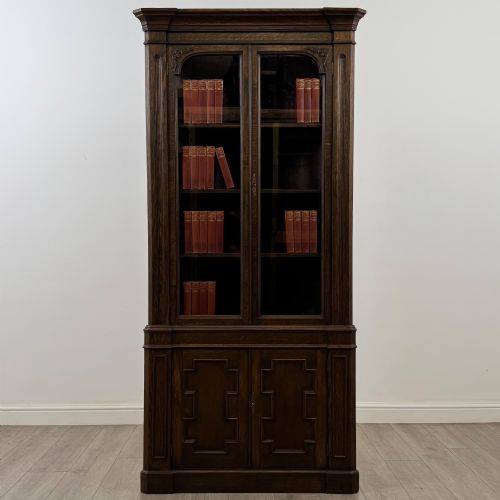
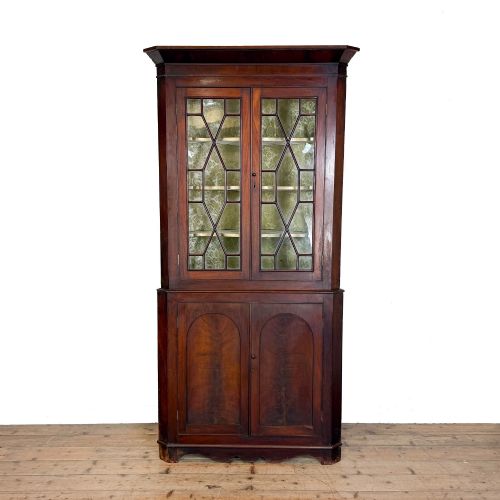
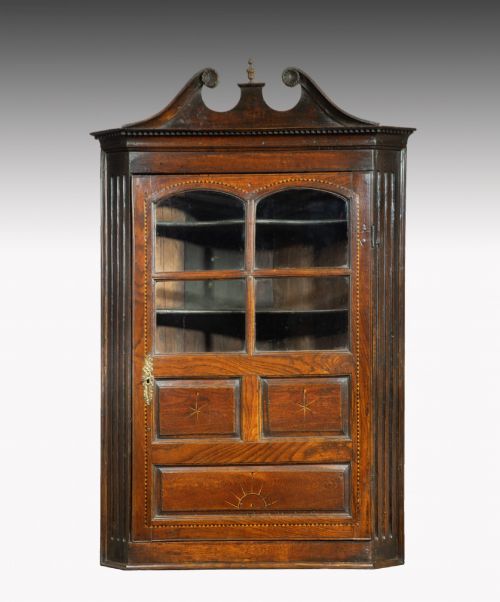
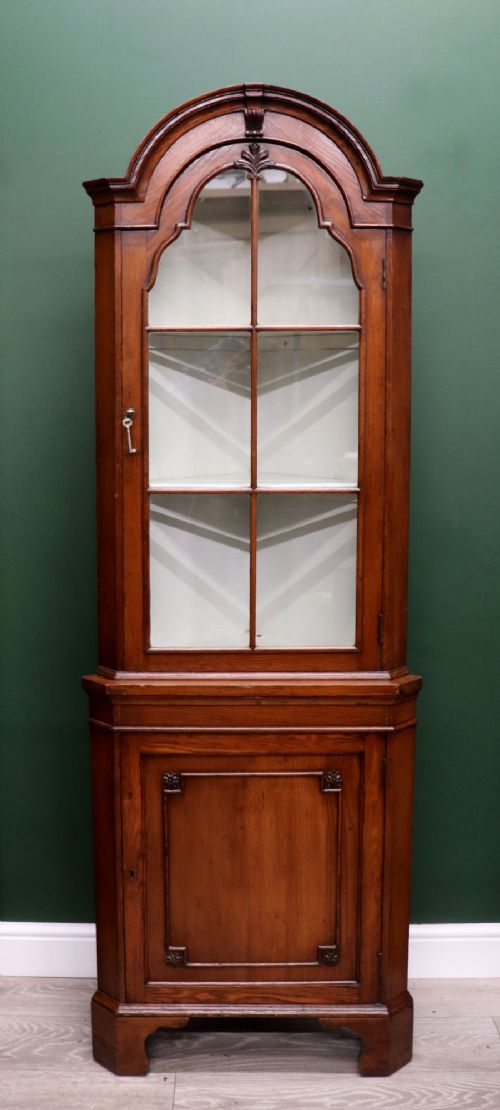
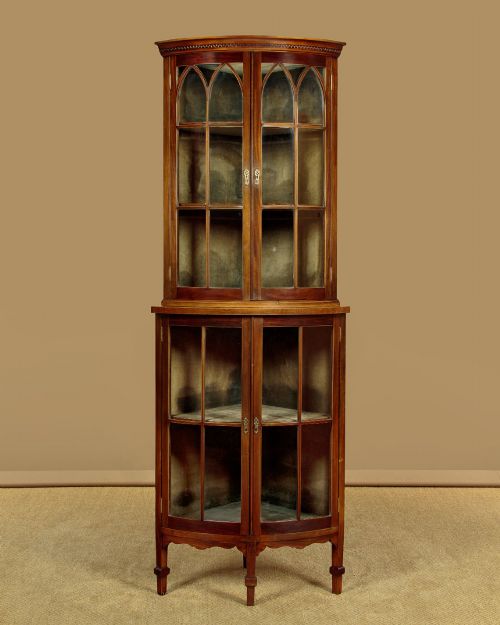
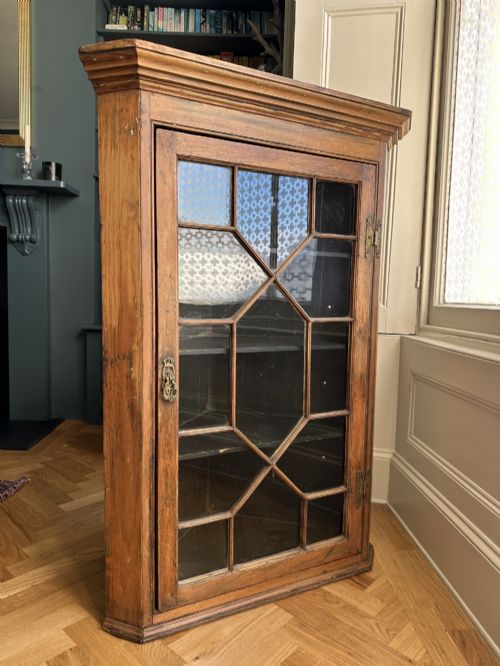
Vintage Corner Display Cabinet
A vintage corner display cabinet fits snugly into an unused angle, turning dead space into a showcase for glass and china.
Vintage Corner Display Cabinet
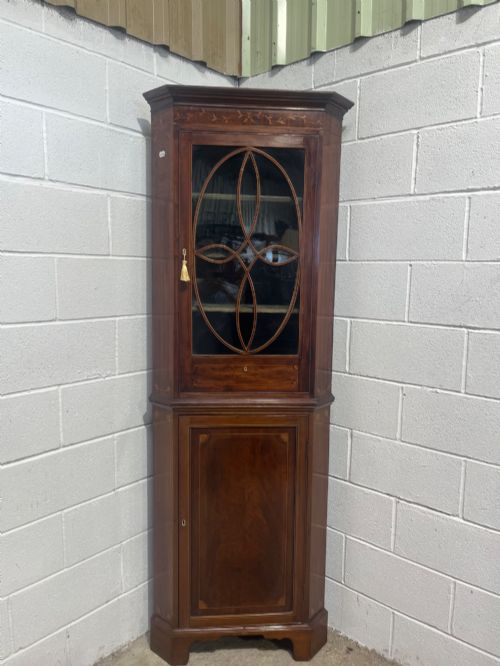
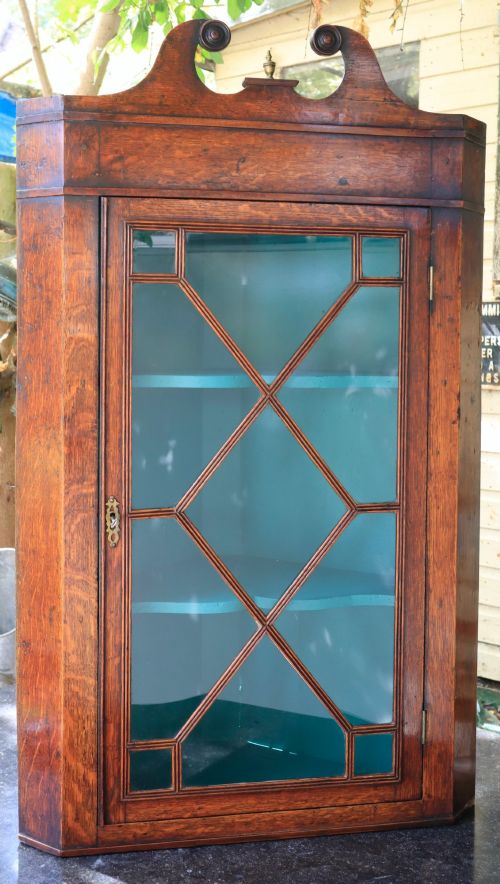
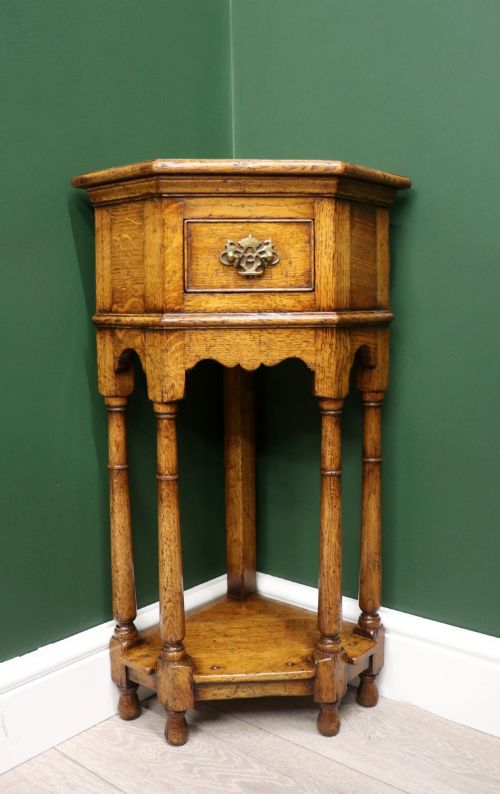
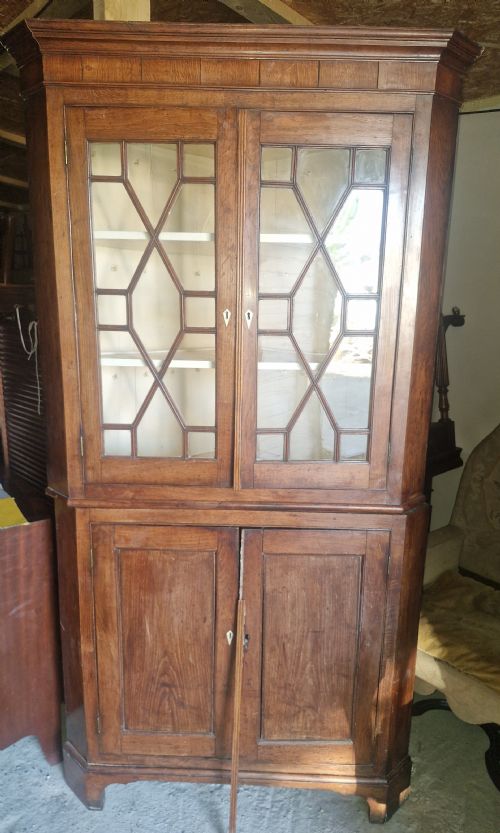
A vintage corner display cabinet is designed to utilise empty room junctions, taking the form of wall-hanging cupboards, floor-standing units, and two-part corner pieces. When you search for a vintage corner display cabinet, you encounter forms ranging from simple 18th Century oak cupboards to Edwardian inlaid mahogany display units and Art Deco variations.
The pieces on this page appear predominantly in mahogany, oak, and walnut, often featuring glass doors to reveal internal shelves. Makers built both single units and tall floor-standing cabinets, utilising the specific geometry of a right-angled corner to anchor larger furniture arrangements in a dining room or parlour.
How they were made
Cabinetmakers constructed these pieces primarily from dense timbers such as mahogany, oak, and walnut, frequently applying satinwood inlay, marquetry, or brass mounts for decoration. Glass panels were fitted into wooden frames or doors to allow visibility into the interior, whilst backboards were commonly fashioned from softer timbers.
Joinery techniques relied on sturdy tongue-and-groove or panelled construction to ensure the carcass held its shape under the weight of stored ceramics. Surface finishes ranged from polished French polish on mahogany to painted interiors and stripped pine, reflecting the workshop traditions of each distinct period.
Materials recur across multiple eras, pairing glass and brass with mahogany, oak, walnut, and satinwood inlay.
What varies in quality
Quality rests heavily on the selection of timber veneers and the crispness of any inlay work, where finer cabinets employ carefully matched grain patterns and precise satinwood stringing. Superior examples demonstrate tight joinery at the angled mitres and retain their original brass hardware, glass, and interior paint rather than later replacements.
The architectural presence of the cornice and the proportion of the glazing bars also distinguish standard utility cupboards from high-status pieces. A heavier reliance on hand-carved details or refined Dutch marquetry elevates a cabinet far above plain regional oak pieces.
Maurice Adams
The Vintage Corner Display Cabinet Glossary
- Cornice
- The moulded projection that crowns the top of a cabinet. It finishes the architectural profile of the piece against the wall.
- Glazing bar
- A wooden strip that holds individual panes of glass within a door. Finer bars are narrower and shaped by hand.
- Marquetry
- Decorative veneer work arranged in pictorial patterns using different coloured woods. It requires considerable skill to cut and fit.
- Bow front
- A cabinet front that curves outward in a convex shape. This geometry softens the hard right angle of the corner.
- Stringing
- A thin inlay of contrasting wood used to outline panels and drawers. It creates a delicate linear border.
Vintage Corner Display Cabinet: Frequently Asked Questions
How do I fit one into a modern room?
Measure the exact wall depth and ceiling height, as these cabinets require precise right angles to sit flush. Floor-standing versions anchor a neglected corner, while wall-hanging models free up floor space below.
Ensure the door swing clears any adjacent furniture or skirting boards before fixing or placing the cabinet. They suit dining rooms and hallways where display space is tight.
Are these cabinets difficult to hang on walls?
Wall-hanging models require secure fixing into solid masonry or direct timber studs due to the heavy weight of solid wood and glass. Professional installation is standard practice for older hanging cupboards.
Check the internal backboards and hanging brackets before mounting any piece. Once secured properly, they hold dinner services and glassware safely.
How do I tell an 18th century piece from a later revival?
Examine the timber shrinkage, secondary woods at the back, and hand-cut joinery marks to determine early manufacture. Georgian pieces often display pegged joints and simpler interior configurations than later Victorian iterations.
Revival pieces made in the Edwardian or later periods frequently employ machine-sawn elements and standardised screws. Comparing the backboards and hinges helps confirm the true age of the cabinet.