



Arts and Crafts Wall Cupboard
An arts and crafts wall cupboard brings honest joinery and utility to a room, offering compact hanging storage rooted in plain materials.
Arts and Crafts Wall Cupboard
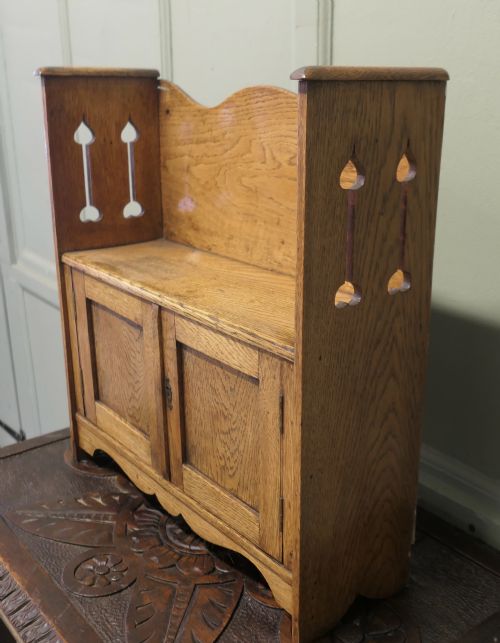
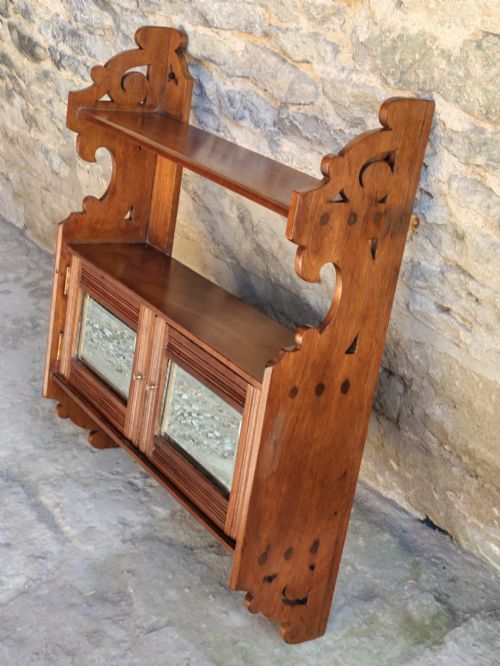
An arts and crafts wall cupboard is a hanging cabinet designed for domestic use, most frequently found in oak with styles spanning the nineteenth century into the nineteen thirties. These wall-mounted pieces take forms such as small key cabinets, corner cupboards, and glazed display cabinets.
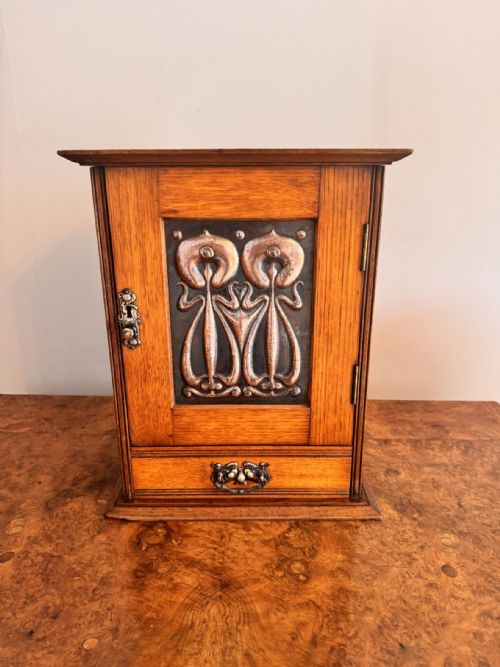
The selection ranges from straightforward oak wall cabinets to examples influenced by the aesthetic movement, art nouveau, and the cotswold school. Walnut and mahogany appear alongside the dominant oak, reflecting the stylistic shifts of the period.
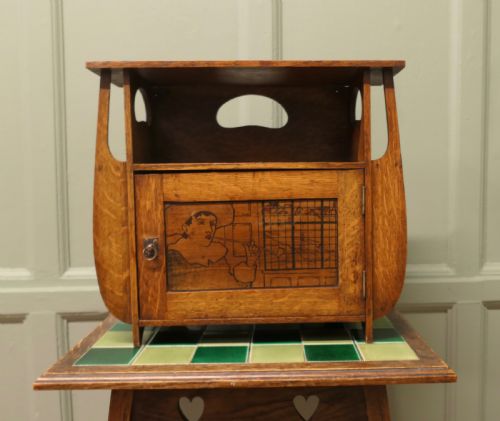
Buyers encounter variations including carved details, pokerwork decoration, and folding designs. Corner cabinets and small hanging shelves make up a significant portion of the available forms.
How they were made
Makers utilised solid timbers such as oak, walnut, and mahogany, constructing wall cupboards with visible joinery and structural integrity. Beech and pine also feature in supporting elements and simpler regional pieces.
Hardware played a functional and decorative role, with brass, copper, and iron hinges, latches, and strapwork applied to the timber surfaces. Glazed doors incorporate glass panels, while decorative touches include carved motifs and pokerwork.
Smokers cabinets preserved pipes and tobacco behind locked doors, keeping aromatic comforts securely at hand.
What varies in quality
The distinction between standard utility cupboards and finer examples lies in the selection of timber and the execution of the joinery. Workshop attribution and thoughtful integration of metalwork distinguish individual pieces from mass-produced items.
Design ambition shapes the tier of a piece, separating basic hanging shelves from bespoke cabinets with detailed carving, specialised hardware, or specific school associations.
John Moyr Smith·Arthur Simpson
The Arts and Crafts Wall Cupboard Glossary
- Astra glazed
- A specific method of glazing cabinet doors with multiple small glass panes held by wooden bars. This technique is often seen on corner cabinets from the early twentieth century.
- Pokerwork
- The art of decorating wood by burning designs onto the surface using a heated tool. It appears on panels of specific wall-mounted cupboards.
- Cotswold school
- A design movement associated with handcrafted furniture production in Gloucestershire. Pieces from this tradition emphasise traditional woodworking methods and plain finishes.
- Aesthetic movement
- A late nineteenth century design approach that prioritized visual beauty over narrative or moral function. Cabinets from this style often incorporate refined lines and distinct metal fittings.
Arts and Crafts Wall Cupboard: Frequently Asked Questions
How were these wall cupboards used originally?
These cabinets served domestic purposes in hallways, sitting rooms, and smoking rooms for storing small valuables, keys, or display items.
Their wall-hanging design kept surfaces clear while providing accessible enclosed storage in smaller living spaces.
Are all arts and crafts cupboards made of oak?
While oak is the predominant timber seen across the period, makers also utilised walnut, mahogany, pine, and beech.
Different woods reflect regional preferences, changing fashions, and the specific workshop producing the cabinet.
How do I distinguish arts and crafts from art nouveau?
Arts and crafts pieces emphasise plain materials, visible joinery, and structural honesty inspired by hand production. Art nouveau introduces flowing, organic lines and stylised natural motifs to the design.
Some cabinets combine elements of both movements, particularly in transitional pieces from around nineteen hundred.
Can these cabinets be hung safely on modern walls?
Most wall cupboards feature original hanging brackets or internal fixing points designed for domestic mounting. Proper installation requires assessing the weight of the timber and using appropriate wall fixings.