






Vintage Copper Platter
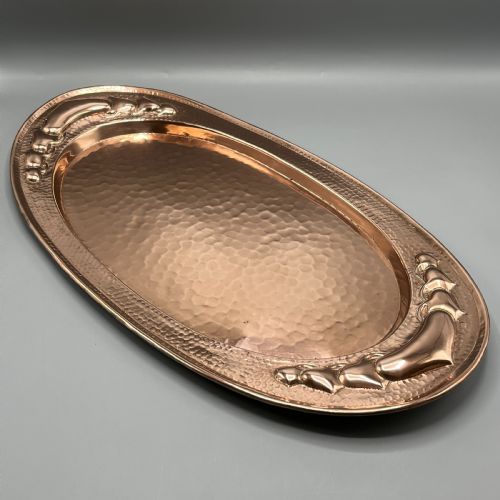
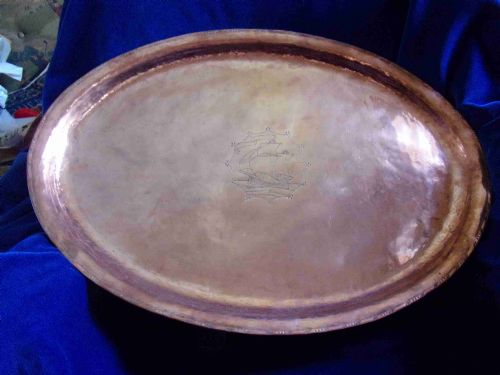
A vintage copper platter brings warmth and hand-worked texture to a room, offering a decorative surface that bridges centuries of metalwork traditions.
Vintage Copper Platter
When searching for a vintage copper platter, collectors encounter diverse forms spanning British Arts and Crafts output, Japanese Meiji period cloisonne enamel pieces, and intricate Middle Eastern metalwork. These items range from large decorative chargers bearing chased foliage and animal motifs to smaller serving trays with hammered surfaces and pie crust edges.
The most common examples on this page date from the Victorian era up through the early twentieth century, reflecting a period when domestic metalware combined functional utility with ornate handcrafting. Pieces emerge from distinct stylistic traditions, including Art Nouveau floral designs, Islamic silver inlay, and regional workshops such as Newlyn.
Objects categorized under this search vary from plain beaten metal serving trays to deeply embossed chargers designed primarily for display on walls or sideboards. Buyers find both British provincial craft items and imported Eastern metalwork sharing the same marketplace category due to their shared metallic medium and period origin.
Materials and construction
Makers formed these platters using sheets of copper, patinated copper, or brass, often employing hand-hammering techniques to raise the metal from behind in repousse work. Artisans chased fine details into the surface using punches and chisels, creating textured reliefs of pomegranates, foliage, and figural scenes.
Many examples incorporate mixed media, featuring silver inlay, brass wire, and vibrant cloisonne enamel cells fused to the copper base. Workshops applied silver plating or created contrasting patination to enhance the visual depth of the engraved and pierced patterns across the plates.
Several platters double as miniature menageries, populated by leaping koi, watchful owls, and mythical dragons.
Assessing quality and execution
Quality rests in the crispness and depth of the hand-chased repousse work and the precision of the engraved lines across the metal surface. Masterpieces display complex pictorial motifs, such as leaping koi, dragons, or detailed avian subjects, executed with disciplined control rather than mechanical repetition.
The integration of mixed metals, such as silver inlay on patinated copper or complex multi-coloured enamel work, separates standard utility vessels from exceptional decorative chargers. The weight of the metal gauge and the subtlety of the hammered texture further distinguish workshop-produced pieces from mass-manufactured items.
Hugh Wallis·Faulkner Bronze Company
The Vintage Copper Platter Glossary
- Repousse
- A metalworking technique where the artisan hammers the metal from the reverse side to form a raised design on the front. Artisans then refine the details from the front using chisels.
- Cloisonne
- An enamel technique where artists solder flat metal wires onto a copper base to create compartments, which they then fill with enamel paste before firing.
- Charger
- A large decorative plate or platter traditionally used for ceremonial display rather than serving food at the table.
- Patination
- The natural or chemically induced surface coloration that develops on copper over time, changing the tone and finish of the metal.
Vintage Copper Platter: Frequently Asked Questions
How do I clean a copper platter?
Polishing away the aged patina reduces the historical character that collectors value on older metalwork. Gentle dusting with a soft cloth preserves the surface finish.
Harsh chemical dips strip the natural patination built up over decades of exposure and handling. Most owners prefer to leave the metal untouched.
Can I use these platters for food?
Many older platters served practical functions in domestic settings, though their primary role today is decorative display. Uncoated copper reacts to acidic foods.
Using them as centrepieces or wall chargers protects the metal surface from unnecessary wear and potential staining. Displaying them on stands highlights the engraved details.
What is Cairo Ware?
Cairo Ware describes Middle Eastern metalwork featuring intricate silver and brass inlay set into a dark patinated copper or brass ground. These pieces gained popularity during the late nineteenth century.
European travellers collected them during Grand Tours across Egypt and Syria. They showcase geometric and calligraphic patterns worked by Middle Eastern artisans.
How do I date a copper tray?
Stylistic clues such as Art Nouveau whiplash lines or Arts and Crafts hand-beaten textures usually point to the period around nineteen hundred. Victorian examples often display heavier gauge metal and classical floral motifs.
Japanese pieces frequently align with the Meiji period or late Edo era through specific pictorial subjects and enamel techniques. Examining the construction marks helps confirm the manufacturing era.