
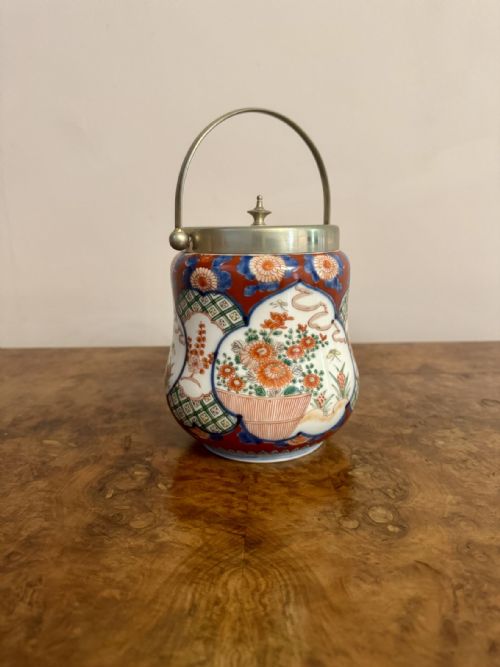


Vintage Cookie Jar
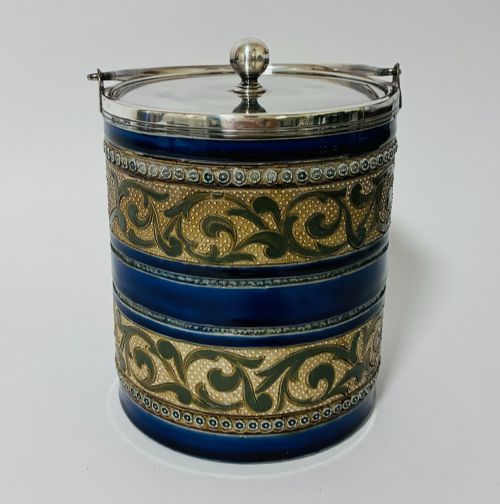
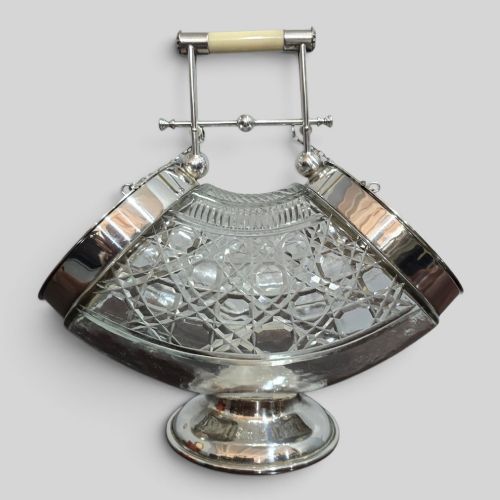
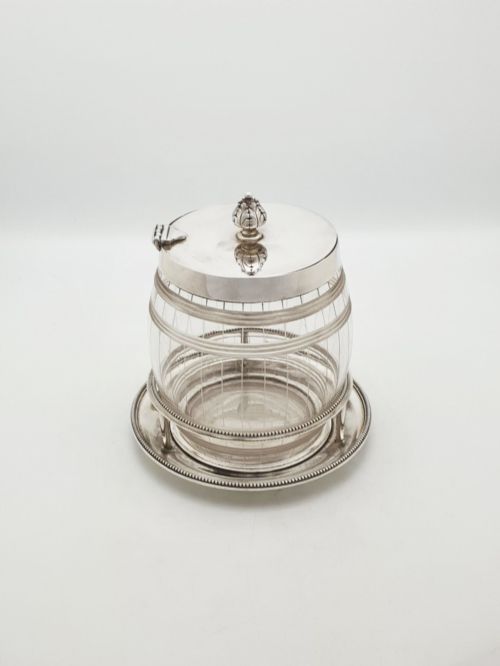
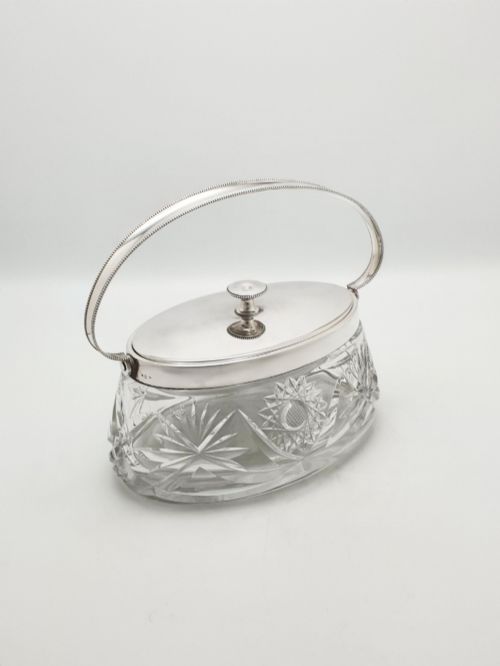
These vintage cookie jar pieces are sturdy ceramic, glass, and oak containers once kept for biscuits, combining silver plate mounts with decorative bodies.
Vintage Cookie Jar
A vintage cookie jar search uncovers biscuit barrels and containers originating from the Victorian, Edwardian, and George V periods, alongside the late nineteenth century. These containers frequently appear as silver plated and cut glass cylinders or oak drums.
Makers produced these pieces in ceramic, earthenware, stoneware, and cranberry glass, often adding silver plate lids, handles, and swing mounts. Examples range from flow blue ceramics and Japanese imari patterns to Jasper Ware and enamel decoration.
The versions most commonly met on this page combine cut glass bodies with silver plated mounts, or utilise English oak frames fitted with hinged lids. Formats vary from straight-sided barrels to novelty shapes like weights or drum forms.
How they were made
Silversmiths and manufacturers combined silver plate, sterling silver, and gold leaf with cut glass, earthenware, and stoneware. Metal mounts, swing handles, and finials were secured to ceramic or glass bodies.
Potters and glassmakers shaped vessels through cutting, moulding, and enamelling, producing hobnail patterns, faceted glass, and flow blue or Jasper Ware ceramic finishes. Oak frames were turned and fitted with metal bands.
Listings feature items from the Victorian, Edwardian, and George V periods, using materials like silver plate, cut glass, stoneware, oak, earthenware, and gold leaf.
What varies in quality
Quality rests in the weight and thickness of the cut glass or ceramic body, and the heaviness of the silver plate or sterling silver mount. Finer examples display crisp hobnail or faceted cutting and detailed ceramic moulding.
Design complexity marks the upper tier, seen in novelty forms like weights, heraldic dragon finials, or automated mechanisms. The integration between the wooden or ceramic body and the metal hardware defines the finish.
Doulton Lambeth·Elkington·WMF·Crown Devon·Carlton Ware·Wedgwood·John Grinsell and Sons·James Dixon and Sons
The Vintage Cookie Jar Glossary
- Biscuit barrel
- A covered container designed for storing dry biscuits at the dining table. They frequently feature a ceramic or glass body fitted with a metal lid and swing handle.
- Silver plate
- A layer of silver applied over a base metal foundation such as copper or brass. It provided the appearance of solid silver at a lower production cost.
- Jasper Ware
- A type of fine stoneware developed by Josiah Wedgwood, characterised by a matte unglazed surface and contrasting white cameo reliefs.
- Hobnail cut
- A decorative pattern cut into glass surfaces resembling the hobnails on stout boots. It creates raised points that catch and refract the light.
- Flow blue
- A cobalt blue transfer printing style used on earthenware where the colour blurred slightly during firing. This produced a soft, hazy aesthetic across the ceramic pattern.
Vintage Cookie Jar: Frequently Asked Questions
What is a biscuit barrel?
A biscuit barrel is a lidded container historically used for storing dry biscuits on the dining room sideboard. They were brought out after meals for guests.
Most examples date from the Victorian and Edwardian eras, combining a ceramic or glass body with metal mountings and handles.
How do I date a piece?
Dating relies on stylistic clues, material combinations, and maker marks stamped into the metal or ceramic base. Victorian pieces often feature heavy ornamentation, while Edwardian items lean towards lighter cut glass.
Reference periods such as George V or the late nineteenth century help narrow down the decade of manufacture based on prevailing design tastes.
Are the metal parts silver?
The metal components on most pieces are silver plated over a base metal rather than solid sterling silver. Makers stamped hallmarks primarily on solid silver pieces.
Silver plate was standard for everyday dining accessories during the nineteenth and early twentieth centuries, offering durability and shine.
How should I clean them?
Cleaning requires gentle care, particularly for silver plated surfaces and antique glass or ceramics. Mild warm water and a soft cloth preserve the finish without damaging the plating.
Abrasive polishes should be avoided on silver plate to prevent wearing through the thin silver layer to the base metal underneath.