
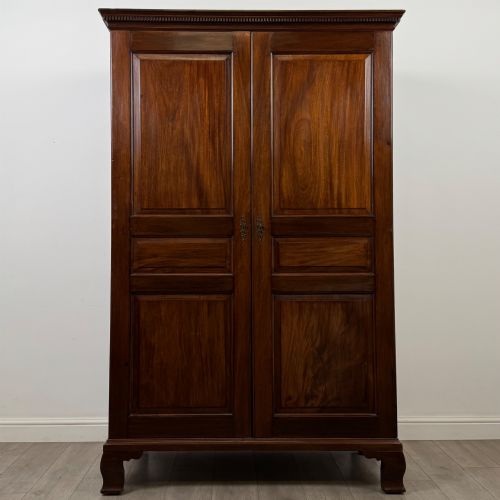
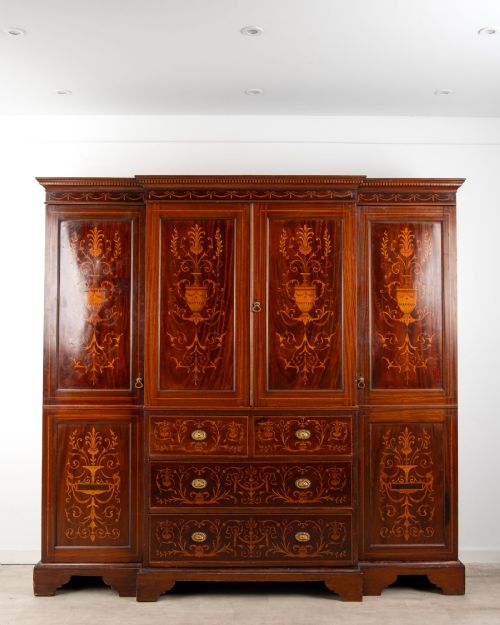
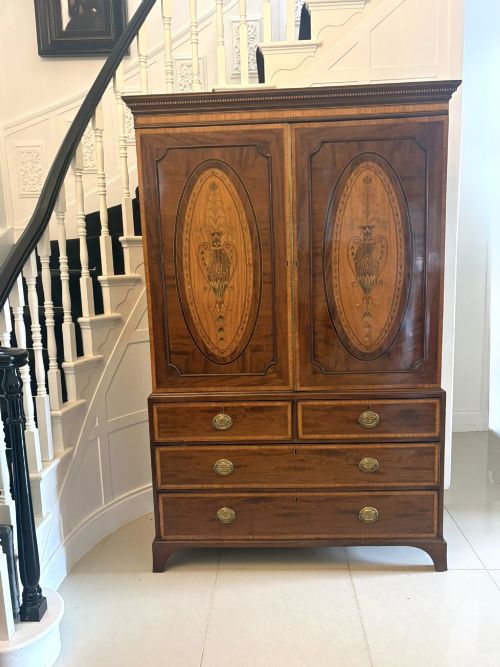
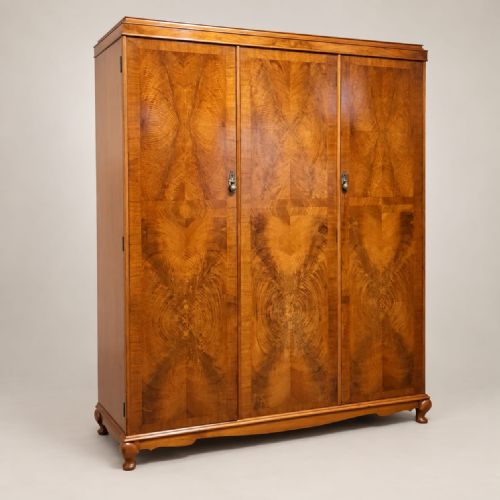
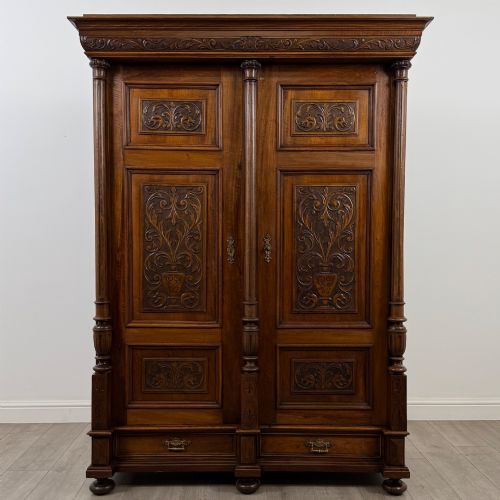
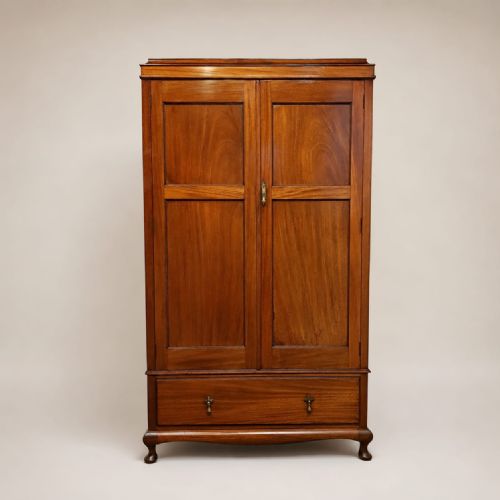
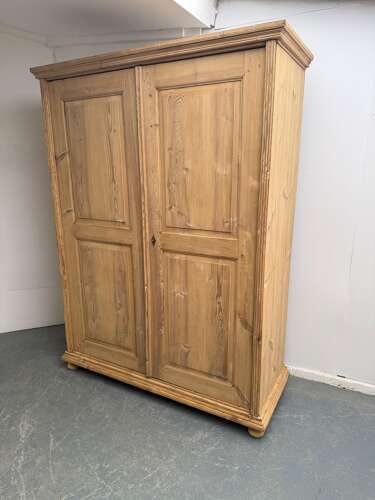
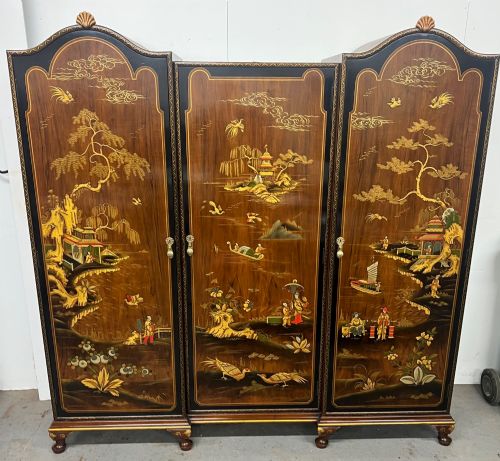
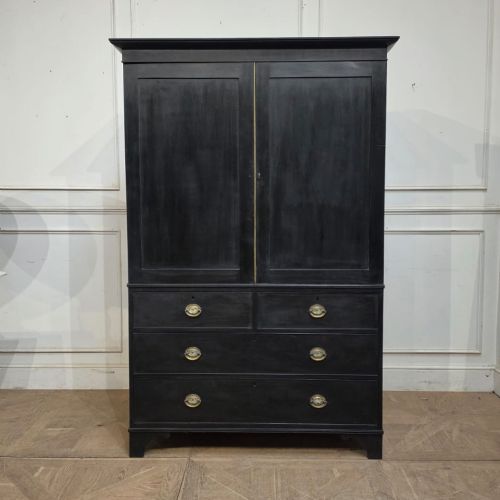
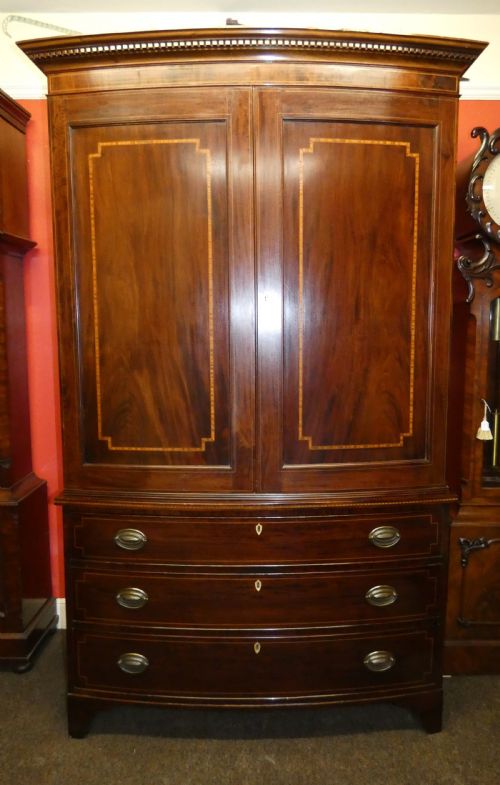
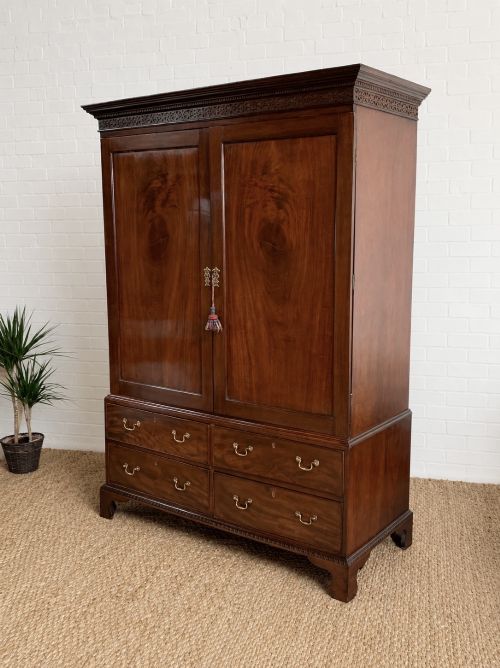
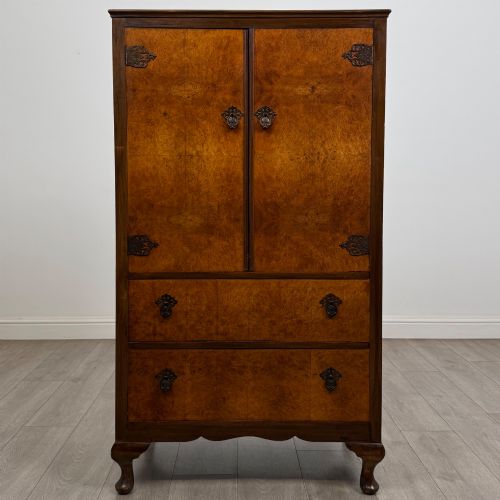
Vintage Clothes Press Cabinet
A vintage clothes press cabinet combines generous storage with deep historical character, offering substantial panelled timber and fitted interior drawers for modern homes.
Vintage Clothes Press Cabinet
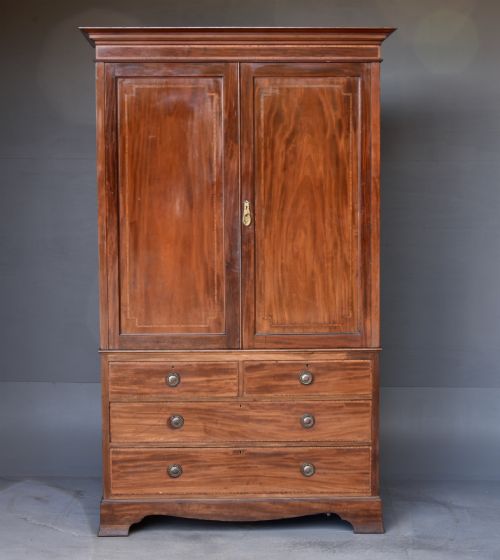
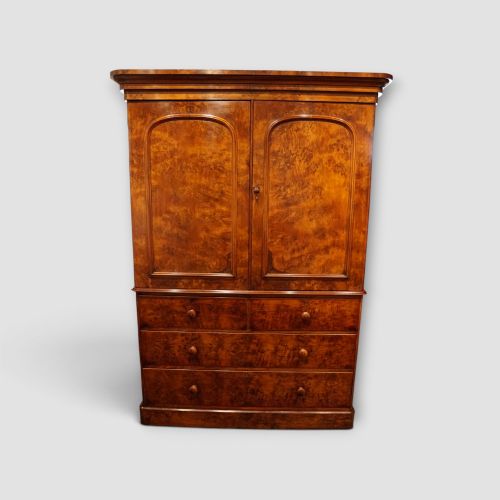
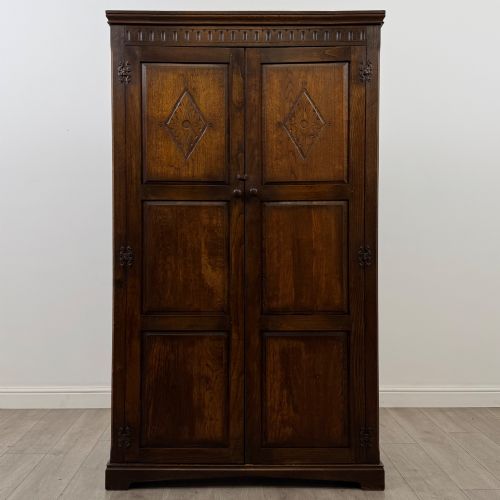
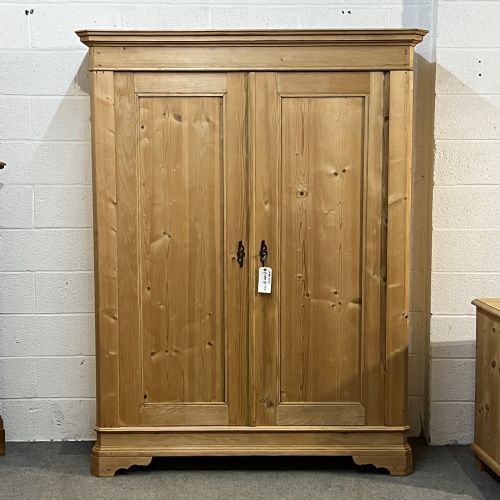
A vintage clothes press cabinet is a tall storage piece designed to hold garments, linens, and personal belongings within domestic settings. When exploring this selection, buyers encounter substantial pieces originating from the eighteenth, nineteenth, and early twentieth centuries.
The form frequently bridges the traditional linen press and the modern wardrobe, often featuring upper cupboard doors above a chest of lower drawers. Mahogany, oak, and walnut examples dominate the selection, spanning Georgian, Victorian, Edwardian, and Art Deco styles.
Makers such as Maples & Co., Druce & Co., and Heals appear among the listings, alongside robust provincial and continental armoires. Buyers are most likely to meet mahogany and oak constructions fitted with panelled doors, brass hardware, and internal sliding trays or hanging space.
How they were made
Cabinet makers constructed these presses using solid timbers like mahogany, oak, and walnut, frequently applying figured veneers and satinwood inlay to primary surfaces. Carved details, blind fretwork cornices, and ebonised finishes required patient hand-tooling by skilled artisans.
Internal components relied on traditional joinery, incorporating dovetailed drawer construction and fitted sliding trays designed for linen storage. Brass hardware, mirrored glass panels, and iron fittings secured doors and completed the functional architecture of each cabinet.
Some nineteenth-century knockdown wardrobes still bear pencilled assembly numbers written by workshop joiners on the hidden edges of their panels.
What varies in quality
The grade of timber and the complexity of its figuring set individual cabinets apart, with densely grained flame mahogany and burr walnut representing finer workshop output. Crispness in carved details, intricate satinwood inlay, and well-executed blind fretwork distinguish master cabinet work from standard production.
Structural integrity depends on the original timber thickness and the preservation of internal sliding trays or fitted drawers. Pieces retaining their original brass handles, working locks, and balanced proportions command greater appreciation among collectors.
Maples & Co·Heals·Druce & Co
The Vintage Clothes Press Cabinet Glossary
- Linen press
- A tall storage cabinet traditionally used for storing folded linen in upper shelves or sliding trays above a chest of drawers. These pieces evolved into general wardrobes during the nineteenth century.
- Compactum
- A fitted wardrobe designed to maximise interior storage efficiency by combining hanging space, drawers, and shelving within a single unit. They frequently date from the Edwardian and Art Deco periods.
- Tallboy
- A tall chest of drawers standing upon a matching base cabinet, providing vertical storage capacity. Eighteenth and nineteenth-century examples often employ figured mahogany or walnut veneers.
- Armoire
- A large freestanding cupboard or wardrobe of continental European origin, usually featuring double doors and deep internal capacity. They appear in oak, walnut, and pine across various regional styles.
- Blind fretwork
- Carved ornamental woodwork applied to a flat surface in an openwork lattice pattern without piercing through to the background. This decorative technique appears frequently on eighteenth-century cornices.
Vintage Clothes Press Cabinet: Frequently Asked Questions
What is a clothes press?
A clothes press is a tall storage cabinet designed with upper cupboard doors and lower drawers. They were traditionally used to store household linen before hanging wardrobes became standard.
Inside, many retain original sliding wooden trays rather than hanging rails. This makes them well-suited for folding sweaters, shirts, and bedlinen.
How do I style a vintage press cabinet?
These large timber cabinets work well as focal points in bedrooms, hallways, or living spaces. Their deep wood tones and panelled doors add warmth and architectural presence to neutral interiors.
Consider pairing mahogany or walnut pieces with simple, contemporary surroundings to let the grain and period details stand out. Ensure you measure ceiling height and clearance for doors before placement.
How do I identify a Georgian press?
Georgian presses typically feature solid mahogany or oak construction with clean architectural lines, bracket feet, and classical proportions. Look for hand-cut dovetails on the drawers and traditional brass hardware.
Many examples from this era incorporate panelled upper doors enclosing sliding linen trays. The cornices often display dentil moulding or blind fretwork rather than heavy Victorian carving.