


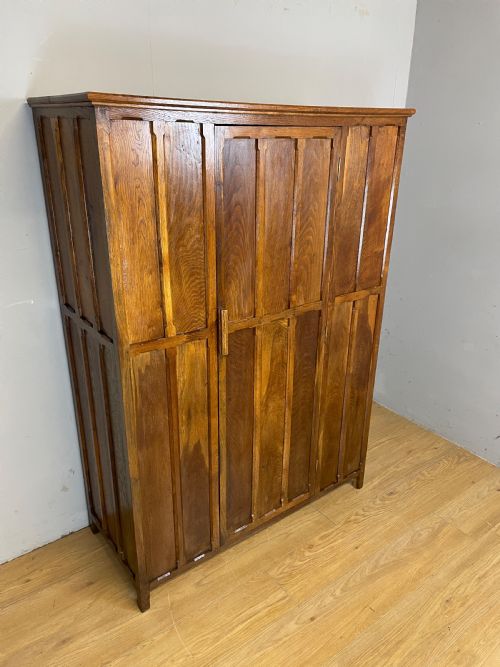


Edwardian Gentleman Wardrobe
An edwardian gentleman wardrobe offers fitted hanging space and tailored drawer storage, combining practicality with period craftsmanship for the modern home.
Edwardian Gentleman Wardrobe
When you search for an edwardian gentleman wardrobe, you encounter substantial freestanding furniture pieces designed for storing a gentleman's attire. These pieces typically combine hanging sections, internal drawers, and linen presses within a single carcass.
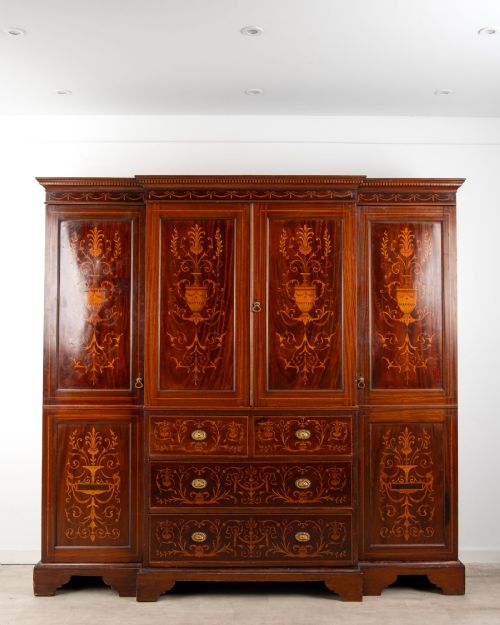
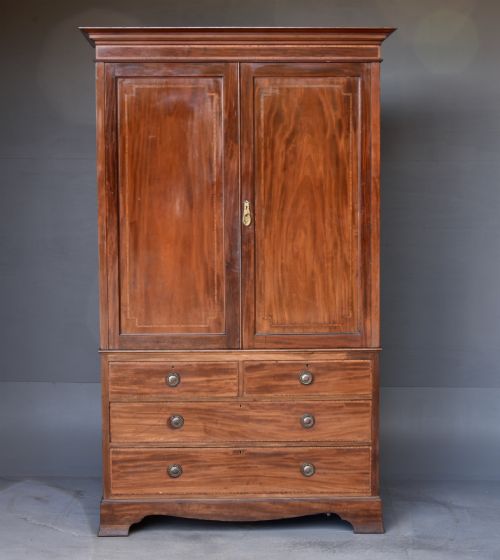
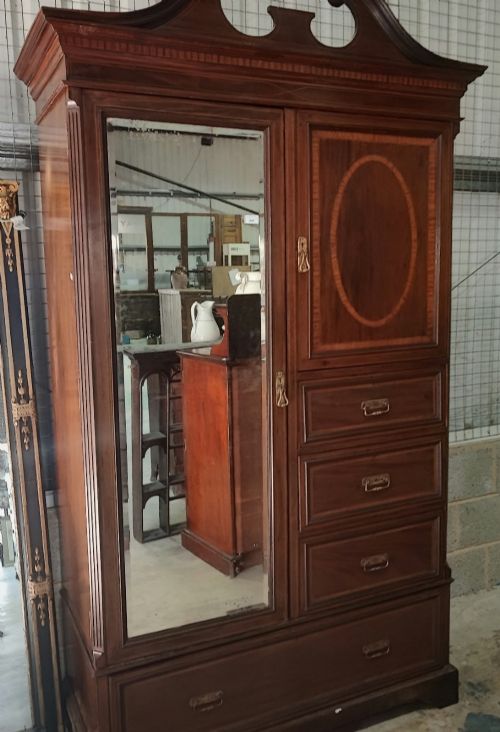
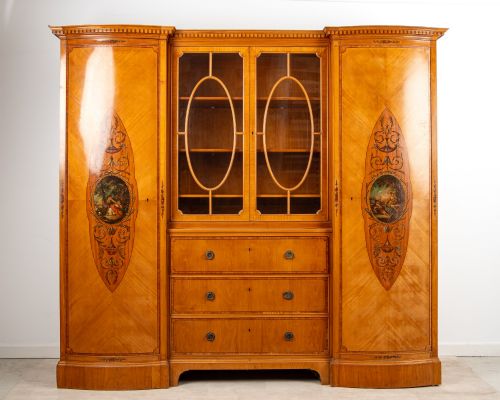
The versions most common on this page date from the Edwardian period and circa 1900, alongside related nineteenth-century compactums. They manifest in mahogany, satinwood, and oak, often incorporating mirrored doors and brass hardware.
Makers such as Maple and Co and Edwards and Roberts produced notable examples, while styles range from standard Edwardian to Neo-Classical and Arts and Crafts interpretations. Occasional pieces stretch back to the eighteenth century or forward into the nineteen-twenties.
Construction and materials
Cabinet makers utilised sturdy timbers like mahogany, oak, and pine as the structural foundation for these large wardrobes. Mahogany and satinwood frequently appear with decorative inlay work and hand-painted panels.
Functional elements rely on brass fittings, glass mirrors, and lead light panels to complete the facade. Internal configurations often include trouser presses, sliding trays, and partitioned drawer banks designed for specific garments.
Some Edwardian gentlemen clearly had very specific trouser management priorities.
Assessing craftsmanship and finish
The distinction between standard utility pieces and finer examples rests in the selection of timbers and the sophistication of the inlay work. Pieces bearing maker attributions from notable London firms demonstrate superior internal fitted arrangements and heavier brass hardware.
Surface finish and decorative detail separate simpler pine or oak constructions from elaborate satinwood and painted triple wardrobes. The integration of specialised internal mechanisms, such as integrated trouser presses, indicates higher workshop standards.
Edwards and Roberts·Maple and Co·Whytock and Reid·Merryweather London
The Edwardian Gentleman Wardrobe Glossary
- Compactum
- A large fitted wardrobe combining hanging space, drawers, and shelving within one multi-section carcass. This format is typical of Edwardian gentleman wardrobes designed for complete outfits.
- Gentleman's chest
- A hybrid storage piece containing a combination of shallow drawers and cupboard space. These items often feature internal sliding trays for linen.
- Linen press
- A tall cabinet featuring upper cupboard doors enclosing sliding shelves, positioned above a base of lower drawers. They frequently share lineage with nineteenth-century compactums.
- Lead light panel
- Glass panes held together by lead caming, creating decorative geometric or floral patterns in cabinet doors. They appear on select Edwardian and Arts and Crafts pieces.
- Satinwood inlay
- Contrasting timbers inserted into a primary wood surface to create geometric borders or pictorial motifs. This technique defines high-grade Edwardian cabinetwork.
Edwardian Gentleman Wardrobe: Frequently Asked Questions
What is inside an edwardian gentleman wardrobe?
These wardrobes typically divide their internal space between hanging compartments for coats and suits, and banks of internal drawers for smaller garments. Many examples also incorporate sliding linen trays or specialised trouser presses.
Such compartmentalisation reflects the structured dressing habits of the period, offering dedicated storage for every article of clothing.
How do compactums differ from standard wardrobes?
A compactum integrates multiple furniture forms into a single unit, combining the hanging capacity of a wardrobe with the drawer capacity of a chest. They offer comprehensive storage solutions within a substantial architectural footprint.
This multi-functional design makes them heavier and more complex than simple hanging wardrobes.
Where should I place a large wardrobe?
These tall and deep pieces require adequate wall clearance and sufficient ceiling height to accommodate their cornices. Placing them away from direct heat sources protects the polished mahogany or oak surfaces from timber movement.
Their substantial weight means they function best positioned on ground floors or in rooms with reinforced structural support.
How do I distinguish Edwardian pieces from Victorian ones?
Edwardian furniture generally exhibits lighter timbers, simpler lines, and more restrained decoration compared to heavier Victorian predecessors. Satinwood, lighter mahogany, and Arts and Crafts influences often point toward the Edwardian era.
Victorian pieces tend toward darker finishes, heavier mouldings, and more exuberant carved detailing.