
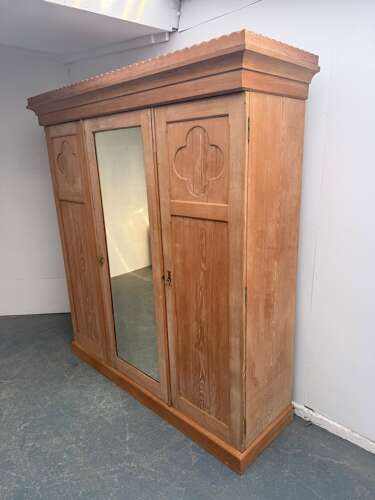
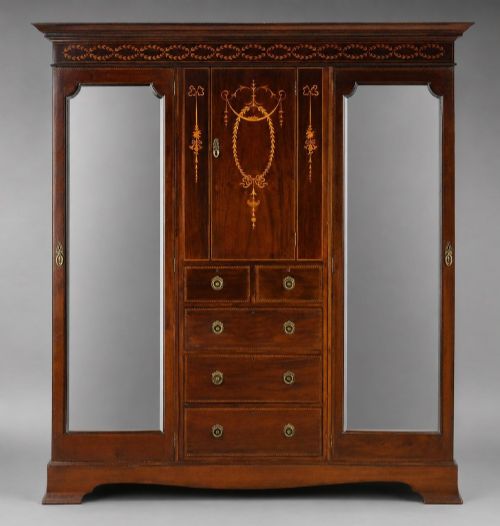
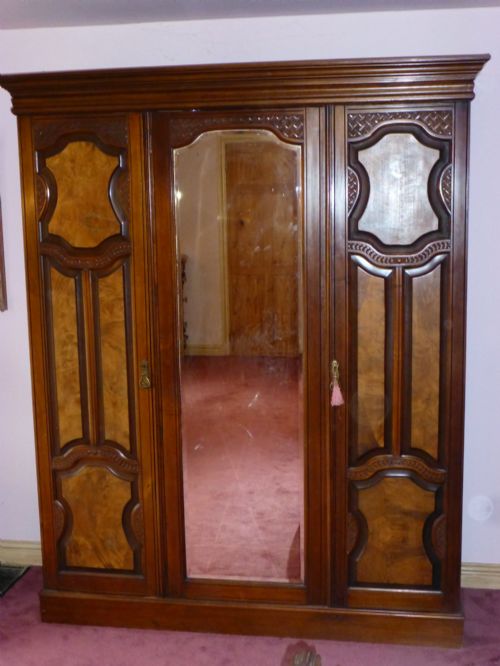
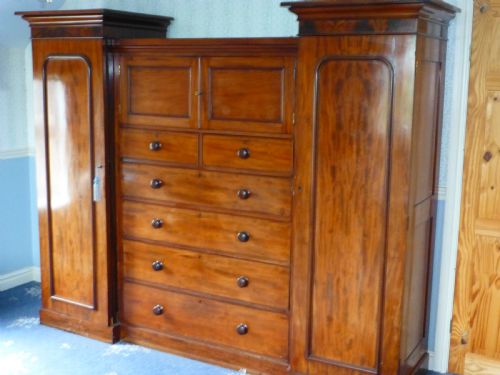



Fitted Bedroom Compactum
A fitted bedroom compactum is a substantial storage piece combining hanging space and drawers, offering a complete wardrobe solution for period rooms.
Fitted Bedroom Compactum
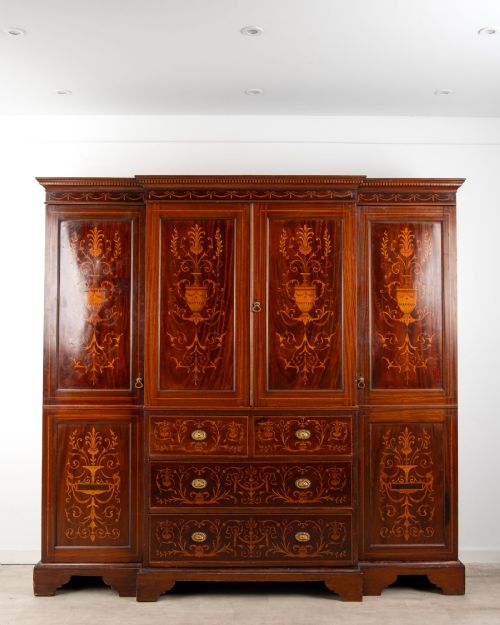
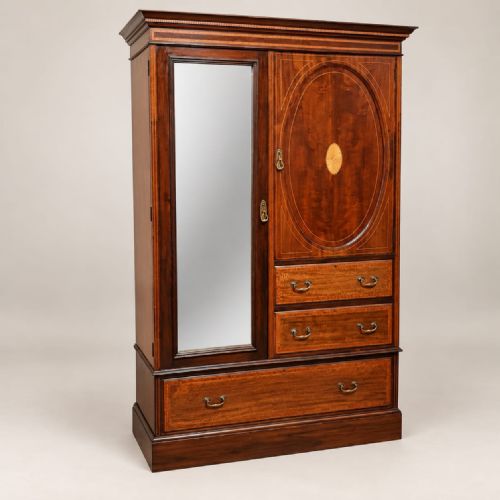
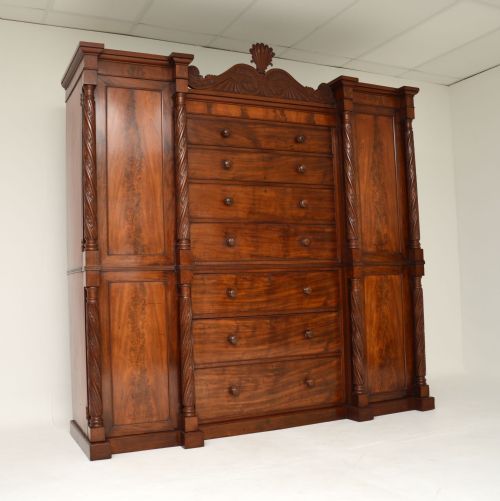
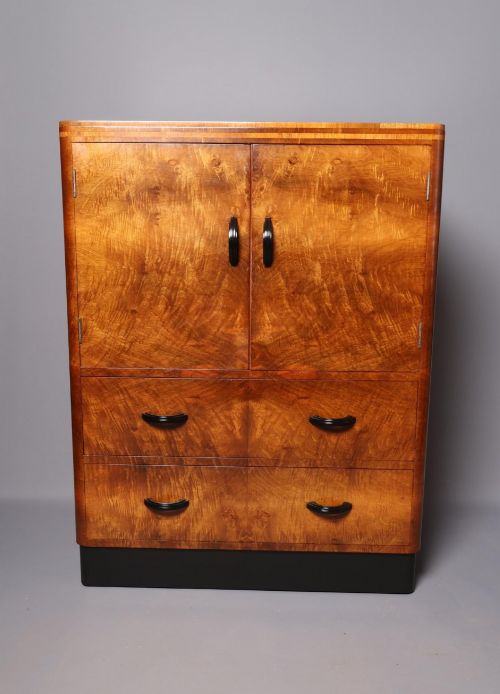
A fitted bedroom compactum combines multiple storage functions into a single large frame, bringing together hanging compartments, drawers, and linen shelves. You meet these primarily in Victorian and Edwardian iterations, often rendered in mahogany, walnut, or oak, alongside later Art Deco examples.
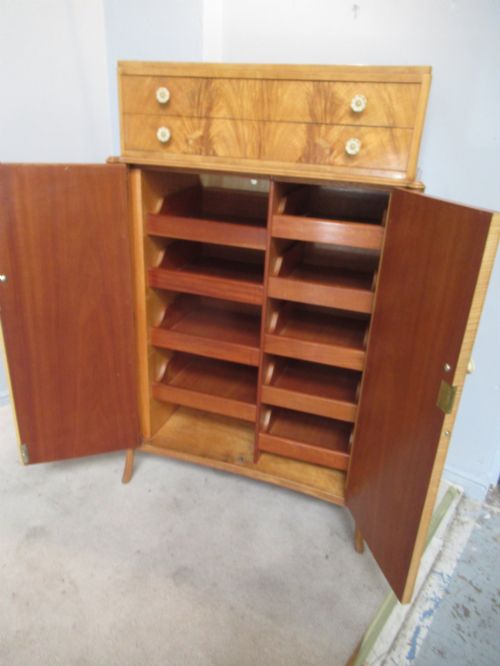
Makers designed these multi-compartment pieces to organise a gentleman's or lady's attire within one footprint, frequently incorporating internal trays, hooks, and sliding shelves behind panelled doors.
How they were made
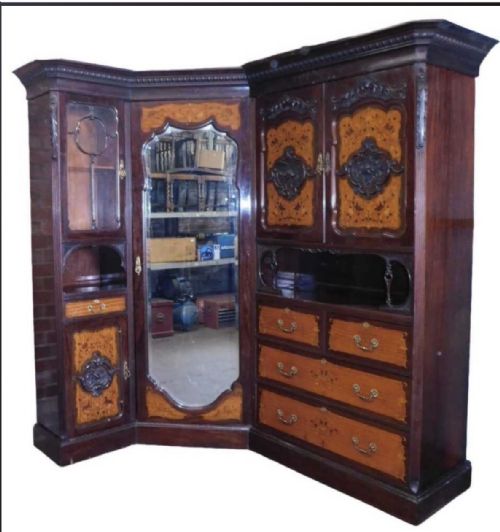
Cabinet makers constructed these carcases using solid timbers like mahogany, walnut, and oak, often applying flame mahogany, burr walnut, or satinwood veneers to the principal surfaces. Brass hardware secures the doors and internal fittings, while glass panels occasionally feature on central mirror doors.
Internal configurations rely on traditional joinery, integrating sliding linen trays, compartmentalised drawer banks, and hanging rails within breakfront or straight-sided frames.
Listings feature mahogany, walnut, and oak alongside decorative veneers like burr walnut and flame mahogany across Victorian and Edwardian periods.
What varies in quality
The sophistication of the internal layout and the selection of timber veneers separate standard production from superior cabinet work. Pieces retaining original brass fittings, carefully matched burr walnut or flame mahogany graining, and intricate marquetry inlay demonstrate higher workshop standards.
Construction depth and the integrity of the breakfront or multi-door assembly indicate the original maker's ambition, with finer examples featuring secondary timbers like satin birch and maple inside the drawers.
Holland and Sons·Gillows·Maple and Co·Edwards and Roberts
The Fitted Bedroom Compactum Glossary
- Compactum
- A multi-functional wardrobe containing a combination of hanging space, drawers, and shelving within one unit. It provides comprehensive clothing storage.
- Breakfront
- A cabinet design where the central section projects forward from the flanking wings. This creates architectural depth and visual weight.
- Flame mahogany
- Timber cut to reveal a distinctive undulating grain pattern resembling flickering flames. Cabinet makers used veneers of this wood on prominent exterior doors.
- Burr walnut
- Wood taken from a tree growth carrying distorted grain formations that produce intricate swirling patterns. It forms highly decorative surfaces on Victorian and Edwardian carcases.
- Linen press
- A tall storage piece containing sliding trays or shelves behind doors, traditionally used for flat textiles. It frequently forms part of a larger combination wardrobe.
Fitted Bedroom Compactum: Frequently Asked Questions
What is a fitted bedroom compactum?
A fitted bedroom compactum is a large, multi-compartment wardrobe designed to hold hanging garments, folded clothes, and linens in a single unit. These pieces combine wardrobes and drawer chests into one architectural form.
Originating largely in the nineteenth and early twentieth centuries, they offer extensive storage whilst maintaining a unified exterior facade of timber and panelled doors.
How do I date a compactum?
Dating relies on stylistic markers, timber choices, and construction methods. Victorian examples often display heavy flame mahogany or burr walnut, whereas Edwardian pieces lean towards inlaid satinwood and lighter frames.
Art Deco versions introduce streamlined walnut forms from the 1930s, while earlier Georgian or William IV pieces exhibit simpler, robust proportions and deep solid timbers.
Will a compactum fit in a modern bedroom?
These pieces are substantial structures designed for period rooms with high ceilings and generous floor space. Measuring them carefully against your ceiling height and wall length is essential before placement.
Many breakfront and triple-door examples dismantle into smaller sections for transport, making movement through doorways and assembly inside the room manageable.
How should I care for timber surfaces?
Maintaining these wooden surfaces requires regular dusting with a soft, dry cloth and occasional application of appropriate beeswax to nourish the polish. Avoid placing them near direct heat sources or strong sunlight.
Keeping the interior dry preserves the sliding trays and internal mahogany or oak drawer linings, ensuring the doors and drawers continue to run smoothly.