


Satinwood Armoire Cabinet
A satinwood armoire cabinet brings pale timber and fine grain into a bedroom, offering large-scale storage through fitted hanging space and linen shelves.
Satinwood Armoire Cabinet
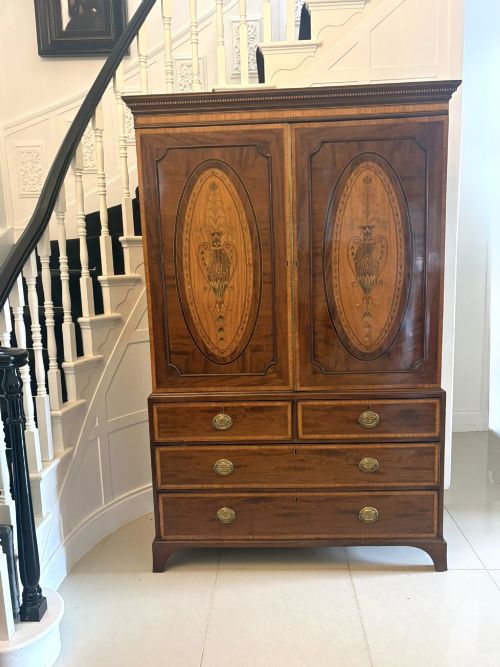
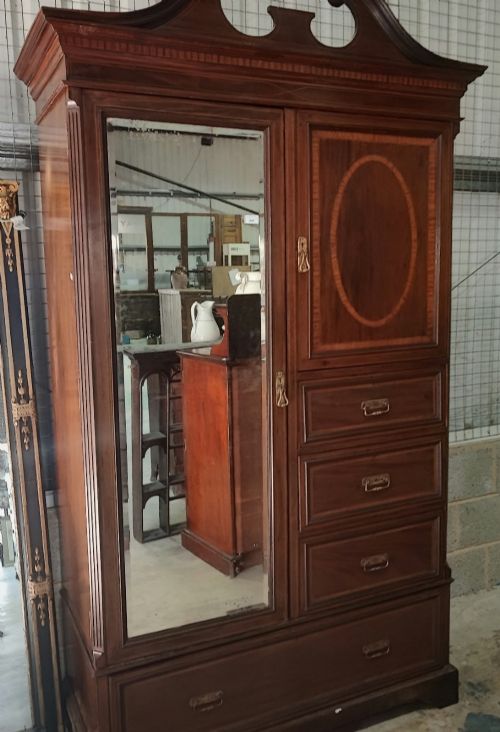
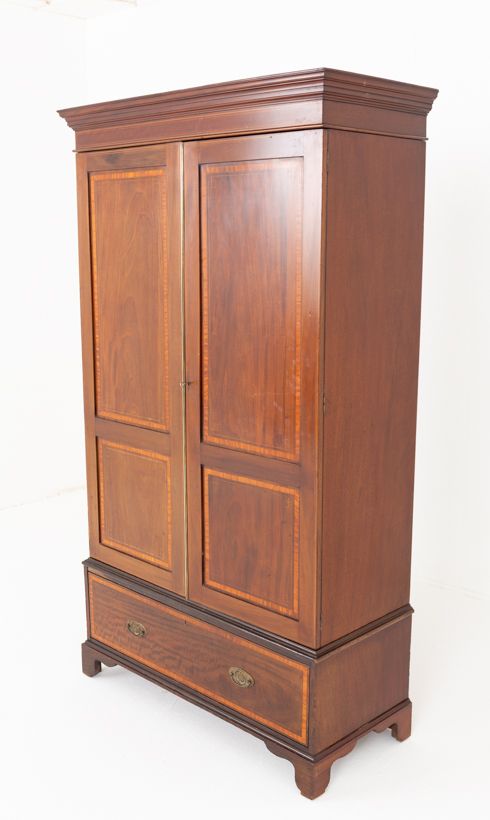
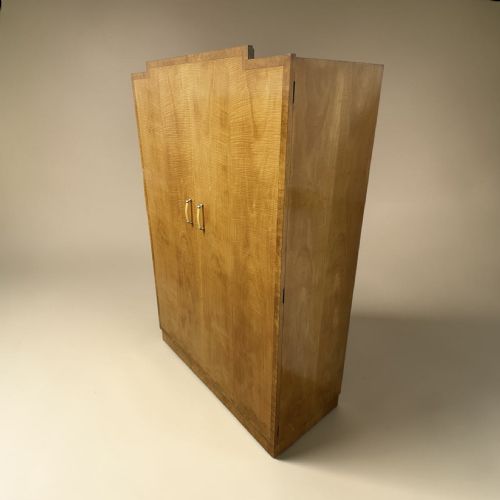
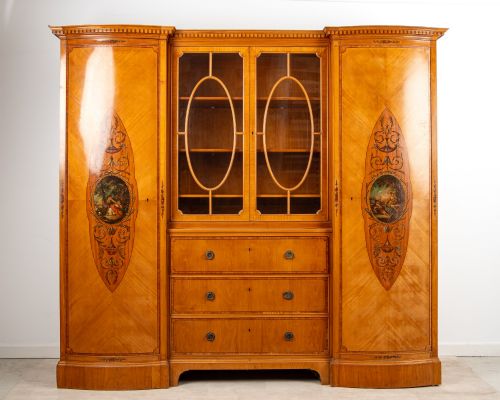
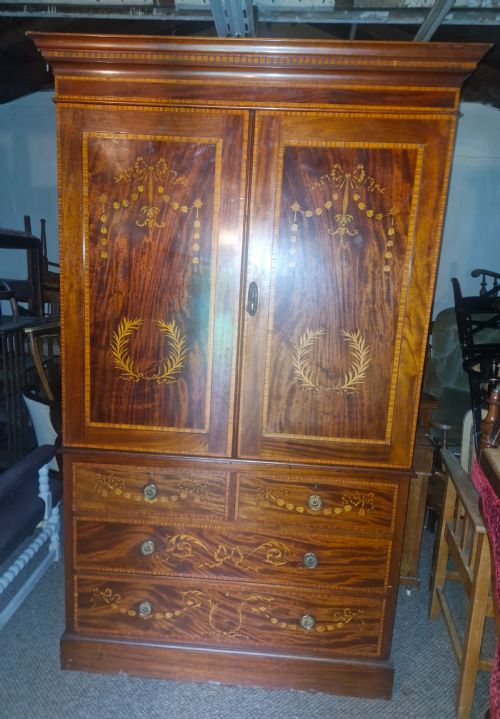
A satinwood armoire cabinet combines large-scale storage with pale timber finishes, appearing across Georgian, Victorian, Edwardian, and Art Deco periods. These pieces take the form of wardrobes, linen presses, housekeepers cupboards, and compactums.
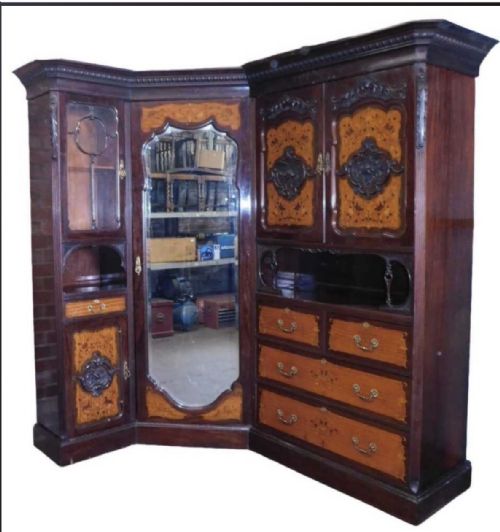
The Edwardian examples and Sheraton Revival pieces dominate the selection with inlaid satinwood and mahogany structures. Collectors encounter everything from triple wardrobe bookcases to double doors and corner compactums.
Earlier George III and Victorian items use mahogany carcasses with satinwood banding and stringing. Art Deco items introduce cleaner lines in a departure from earlier inlaid decoration.
Construction and materials
Cabinet makers constructed these pieces using solid timber frames overlaid with veneers, pairing satinwood with mahogany, birch, and timber. Craftsmen added brass hardware and glass panels to complete the doors and interior fittings.
Makers applied intricate inlays and hand-painted panels to the exterior surfaces, particularly during the Edwardian and Sheraton Revival periods. Carcasses often separate into modular sections to allow movement and installation in domestic rooms.
Listings span from the late eighteenth century through the Edwardian era into Art Deco, utilising satinwood, mahogany, birch, and brass.
Judging quality and finish
Quality rests in the precision of the timber matching and the crispness of the inlaid stringing across the doors and cornice. Superior examples feature carefully selected grain patterns that remain stable across large panel surfaces.
The integrity of the original brass fittings, working locks, and interior sliding trays distinguishes a finished piece. Finer workshops employed skilled hands for hand-painted ornamentation and structural joinery that withstands heavy daily use.
Edwards and Roberts·Druce and Co
The Satinwood Armoire Cabinet Glossary
- Satinwood
- A dense, lustrous timber native to tropical regions, prized for its golden yellow colour and reflective, chatoyant grain. Cabinet makers used veneers of this wood to create striking contrasting panels on larger furniture.
- Compactum
- A multi-functional wardrobe designed to hold various types of clothing within a single footprint. These pieces typically combine hanging space, sliding linen trays, and small drawers.
- Linen Press
- A tall storage cabinet featuring upper sliding shelves for folded textiles and lower drawer sections for larger garments. Earlier Georgian versions often integrated mahogany frames with decorative panelling.
- Stringing
- A narrow strip of contrasting timber inlaid into a channel cut into the surface of a panel. This technique outlines the borders of doors and drawers on Sheraton Revival and Georgian furniture.
- Pediment
- The decorative architectural crowning structure situated at the top of a tall cabinet or wardrobe. Examples include swan-neck variations featuring curved scrolls meeting at a central point.
Satinwood Armoire Cabinet: Frequently Asked Questions
What is a compactum wardrobe?
A compactum is a specialised wardrobe designed to maximise storage by combining hanging sections, sliding shelves, and drawers into one unified cabinet. These multi-functional pieces keep various types of clothing organised without requiring separate chests.
Craftsmen often fitted these large items with internal mirrors and compartments to serve as comprehensive bedroom dressing stations.
How do I date an Edwardian wardrobe?
Edwardian wardrobes often feature lighter satinwood finishes, symmetrical inlaid banding, and sometimes hand-painted floral panels reflecting Sheraton Revival influences. The hardware and internal fittings typically show early twentieth-century manufacturing techniques.
Comparing the secondary timbers inside the drawers helps confirm the period against Victorian or later Art Deco designs.
Will an armoire fit my bedroom?
These large cabinets require careful measurement of ceiling height and doorway clearance before purchase. Many period wardrobes were constructed in modular sections so they could be dismantled and reassembled inside a room.
Checking the dimensions of the cornice and the depth of the hanging space ensures the piece sits comfortably in its intended room.
How do I care for satinwood?
Satinwood benefits from minimal exposure to direct sunlight to preserve its golden tone and prevent the timber from fading. Regular dusting with a soft, dry cloth maintains the polished finish without building up heavy wax residues.
Maintaining stable room humidity protects the underlying veneer and prevents the joints from shifting over time.