


Edwardian Compactum Cabinet
An Edwardian compactum cabinet combines wardrobe storage and drawer space into one substantial piece, offering serious utility for the bedroom.
Edwardian Compactum Cabinet
An edwardian compactum cabinet is a capacious multisection piece designed to consolidate hanging space, drawers, and sometimes shelving into a single footprint. Buyers searching for this phrase seek functional storage that reflects the refined tastes of the early twentieth century.
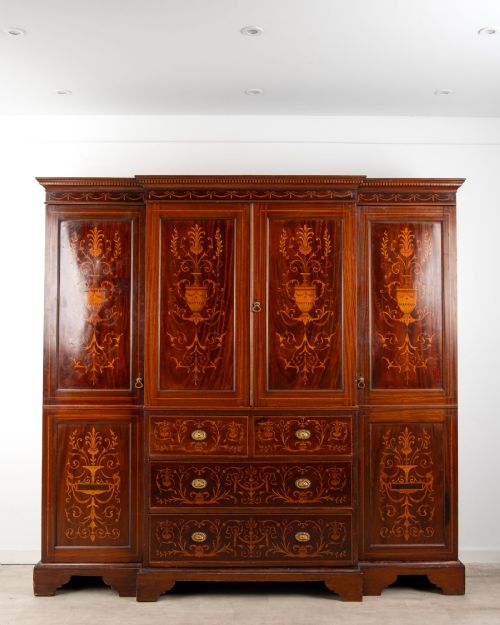
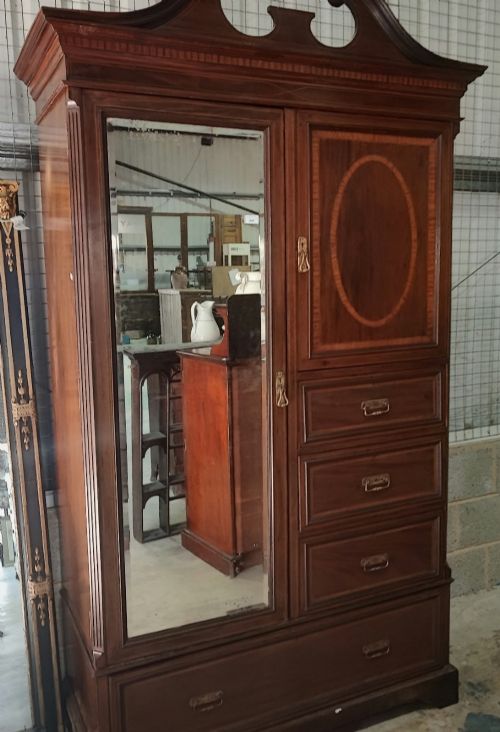
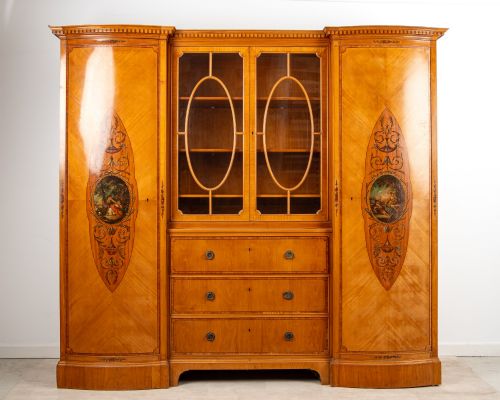
The selections available here span from the late nineteenth century through the Edwardian period, with mahogany and satinwood dominating the forms. Pieces often feature central mirrored doors flanked by hanging compartments and banks of internal drawers.
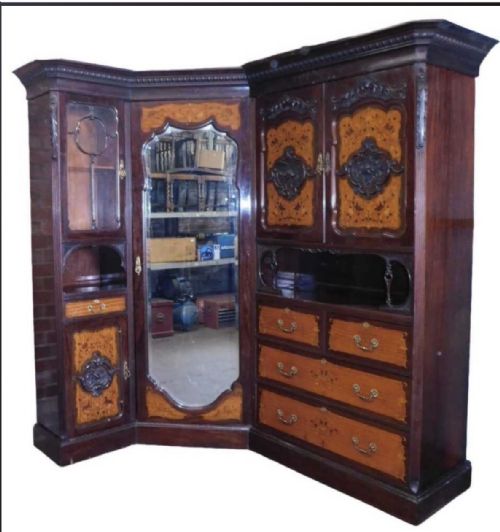
While many examples follow standard double or triple wardrobe dimensions, occasional miniature interpretations or corner variations appear. These diverse proportions allow the compactum format to adapt to various room layouts while maintaining its characteristic multifaceted storage.
Materials and construction methods
Makers utilised timber veneers and solid frames, employing rich mahogany, warm oak, and pale satinwood. Inlaid stringing in contrasting woods frequently frames the panel doors and drawer fronts.
Glass appears in bevelled mirror door panels and occasional lead light glazing. Brass hardware secures the doors and pulls the internal drawers, which utilise traditional dovetail joinery.
Some compactums conceal interior shirt drawers behind panelled doors, keeping early morning routines entirely out of sight.
Distinctions in quality and execution
The refinement of the timber selection and the precision of the satinwood inlay set finer pieces apart from standard workshop production. Hand-painted panels and choice mahogany grain demonstrate superior craftsmanship.
Structural integrity depends on the robustness of the internal carcase and the smooth operation of multiple doors and drawers. Maker attribution, such as work by established firms, further distinguishes exceptional examples.
Edwards and Roberts·Maple and Co
The Edwardian Compactum Cabinet Glossary
- Compactum
- A large multisection wardrobe combining hanging space, drawers, and sometimes shelves in one unit. This multi-use format emerged to maximise bedroom storage efficiency.
- Satinwood
- A lustrous tropical hardwood native to India and Ceylon, prized for its pale yellow tone. It serves as both a primary timber and a decorative veneer.
- Stringing
- A narrow strip of contrasting wood inlay used to outline panels and drawers. It creates a delicate linear border on cabinet doors.
- Lead light
- Glass panes held together by lead cames to form geometric or decorative patterns. This technique appears on select cabinet doors.
Edwardian Compactum Cabinet: Frequently Asked Questions
What is an edwardian compactum cabinet?
An edwardian compactum cabinet is a large bedroom storage piece that integrates wardrobes, drawers, and cupboards into a single structure.
Designed for maximum utility, these units provide hanging space and compartmentalised drawers behind multiple doors, often featuring a central mirror.
How do I fit one in a modern bedroom?
These substantial cabinets require careful measurement of both floor space and ceiling height before placement. Many examples dismantle into sections to assist with transport and installation in older properties.
Position the cabinet away from direct heat sources to protect the polished wood surfaces and timber veneers.
How do I distinguish Edwardian from Victorian examples?
Victorian cabinets often display heavier proportions, darker mahogany timbers, and deeper carved details. Edwardian pieces frequently lean towards lighter satinwood finishes, inlay work, and neoclassical lightness.
Construction details and registration marks can also help narrow down the period of manufacture.
What maintenance do these wooden cabinets need?
Regular dusting with a soft, dry cloth preserves the polished finish of the mahogany or oak. Avoid silicone polishes and keep the timber away from rapid humidity changes to prevent wood movement.