
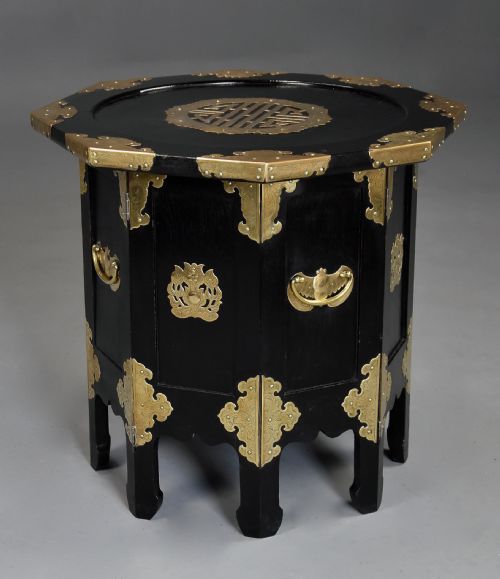


Vintage Chinese Tea Table
A vintage chinese tea table brings low-slung proportion and rich regional timber into a room, offering both practical surface space and distinct historical character.
Vintage Chinese Tea Table
When searching for a vintage chinese tea table, buyers encounter a variety of low tables, nest of tables, and occasional pieces originating primarily from the nineteenth and early twentieth centuries. These range from heavy rosewood opium and kang tables to rustic elm low tables and lacquered occasional surfaces.
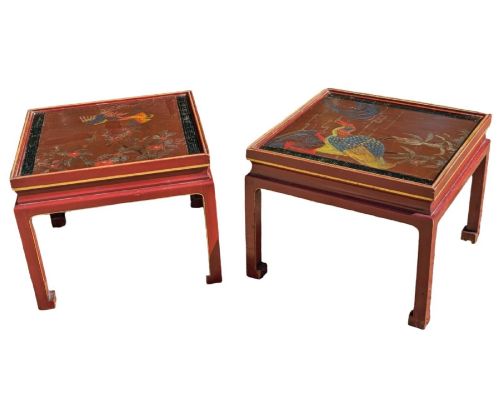
The pieces on this page span traditional Chinese designs and British Edwardian interpretations in the Chinoiserie style. Forms include folding occasional tables, circular coffee tables, and carved centre tables designed for domestic use.
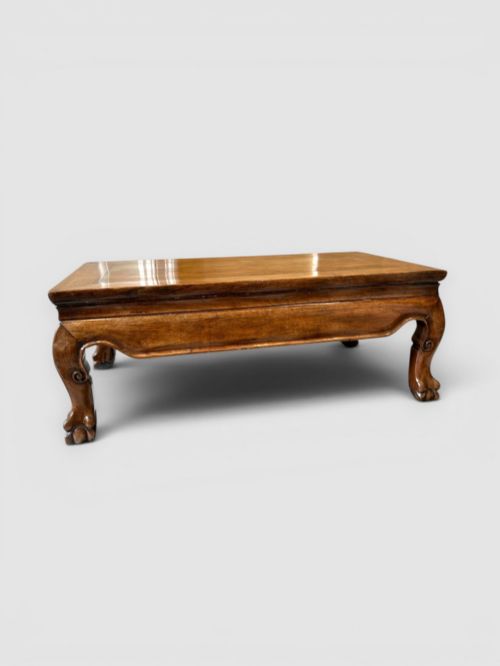
Lower profiles dominate the selection, with low kang and opium tables forming a substantial part of the available stock. Alongside these sit nests of four tables and small side tables constructed from dense Asian hardwoods.
Materials and construction
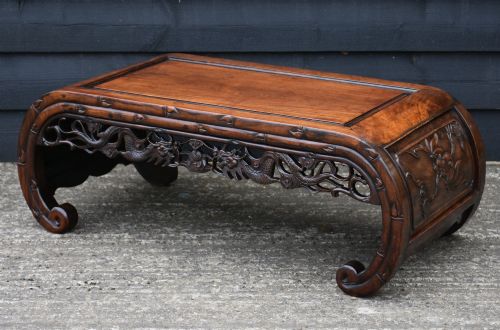
Construction relies heavily on dense timbers such as rosewood, elm, and general hardwood, chosen for their durability and grain. Cabinetmakers utilised traditional joinery methods to build sturdy low frames, often incorporating carved details like dragons directly into the wood.
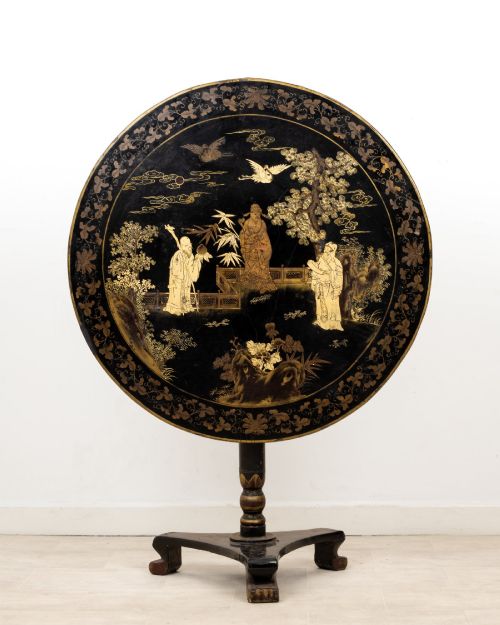
Surface decoration frequently involves black and gilt lacquer or applied brass mounts and glass panels. Ebonised finishes and intricate brass details appear on early twentieth-century occasional pieces to create distinct decorative contrast.
Several tables retain carved dragon details, keeping guard over your evening cup of tea.
Assessing craftsmanship
Quality in these tables rests upon the selection of timber and the crispness of any carved ornamentation. Dense rosewood and figured hardwoods demonstrate superior material choice compared to general softer woods.
The integrity of applied finishes, such as hand-painted lacquer or detailed brass inlay, distinguishes finer decorative examples. Original joinery stability and the preservation of carved dragon motifs further elevate the standing of an individual piece.
The Vintage Chinese Tea Table Glossary
- Kang table
- A low platform table traditionally used on a heated brick bed in northern China for dining and writing. These items now function widely as low coffee tables.
- Opium table
- A low-standing wooden table designed for domestic leisure use. They typically feature short legs and substantial timber tops.
- Chinoiserie
- European decorative style reflecting Chinese artistic motifs and techniques. It appears frequently on Edwardian lacquer occasional furniture.
- Hongmu
- A category of dense, heavy Chinese hardwoods prized for furniture production. The term translates directly to red wood.
- Nest of tables
- A set of graduated tables designed to fit neatly beneath one another. This form appears in both hardwood and lacquered finishes.
Vintage Chinese Tea Table: Frequently Asked Questions
What is a kang table?
A kang table is a low-standing surface originally built to sit upon a heated sleeping platform in traditional Chinese homes. They provided a stable area for partaking in tea, meals, and reading.
In modern interiors, these low proportions make them well suited for use as coffee tables placed in front of low seating.
How do I care for lacquer surfaces?
Lacquered tables require gentle maintenance to preserve the finish against drying and cracking. Dusting with a soft, dry cloth is usually sufficient for regular upkeep.
Keep these pieces away from direct sunlight and excessive heat sources to protect the delicate black and gilt decoration from fading.
Are these tables solid hardwood?
Many examples are constructed from dense Asian timbers such as rosewood and elm. Cabinetmakers built these frames to withstand heavy daily use without warping.
Lighter occasional pieces may utilise secondary woods beneath lacquer or ebonised finishes, while traditional low tables emphasise visible grain.
What is an opium table used for?
Opium tables were historically low domestic surfaces utilised for social gatherings and leisure activities within the home. Their compact stature allowed users to sit comfortably on cushions or mats.
Today, buyers repurpose them as central coffee tables in living spaces where a low visual profile is desired.