


Chinese Hardwood Tea Table
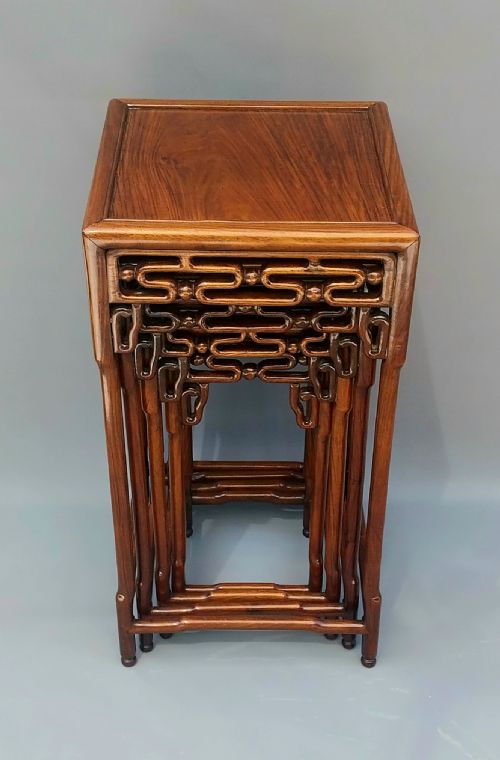
A chinese hardwood tea table brings dense timbers and traditional joinery together, serving as a low surface for domestic rituals.
Chinese Hardwood Tea Table
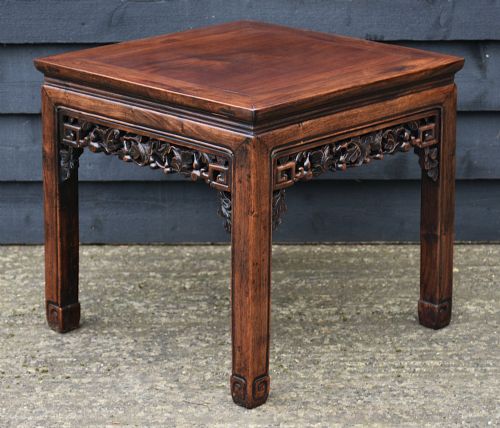
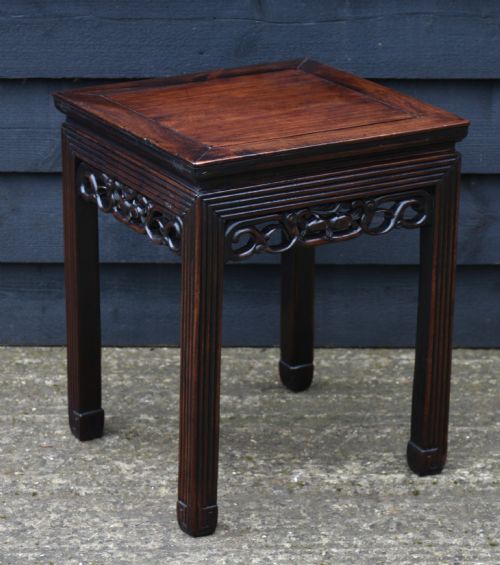
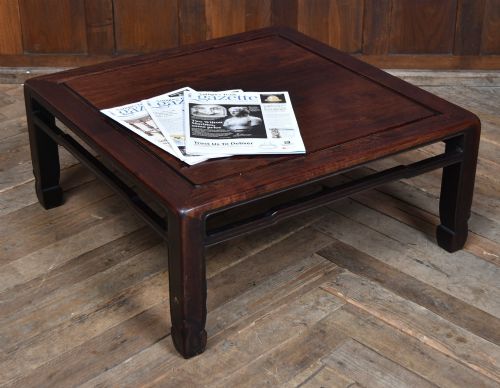
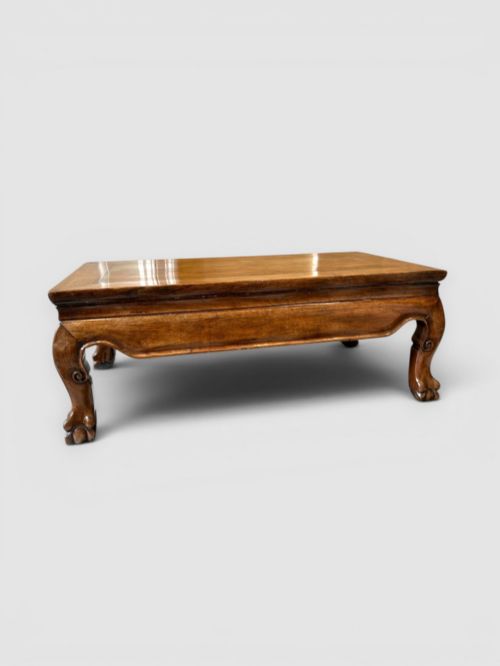
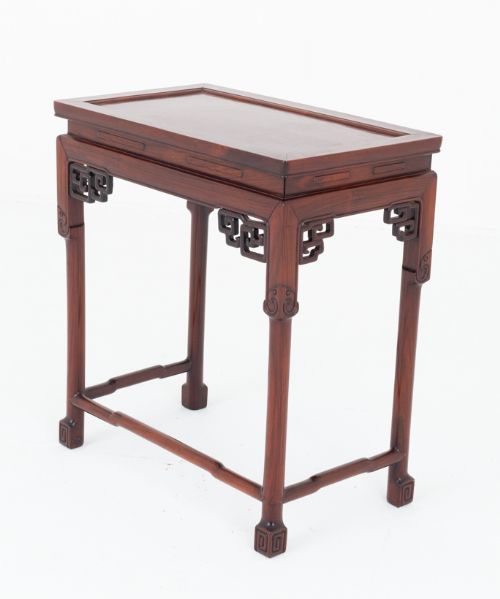
A chinese hardwood tea table typically appears as a low kang table, a square coffee table, or an opium table dating from the nineteenth century through the early twentieth century. These pieces emerge in styles reflecting the Qing Dynasty, featuring scroll ends, carved dragons, or clean rectangular lines designed for domestic utility.
Buyers also encounter nests of four tables, two-tier tables, and occasional tables shaped from dense Asian timbers. The low profiles and sturdy construction suit modern living spaces just as they suited traditional interiors.
Materials and construction methods
Craftsmen built these tables using heavy, durable timbers such as rosewood, hongmu, padouk, elm, and huali. These dense woods provide the natural weight and structural integrity required for traditional joinery without relying on metal fasteners.
Surfaces frequently display intricate hand-carved ornamentation, scroll ends, or inset marble panels. Polishing brings out the deep natural grain and rich patina of the hardwood.
Several tables were built low enough to sit directly on a bed, proving that nineteenth-century tea drinkers took comfort very seriously indeed.
Judging the quality of execution
Quality rests upon the crispness of the hand-carving and the selection of the timber. Dense, heavily figured rosewood or hongmu with a deep, warm patina sits at the upper end of the scale, whereas simpler elm pieces represent a more utilitarian domestic tradition.
The precision of the joinery and the stability of the frame dictate durability. Pieces retaining their original scroll ends and uncompromised structural alignment demonstrate superior workshop standards.
The Chinese Hardwood Tea Table Glossary
- Kang table
- A low platform table traditionally used on a heated brick bed in northern China for resting, eating, or drinking tea. These low surfaces form a major portion of surviving hardwood tables.
- Hongmu
- A categorical trade term for dense, heavy red hardwoods highly prized in Chinese furniture making. It includes various species of rosewood and padouk.
- Opium table
- A common historical descriptor for a low Chinese hardwood table. Despite the name, these versatile low tables served general domestic functions including serving tea.
- Scroll end
- A traditional table design feature where the short ends of the top panel curl outward or inward in a distinct scroll motif. This detail frequently appears on Qing Dynasty kang tables.
- Patina
- The surface sheen and deep coloration developed by aged hardwood through handling, waxing, and exposure to light over decades.
Chinese Hardwood Tea Table: Frequently Asked Questions
How do I use a low tea table today?
These low tables function well as central coffee tables in contemporary sitting rooms, pairing easily with modern low-slung seating.
They also serve effectively as display surfaces for sculptures, ceramics, or lamps where a compact height is desired.
What is a kang table?
A kang table is a low wooden platform designed to sit on top of a traditional heated brick sleeping platform in Chinese homes.
Today, these pieces are collected and utilised as low coffee tables due to their compact proportions and carved detail.
How do I clean hardwood surfaces?
Dust the timber regularly with a soft, dry cloth to prevent the accumulation of grit in the carved recesses.
Avoid liquid polishes or harsh chemical cleaners, applying occasional natural beeswax instead to maintain the dry sheen.
How can I tell the age of these tables?
Dating relies on examining the timber density, construction joinery, wear patterns, and the stylistic cues of the carving.
Nineteenth-century examples typically display deeper patination and traditional joinery methods compared to later twentieth-century reproductions.