


Chinese Low Bench
A chinese low bench brings quiet, low-slung seating and sturdy surfaces into a modern room, anchored in traditional craftsmanship.
Chinese Low Bench
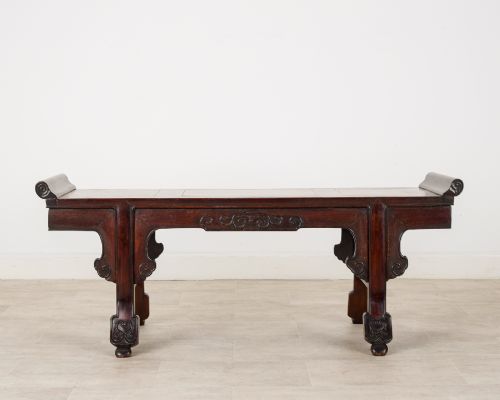
A chinese low bench encompasses low tables, opium tables, altar benches, and dressing stools drawn from periods such as the nineteenth century and the Edwardian era.
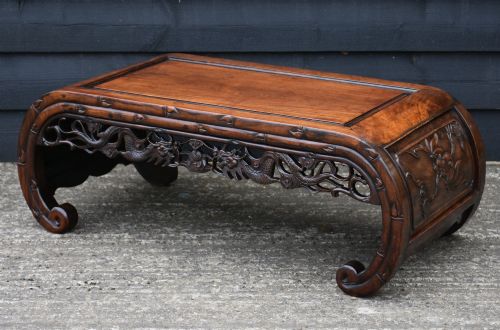
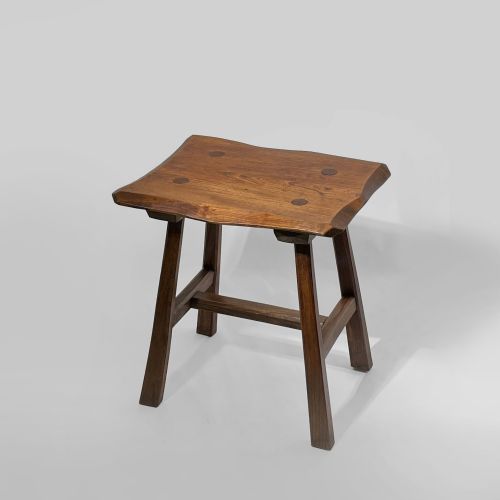
Buyers encounter forms ranging from rustic elm country pieces to intricately carved huali and hongmu examples bearing dragon details or scroll ends.
These items serve equally well as low coffee tables, window seats, or compact display platforms within contemporary spaces.
Materials and Construction
Joinery relies on dense timbers like elm, rosewood, huali wood, hongmu, and huanghuali wood, selected for their structural strength and rich grain.
Carving and ebonising techniques appear across late Qing Dynasty and regional pieces, adding surface depth to plank tops and trestle supports.
Some tables retain subtle dragon carvings that once guarded domestic tranquility from the floor up.
Distinctions in Quality
Refinement in quality rests on the choice of timber and the precision of regional joinery rather than surface ornamentation alone.
Subtle differences in proportion, scrollwork execution, and the integrity of the timber distinguish standard vernacular work from finer scholarly examples.
The Chinese Low Bench Glossary
- Kang table
- A low platform table traditionally used on a heated brick bed in northern China for dining or writing. These pieces now function as compact coffee tables.
- Hongmu
- A categorical trade term for dense, dark Asian hardwoods translating to red wood. It embraces several heavy timber species prized for furniture.
- Elm
- A resilient native timber utilised extensively for rustic vernacular furniture. Its visible grain handles daily wear with robust character.
- Trestle table
- A table structure featuring a horizontal beam supported by two trestles or legs. This design provides sturdy stability for low-profile surfaces.
Chinese Low Bench: Frequently Asked Questions
What is a chinese low bench used for?
These low pieces function primarily as coffee tables, window seats, or auxiliary display platforms in living spaces.
Their modest height accommodates traditional seating arrangements and modern minimalist layouts alike.
How do I style a low bench?
Position the piece centrally before a sofa as a coffee table or place it beneath a window as a low seat.
Keep the surface styling simple to let the hardwood grain and structural joinery remain visible.
How old are these benches?
The available selection spans from the late nineteenth century through the Edwardian period and into nineteen-ten.
Stylistic details and timber choices help indicate whether a piece dates to the Qing Dynasty or later vernacular production.
What woods were used?
Craftsmen utilised both native timbers like elm and dense exotic hardwoods including rosewood, huali, and hongmu.
Each timber offers distinct weight, colouration, and grain patterns that influence the appearance of the finished bench.