



Vintage Chinese Armchairs
These vintage chinese armchairs bring solid hardwood framing and carved oriental character into modern rooms.
Vintage Chinese Armchairs
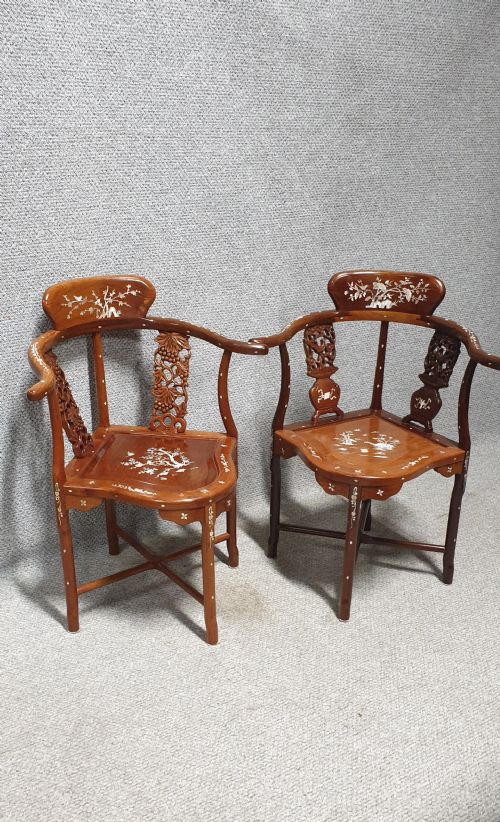
Vintage chinese armchairs encompass seating spanning the eighteenth, nineteenth, and early twentieth centuries, drawing on traditional Chinese, Qing dynasty, and export aesthetics. When searching for vintage chinese armchairs, buyers encounter sturdy forms built from dense timbers alongside hybrid styles like the Cockpen chair.
Originating from workshops producing traditional Chinese furniture and export pieces for Western markets, these armchairs combine utility with decorative carving. Buyers are most likely to meet nineteenth century hardwood chairs and early twentieth century pairs designed for domestic sitting rooms.
How vintage chinese armchairs were made
Craftsmen built these armchairs using dense timbers such as hardwood, elm, and mahogany, often employing traditional joinery to ensure structural stability without metal fixings. Surfaces were finished with natural polish, lacquer, or ebonised treatments that highlighted the grain of the wood.
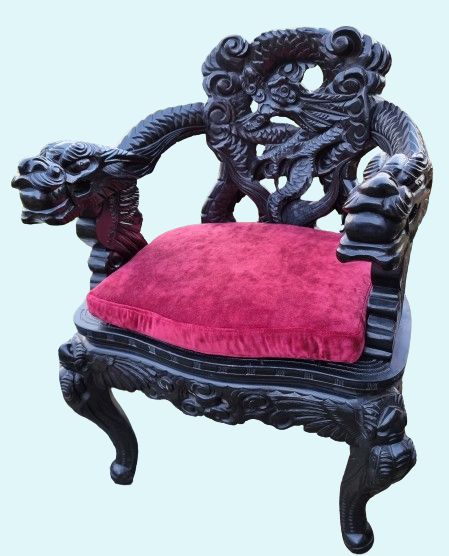
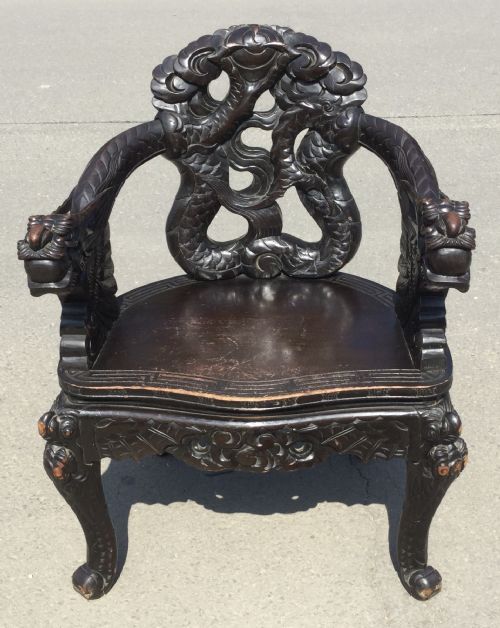
Carving formed a central part of construction, with artisans chiselling intricate dragon motifs and geometric patterns directly into the hardwood frames. Canework and bamboo panels were also incorporated into specific designs to provide flexible seating surfaces and lighter structural elements.
Listings feature periods spanning the eighteenth, nineteenth, and early twentieth centuries, executed in hardwood, elm, mahogany, and lacquer.
What varies in quality in vintage chinese armchairs
The quality of these armchairs rests upon the density of the timber selected and the crispness of the hand-carved ornamentation. Superior examples display deeply chiselled dragon motifs and well-proportioned frames that maintain structural integrity across centuries of use.
Joinery technique dictates longevity, with tight mortise and tenon joints separating finer workshop output from simpler utility seating. Furthermore, the preservation of original lacquer, ebonised finishes, and cane panels influences the overall integrity of the piece.
The Vintage Chinese Armchairs Glossary
- Cockpen chair
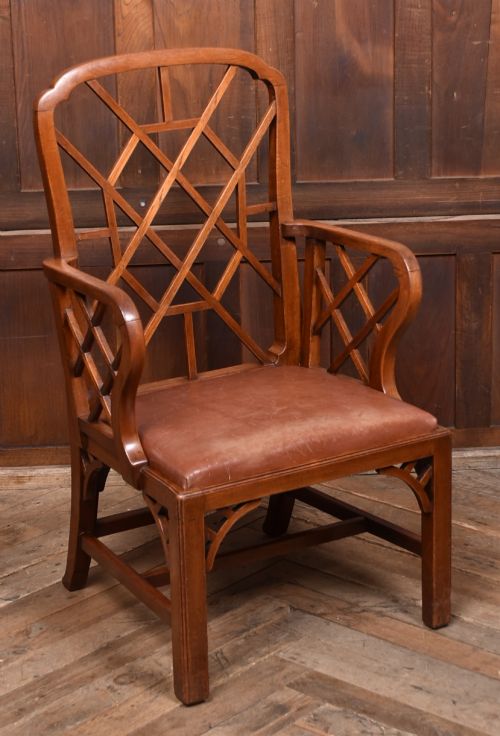
- A type of Chinese export armchair featuring open lattice woodwork, popular during the eighteenth and early nineteenth centuries. This style borrows architectural fretwork patterns from traditional Chinese screens.
- Horseshoe back
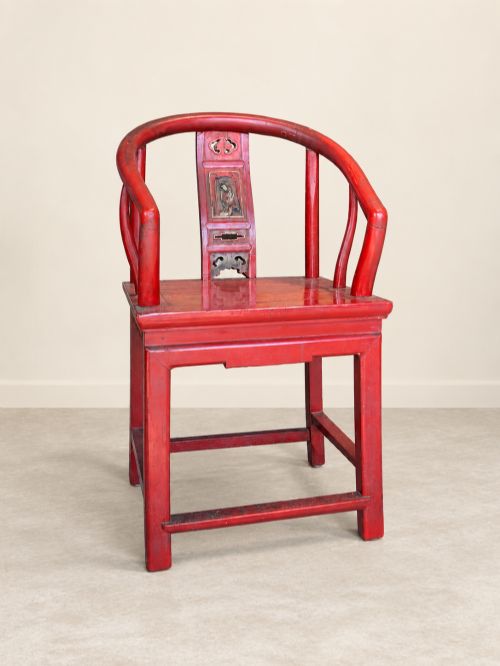
- A continuous curved crest rail that sweeps down to form the armrests of a traditional Chinese chair. This ergonomic design provides comfortable support for the user.
- Hardwood
- Dense, durable timber utilised in traditional Chinese furniture making, including species such as hualili and various domestic Asian hardwoods. It resists warping and takes fine carved detail exceptionally well.
- Qing Dynasty
- The final imperial dynasty of China, lasting from sixteen forty-four to nineteen twelve, known for elaborate carving and refined furniture forms. Pieces from this era often feature auspicious symbols and dragon motifs.
- Chinoiserie
- The European interpretation and imitation of Chinese artistic traditions, prevalent in decorative arts and furniture design. It merges Asian motifs with Western furniture forms like the corner armchair.
Vintage Chinese Armchairs: Frequently Asked Questions
How do I use a horseshoe back chair?
A horseshoe back chair works well as a standalone desk seat or a statement piece in a living room. Its curved rail supports the arms comfortably during extended sitting.
Position the chair where its carved wooden back can be viewed from multiple angles. Avoid placing it in direct sunlight to protect the aged timber surface.
What is a Cockpen chair?
A Cockpen chair is a lattice-back armchair created for the export market during the eighteenth and nineteenth centuries. It combines British chair proportions with Chinese geometric fretwork.
These chairs suit both traditional and contemporary interiors as accent seating. Their open wooden lattice creates a visually light footprint in smaller rooms.
How should I care for antique elm furniture?
Maintain antique elm by dusting regularly with a dry cloth and avoiding chemical polishes. Keep the wood away from direct heat sources to prevent the timber from splitting.
Applying occasional natural wax helps nourish the dry grain. Handle carved sections carefully to avoid chipping the aged wood.
How can I tell nineteenth century chairs apart?
Nineteenth century chairs often display heavier hardwood construction, hand-carved dragon motifs, or integrated canework panels. Earlier eighteenth century examples tend toward more eccentric proportions and corner chair formats.
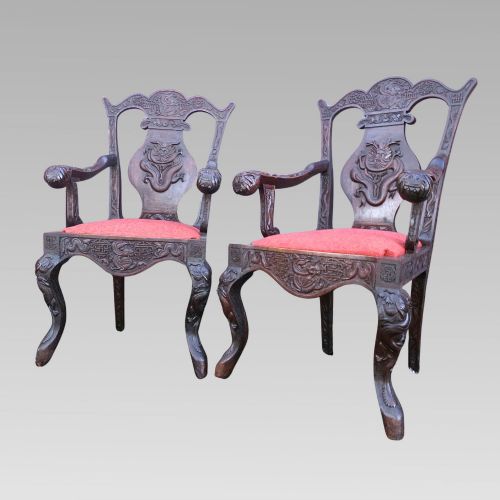
Twentieth century pieces frequently appear in matched pairs and utilise simpler elm frames. Examining the tool marks and wear patterns helps clarify the age of the timber.