


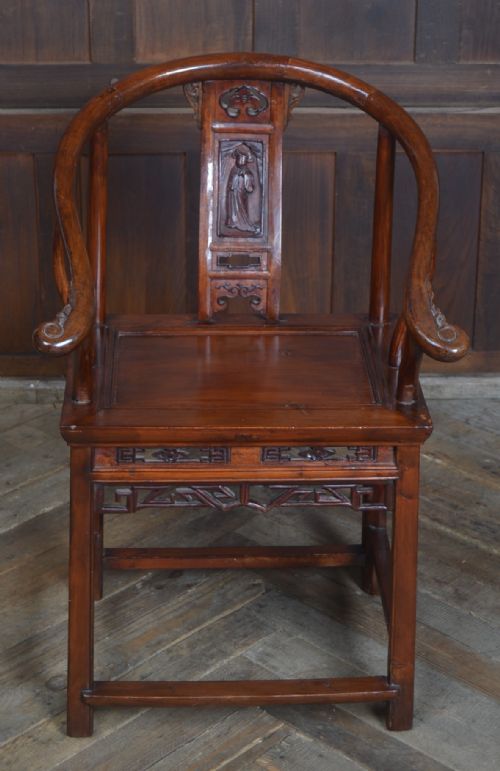


Chinese Lacquer Armchair
A chinese lacquer armchair brings depth and a rich surface to a room, offering robust seating shaped by centuries of tradition.
Chinese Lacquer Armchair
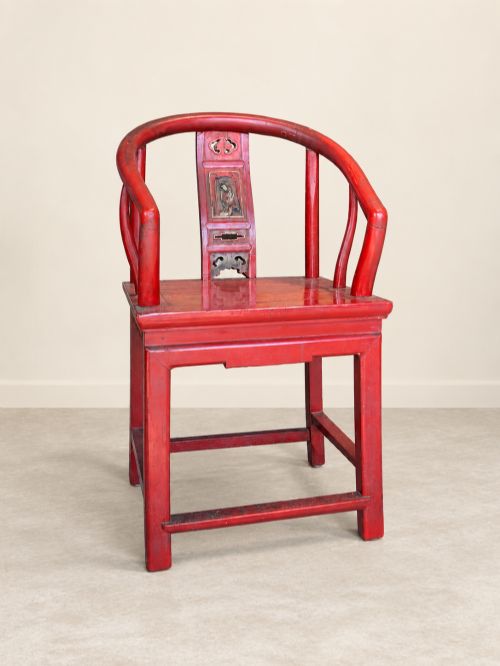
A chinese lacquer armchair is a seat built with arms, finished in hard tree sap resin or painted lacquer, often drawing on traditional forms or Qing Dynasty aesthetics. You encounter pieces spanning the nineteenth century, the Edwardian era, and the early twentieth century.
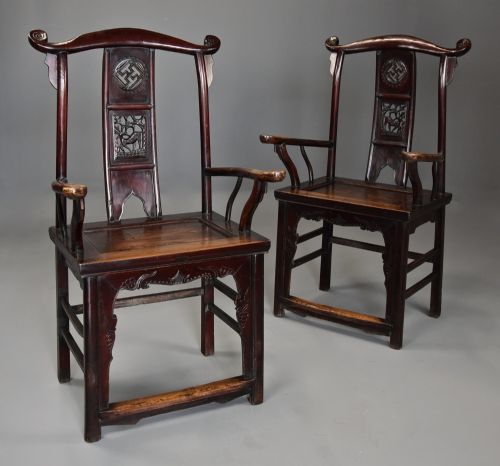
The most common versions on this page are elm or hardwood structures finished with red lacquer, black lacquer, or ebonised wood. Many examples arrive as pairs rather than single seats, incorporating yokeback designs or elbow seats.
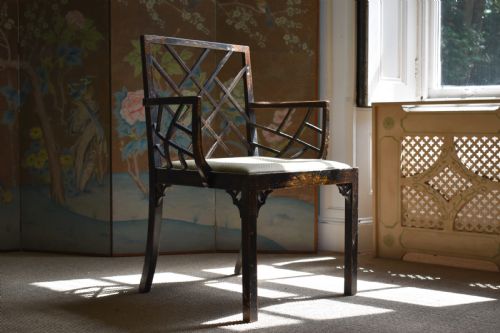
Makers and workshops across these periods produced both export items for Western tastes and traditional seating for domestic use. Forms range from strict oriental styles to Georgian Chinoiserie interpretations made in Britain.
Materials and construction
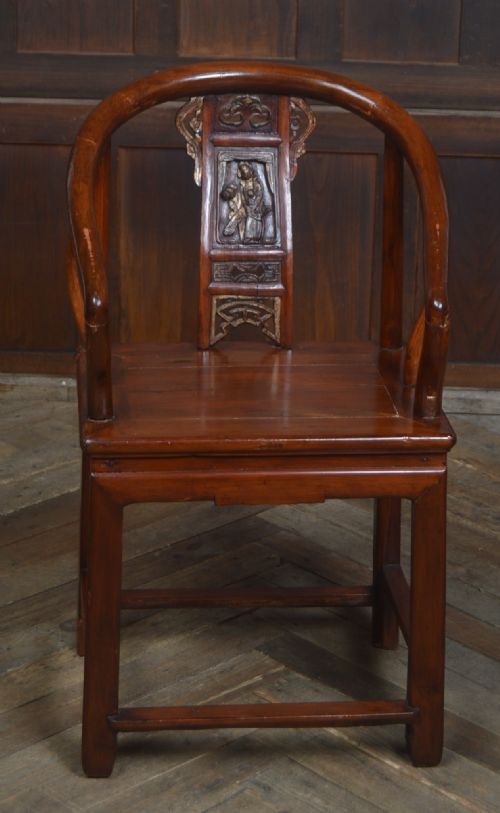
These armchairs rely on sturdy timber foundations, predominantly Chinese elm or dense hardwoods, which provide the structural integrity required for daily use. Joinery techniques connect the frame parts securely without relying on modern fasteners.
Surfaces receive coats of natural lacquer or polished finishes, sometimes complemented by cane, canework, bamboo, or textile elements on the seat or back panels. Red lacquer and black ebonised wood dominate the visual palette, yielding a lustrous sheen.
Periods represented span from the nineteenth century through Edwardian interpretations and early twentieth-century designs.
Judging quality and finish
Quality rests in the depth of the lacquer finish and the preservation of the original surface patina accumulated over generations. Chairs displaying crisp joinery and intact red or black coatings stand apart from heavily restored alternatives.
The sophistication of the carved wooden elements or painted details dictates the tier of the piece. Matching pairs with uniform elm grain and consistent lacquer wear command greater attention than mismatched assemblies.
The Chinese Lacquer Armchair Glossary
- Lacquer
- A durable finish applied in multiple layers using natural resin derived from trees. This substance hardens into a glossy, protective coating that resists moisture and wear.
- Yokeback
- A chair design featuring a top rail shaped like an ox yoke, curving upwards for head support. This traditional Chinese form provides ergonomic comfort.
- Chinoiserie
- European artistic style that reflects Chinese decorative traditions. Artisans applied this approach to furniture and interiors during the eighteenth century and later revivals.
- Canework
- Woven rattan or cane material used for chair seats or back panels. It offers a resilient, flexible surface that contrasts with solid wooden frames.
- Ebonised
- Wood treated to resemble ebony through staining or painting dark black. This technique creates a formal appearance on nineteenth-century frames.
Chinese Lacquer Armchair: Frequently Asked Questions
Are these chairs comfortable for daily use?
These armchairs are built with sturdy wooden frames and supportive arm rests, making them suitable for regular sitting. Many feature generous proportions designed for upright posture.
Pairs often serve as accent seating in living spaces or studies rather than primary lounging chairs. Adding a cushion can alter the seating height and softness to suit your preference.
How do I clean a lacquered surface?
Dust the lacquer gently with a soft, dry cloth to prevent scratching the polished finish. Avoid harsh chemical cleaners or excessive water, which can damage old resin coatings.
Applying a microcrystalline wax periodically helps protect the surface and maintain its historic sheen without harming the timber beneath.
Can I mix these chairs with modern decor?
The rich red and black lacquer finishes provide a strong visual anchor that pairs well with minimalist or contemporary interiors. Their clean architectural lines bridge historical and modern design spaces.
Placing a single armchair as a statement piece allows the craftsmanship and materials to stand out against neutral walls.
How do I distinguish nineteenth-century pieces from later revivals?
Nineteenth-century examples typically show genuine wear patterns in the lacquer and natural patination on the elm or hardwood structure. Tool marks and traditional joinery methods offer clues to their age.
Edwardian or later Chinoiserie interpretations often reflect Western manufacturing standards and specific revival styles like the Georgian manner.