




Chinese Elm Armchairs
Chinese elm armchairs bring traditional seating into a room, valued for their structural lines and warm timber surfaces.
Chinese Elm Armchairs
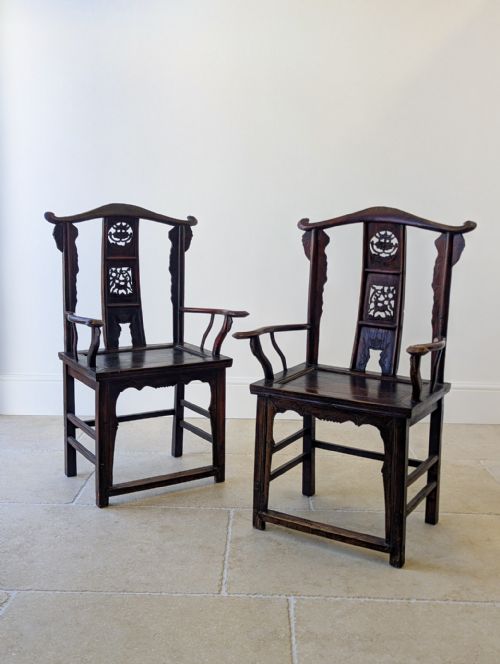
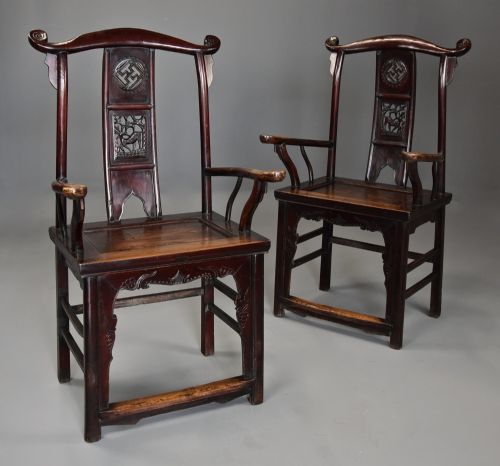
Chinese elm armchairs encompass seating forms created across the nineteenth and eighteenth centuries, reflecting Qing dynasty aesthetics and classical Ming style influences. Buyers searching for Chinese elm armchairs frequently encounter pairs featuring distinctive back rails, carved details, and open arm structures.
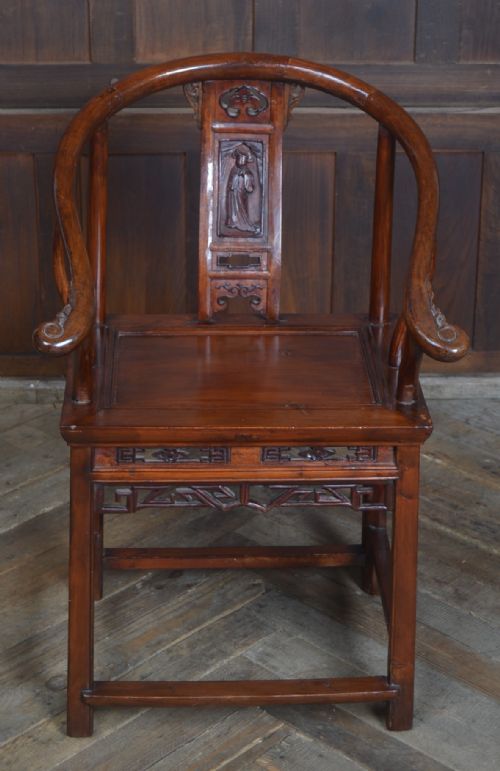
The selection ranges from horseshoe and wishbone designs to scholarly yoke-back chairs, often displaying patinated timber or traces of original red lacquer. These pieces originate primarily from nineteenth-century workshops, alongside occasional examples dating back to the eighteenth century.
Materials and construction methods
Makers utilised elm wood as the primary structural material, relying on its grain pattern and durability for seating frames. Joinery techniques allowed chairs to be assembled without excessive metal fixings, maintaining structural integrity through centuries of use.
Selected pieces received surface treatments including red lacquer and gold leaf applications, which protected the wood while providing a decorative finish. Over time, handling and wear produced a natural patina across the elm surfaces.
Scholars sat high and upright, proving that historical posture was strictly enforced by furniture design.
Markers of quality and finish
Quality in these chairs rests upon the crispness of the carved details and the retention of original surface treatments such as red lacquer. Examples with well-preserved timber patination and balanced proportions command greater attention than heavily restored equivalents.
The integrity of the joinery and the subtlety of the yoke or horseshoe back curves distinguish superior pieces. Original finish layers that have aged naturally without aggressive intervention indicate better preservation.
The Chinese Elm Armchairs Glossary
- Yoke-back
- A chair design featuring a top rail that curves upward at the ends, resembling an ox yoke. This form provides ergonomic support for the sitter.
- Horseshoe back
- A continuous curved rail that sweeps from the arms around to form the backrest. The design is characteristic of classical Chinese seating.
- Patina
- The surface sheen and colour developed by wood over years of handling and exposure. It indicates age and natural wear.
- Red lacquer
- A decorative coating derived from tree sap, applied in multiple layers and often pigmented red. It provides both protection and visual depth to the timber.
- Qing Dynasty
- The imperial dynasty ruling China from the seventeenth to the early twentieth century. Many surviving chairs date from the later decades of this period.
Chinese Elm Armchairs: Frequently Asked Questions
How do I date these chairs?
Dating relies on stylistic markers such as yoke-back profiles and Qing dynasty proportions, alongside the condition of the timber.
Evidence of wear, construction methods, and surface patination also help distinguish nineteenth-century examples from earlier or later work.
Are these chairs comfortable to sit in?
The curved rails and supportive arm designs of horseshoe and yoke-back forms offer ergonomic seating positions.
While they lack modern upholstery, their wooden contours were specifically shaped to support the body during daily use.
What is lacquer finish?
Lacquer is a traditional protective coating built up in successive layers on wooden surfaces. It creates a smooth, durable barrier that often deepens in colour over time.
On these chairs, red lacquer provides both vibrant colour and historical character.
How should I clean elm furniture?
Dusting with a dry, soft cloth prevents particle buildup without harming the timber or surface patination.
Avoid chemical polishes and moisture, which can degrade original finishes and lacquer layers.