







Asian Wooden Armchairs
These asian wooden armchairs bring centuries of craftsmanship into your home, offering sturdy seating carved from elm, hardwood, and rosewood.
Asian Wooden Armchairs
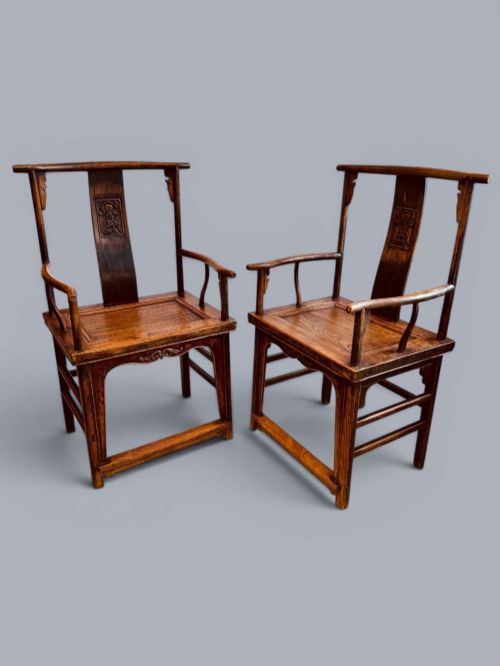
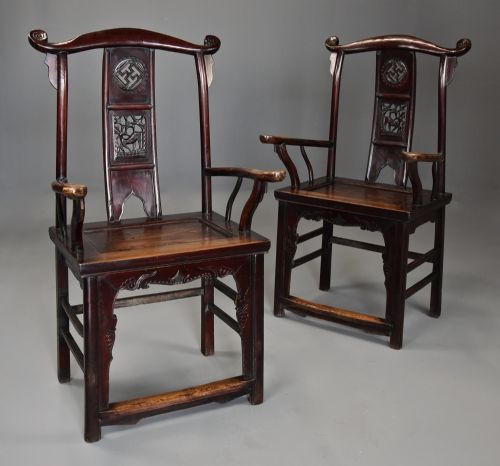
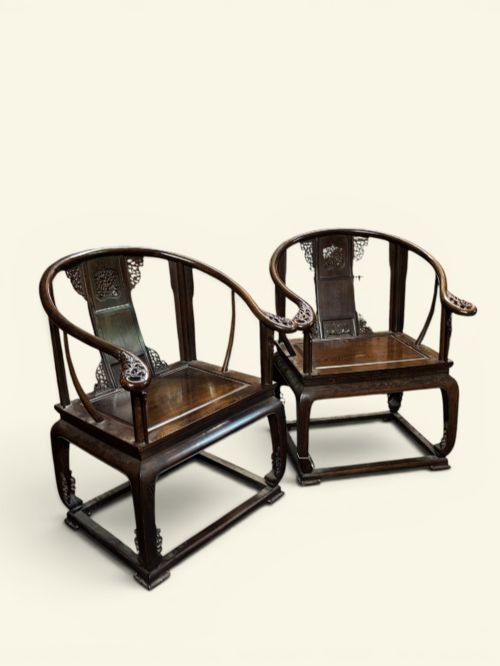
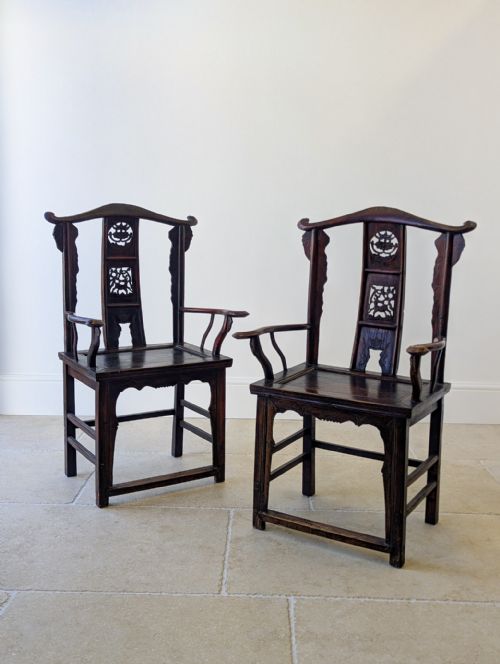
When you search for asian wooden armchairs, you encounter seating built across the nineteenth and early twentieth centuries, drawing on Qing Dynasty, Ming style, and traditional Chinese design. The forms you meet most often on this page are yoke-back armchairs, horseshoe-back armchairs, and scholars chairs.
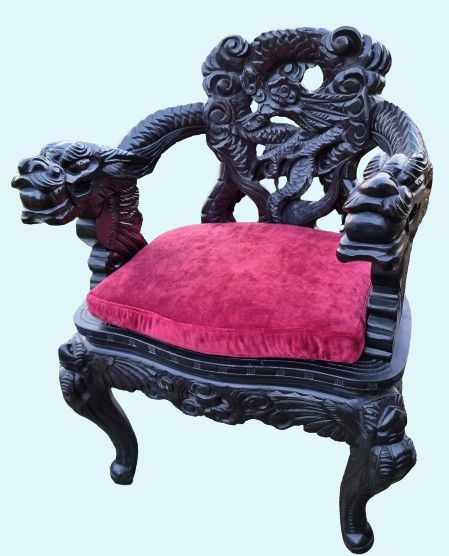
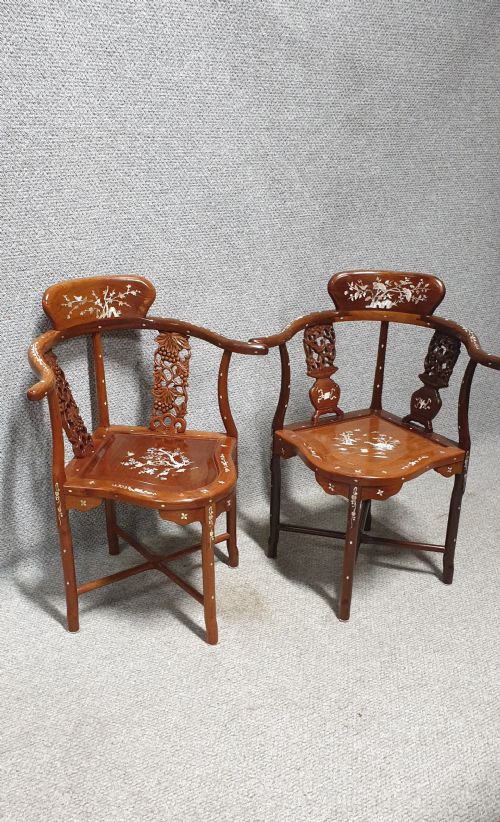
The selection includes pairs and single chairs, alongside occasional seating sets, throne chairs, and corner chairs. Many originate from workshops in China, while others reflect Anglo-Indian or Burmese traditions.
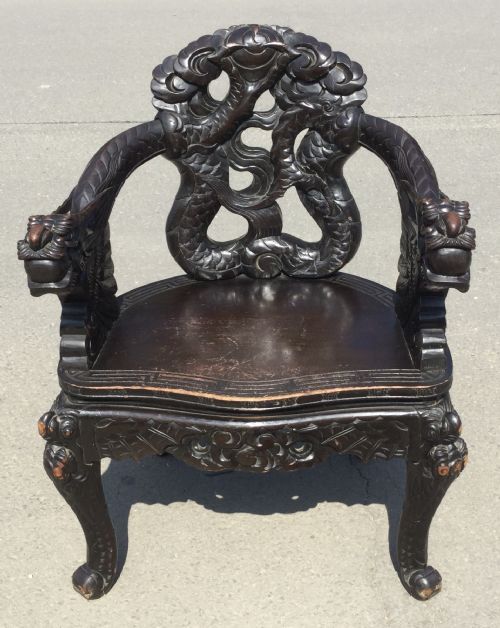
Makers utilised native timbers to construct robust frames intended for daily use and formal reception rooms alike. These chairs combine architectural joinery with carved details, offering a distinct silhouette that suits both period and modern interiors.
Judging Quality
Quality rests in the integrity of the joinery and the preservation of the original timber surface. Chairs retaining their original red lacquer or deep patination command greater attention than those with stripped or heavily restored finishes.
Carving depth and sharpness separate standard production from superior workshop output. The best examples feature crisp relief work on the splats and arms without obscuring the natural grain of the hardwood or elm.
Balance and proportion define the finer pieces, particularly in complex forms like horseshoe chairs and yoke-backs. Symmetrical framing and tight, stable joints indicate skilled construction that endures through centuries of use.
Asian Wooden Armchairs Retail Price Guide 2026
Typical asking prices for asian wooden armchairs among the pieces listed under this phrase on Sellingantiques today, from the lower quarter to the upper quarter. They describe what is for sale here now, not the wider market.
Stargazers and scholars alike can rest easy, thanks to the inclusion of an unusual day bed known charmingly as a stargazers chair.
The Asian Wooden Armchairs Glossary
- Yoke-back armchair
- A traditional Chinese chair featuring a top rail that resembles an ox yoke, curving slightly upward at the ends. This design supports the sitter's posture while adding a refined silhouette to the room.
- Horseshoe-back armchair
- A seating form characterised by a continuous curved rail that sweeps down to form the armrests. The circular design provides ergonomic support and reflects classic Ming joinery techniques.
- Scholars chair
- A minimalist wooden armchair designed for study and meditation, usually featuring a straight backsplat. These chairs prioritise clean lines and structural balance over heavy ornamentation.
- Patina
- The surface sheen and colour developed by wood and lacquer over decades of handling and exposure to light. A good patina indicates age and gentle use without aggressive chemical stripping.
- Qing Dynasty
- The final imperial dynasty of China, spanning from sixteen-forty-four to nineteen-notification-twelve. Furniture from this era often combines robust elm or hardwood frames with intricate carving.
Asian Wooden Armchairs: Frequently Asked Questions
How do I style an antique wooden armchair?
These armchairs work well as standalone statement pieces in living rooms, hallways, or studies. Pair them with neutral modern furnishings to let the carved timber and lacquer finishes stand out.
Ensure the chair has adequate breathing room so the silhouette is fully visible. Avoid placing antique wood in direct sunlight or beside intense heat sources to protect the finish.
What is the difference between yoke-back and horseshoe chairs?
Yoke-back chairs feature a distinct top rail that curves upward at the ends, paired with a straight or gently curved backsplat. They offer a formal and upright seating posture.
Horseshoe chairs utilise a continuous curved rail that wraps around the back and flows directly into the armrests. This circular construction creates a more enveloping and relaxed seating experience.
Can I use these antique chairs every day?
Most of these hardwood and elm chairs were built for daily use using robust mortise and tenon joinery. They remain structurally sound for regular sitting provided the joints are stable.
Check the stability of the legs and arm attachments periodically. Avoid dragging the chairs across rough flooring to prevent stress on the lower stretchers.
How do I identify a Qing Dynasty chair?
Look for dense hardwoods like rosewood or elm, combined with traditional joinery that avoids metal fasteners. Carved motifs on the backsplats often reflect auspicious symbols or classical scrollwork.
Examine the wear patterns and surface patination for signs of age. Regional variations and workshop styles help narrow down the production period within the nineteenth century.