


Vintage Ceramic Tray
A vintage ceramic tray brings domestic history to the tabletop, spanning periods from the Victorian era through Art Deco.
Vintage Ceramic Tray
A vintage ceramic tray encompasses a diverse range of serving dishes, decorative platters, cabinet pieces and inkstands from the nineteenth and early twentieth centuries. These items reflect the varied tastes of the Victorian, Edwardian and Art Deco periods, drawing on styles such as Rococo Revival, Dutch Delft, French Provincial and Chinoiserie.
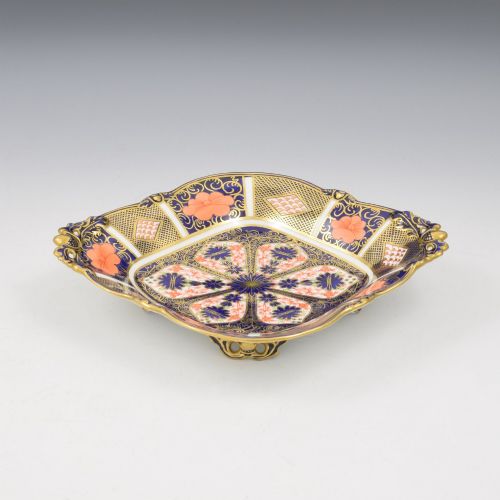
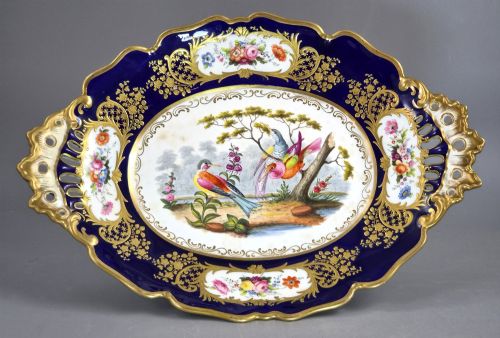
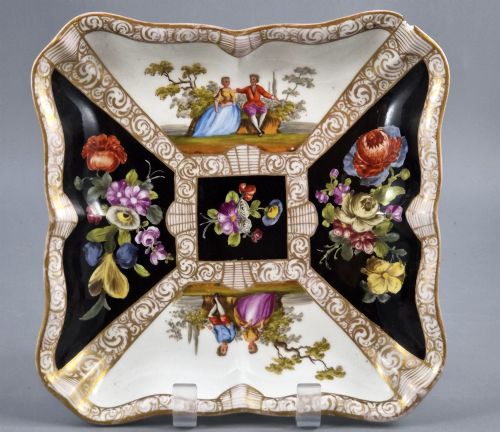
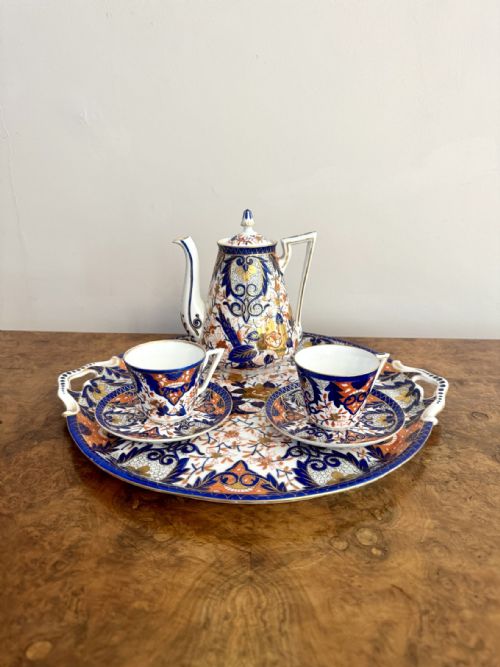
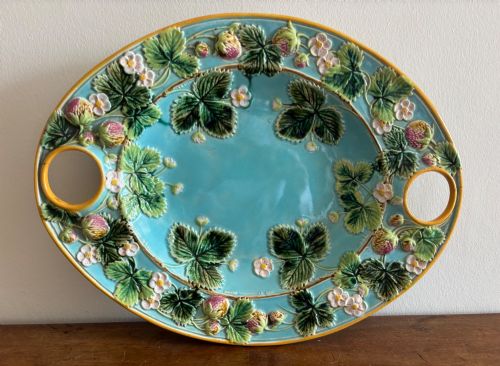
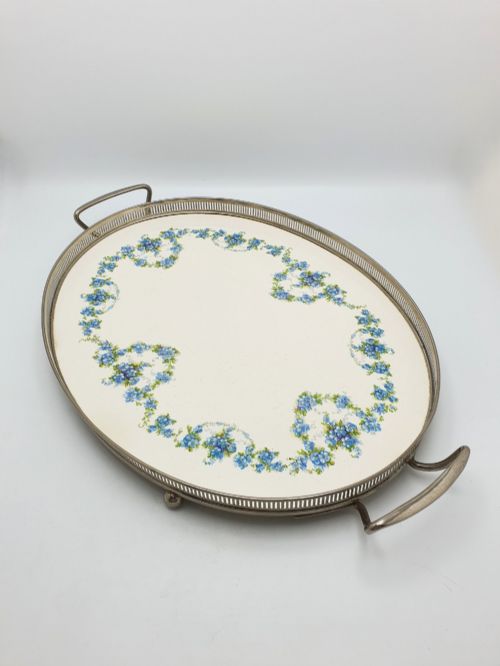
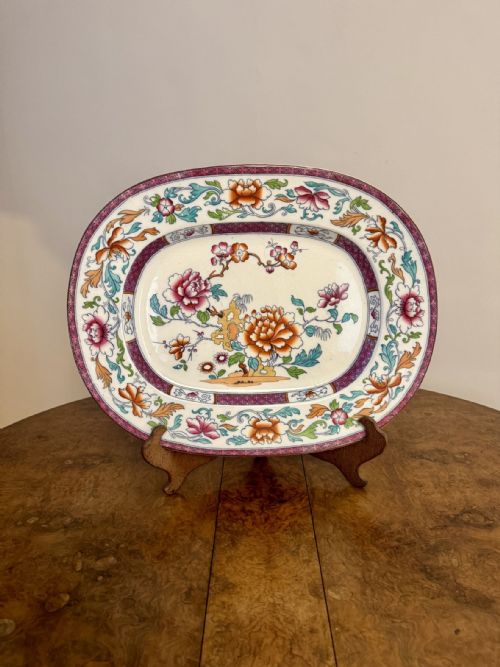
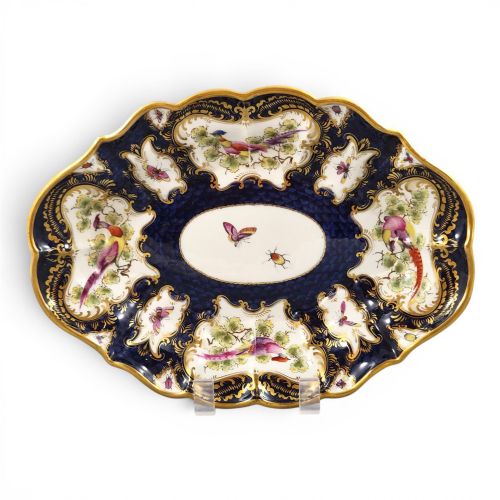
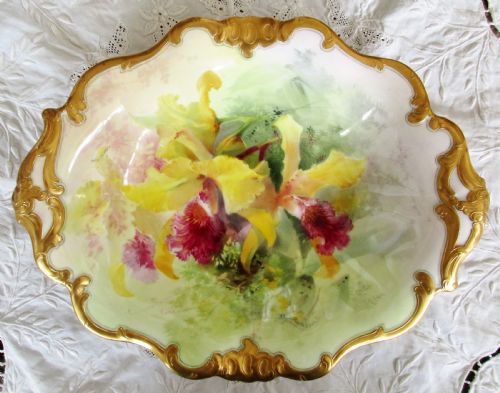
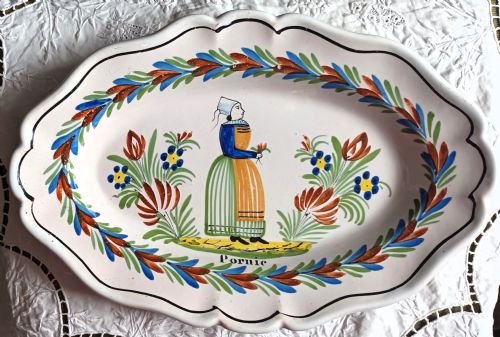
The pieces appearing on this page range from large blue and white meat platters and Majolica strawberry dishes to hand-painted dessert plates and porcelain inkstands. Makers and potteries represented include Royal Crown Derby, Coalport, Meissen, Royal Worcester, Royal Doulton, Quimper, Minton, Spode and Wedgwood.
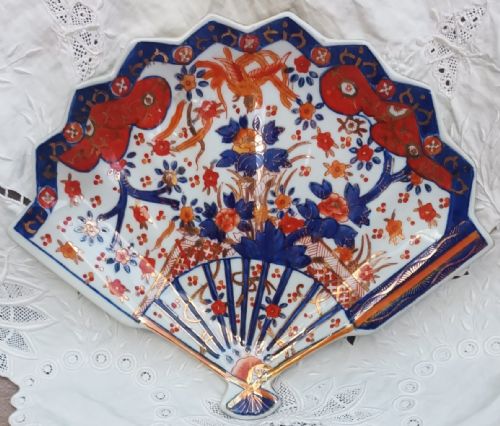
Buyers will find both British earthenwares and continental porcelains alongside Japanese Imari and Kutani platters from the Meiji period. This combination offers utilitarian serving vessels and decorative cabinet items made for domestic use over the past two centuries.
Materials and technique
Makers utilised earthenware, porcelain and ironstone as the primary bodies for these trays and dishes, shaping them through moulding, pressing or throwing on the wheel. Many pieces display cobalt blue underglaze decoration, transfer printing or intricate hand-painted enamel botanical and figural scenes.
Surface finish is defined by applied glaze, sometimes enhanced with gold leaf, gilding or brass mounts as seen on nineteenth-century inkstands. Specialist techniques include the distinct blue scale ground of Royal Worcester and the vibrant polychrome enamels typical of Imari wares.
The inventory records both British manufacturers and continental workshops, including German and French faience production.
Assessing quality
Quality rests upon the crispness of the moulding, the precision of the hand-painting and the depth of the glaze. Works by established factories such as Meissen, Royal Worcester or Coalport display superior control in their fired enamels and gilding compared to simpler commercial wares.
The artistic merit of hand-painted details, such as signed botanical studies or intricate Watteau scenes, elevates a piece above standard transfer-printed transferware. Preservation of the original gilt highlights and the clarity of cobalt underglaze transfer prints also dictate distinction.
Royal Crown Derby·Coalport·Meissen·George Jones·Royal Worcester·Royal Doulton·Quimper French Faience·Minton·Paul Müller Selb·KPM·Spode·Wedgwood
The Vintage Ceramic Tray Glossary
- Majolica
- A type of earthenware characterised by colourful lead glazes applied over an opaque tin-opacified white glaze, popular during the Victorian period for botanical forms.
- Imari
- A style of Japanese porcelain featuring a distinctive palette of underglaze blue, iron red and gold, which heavily influenced European makers.
- Faience
- European tin-glazed earthenware produced in various regional centres such as Quimper in France or Delft in the Netherlands.
- Ironstone
- A heavy, durable type of semi-vitrified earthenware developed in Britain as a robust alternative to true porcelain.
- Transferware
- Pottery decorated by applying a monochrome design from an engraved copper plate onto tissue paper and transferring the ink to the ceramic body before glazing.
Vintage Ceramic Tray: Frequently Asked Questions
How do I date a ceramic tray?
Dating relies upon maker's marks, pattern numbers and registration stamps impressed or printed on the underside of the ceramic body. Stylistic indicators, such as Victorian aesthetic movement motifs or later Art Deco geometric forms, also help establish the era of production.
Changes in glaze composition and manufacturing techniques over the nineteenth and early twentieth centuries provide further clues for narrowing down the exact decade.
Were these trays used for food?
Many items designed as meat platters, dessert dishes and sandwich plates served functional roles at the dining table during the Victorian and Edwardian periods. Others, such as cabinet dishes and inkstands, were strictly ornamental or desk accessories intended for display.
Checking for utensil marks and wear on the glaze helps determine whether an individual piece saw active use or remained protected in a cabinet.
How should I clean antique porcelain?
Cleaning requires gentle hand washing in warm water with a mild, non-abrasive detergent to protect aged glazes and delicate overglaze enamels. Harsh scrubbing or dishwashers must be avoided, especially on pieces featuring gold leaf or hand-painted gilding.
Items with porous earthenware bodies or old hairline cracks should not be submerged for prolonged periods to prevent moisture absorption.
What is the difference between porcelain and earthenware?
Porcelain is fired at a higher temperature, resulting in a vitrified, non-porous body that is often translucent and rings when tapped. Earthenware is a lower-fired, more porous ceramic that requires an impermeable glaze to hold liquids.
Ironstone sits between these categories as a dense, sturdy hybrid developed for everyday durability in nineteenth-century households.