
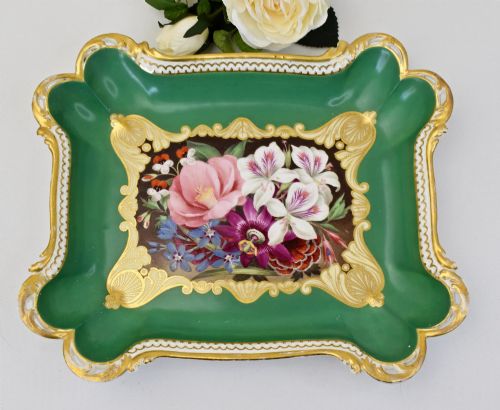


Victorian Floral China Dish
A victorian floral china dish brings hand-painted petals and gilded edges to the table, offering both decorative charm and practical service.
Victorian Floral China Dish
A victorian floral china dish encompasses a variety of ceramic forms designed for serving and display. Buyers encounter cabinet plates, dessert dishes, platters, and tureens shaped by nineteenth-century tastes.
The pieces on this page span from Regency and Georgian roots through Victorian manufacturing up to the early twentieth century. Makers such as Royal Doulton, Coalport, and Minton dominate the selection with painted floral motifs.
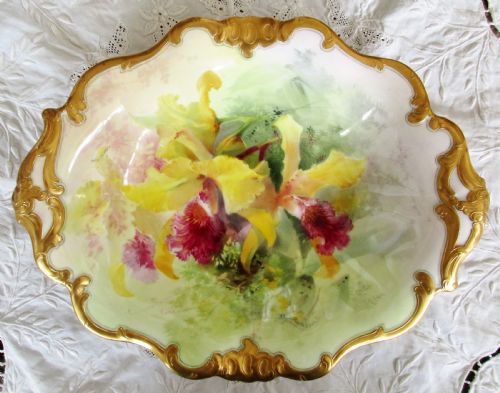
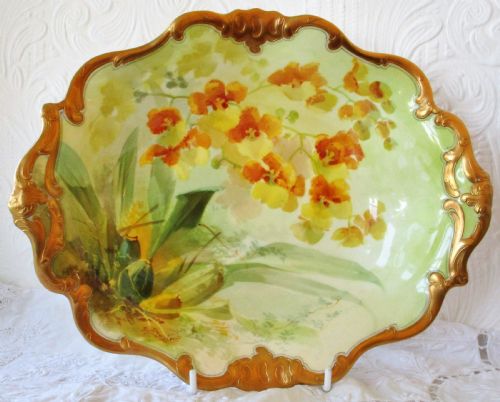
Forms range from simple ironstone comports to intricate porcelain cabinet plates decorated with orchids and botanical studies. These items reflect both formal dining traditions and parlor display customs of the period.
How they were made
Potters utilised porcelain, bone china, and ironstone as the primary bodies for these wares. Ironstone provided a heavy, durable base for large platters and tureens, whilst porcelain and bone china suited delicate cabinet plates.
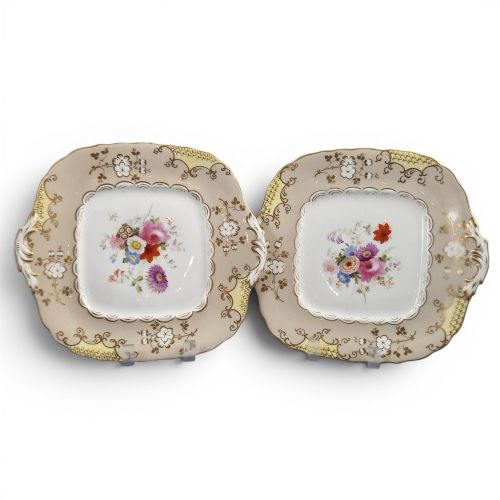
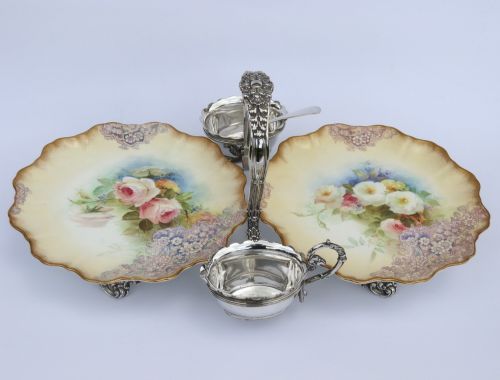
Decoration relied on hand-painted botanical or floral designs applied over or under the glaze. Artisans added gold leaf and gilt highlights to rims and handles, often combining enamel colours with blue and white transfers.
Several dishes bear the names of specific nineteenth-century orchids, painted with botanical precision for Victorian drawing rooms.
What varies in quality
The refinement of the ceramic body and the skill of the brushwork set the standard for each piece. Master painters working for major factories produced botanical studies with distinct botanical accuracy and fine detail.
The preservation of the original gilding and enamel colours dictates the desirability of an item. Superior pieces retain crisp gold leaf along the moulded borders without rubbing from past use.
Royal Doulton·Coalport·Doe and Rogers·Pucher Deroche·Minton·Royal Crown Derby
The Victorian Floral China Dish Glossary
- Ironstone
- A heavy, durable ceramic material patented in the nineteenth century to rival true porcelain. It withstands frequent use on the dining table.
- Cabinet dish
- A decorative ceramic plate or tray intended for display in a cabinet rather than for serving food. These pieces often feature elaborate hand-painted scenes.
- Comport
- A raised dish or bowl used for serving fruit or dessert. It sits upon a central pedestal or foot.
- Gilt
- A thin layer of gold applied to the surface of ceramic wares. It highlights moulded edges and handles.
- Tureen
- A deep covered vessel used for serving soup, sauce, or vegetables. They appear in ceramic and ironstone across this selection.
Victorian Floral China Dish: Frequently Asked Questions
Can I use these dishes for serving food?
Many of these pieces, particularly the ironstone platters and service dishes, were built for dining use. You can use them carefully for special occasions.
Cabinet dishes and delicate painted porcelain plates are better suited for display. Their hand-painted surfaces and gilt edges warrant gentle handling.
How do I date a nineteenth-century floral dish?
Dating relies on factory backstamps, impressed marks, and stylistic clues. Victorian designs often incorporate registration numbers or specific potter's ciphers.
Comparing the floral painting style to known decorator periods helps narrow the decade of manufacture. Ironstone pieces from the earlier decades possess heavier bodies than later Victorian wares.
What is the difference between porcelain and ironstone?
Porcelain is a fine, vitrified ceramic that feels light and sometimes appears translucent under strong light. It was the material of choice for fine dessert services and cabinet plates.
Ironstone is a sturdy, opaque earthenware developed for heavy service use. It resists chipping and forms the base for robust platters and tureens.