


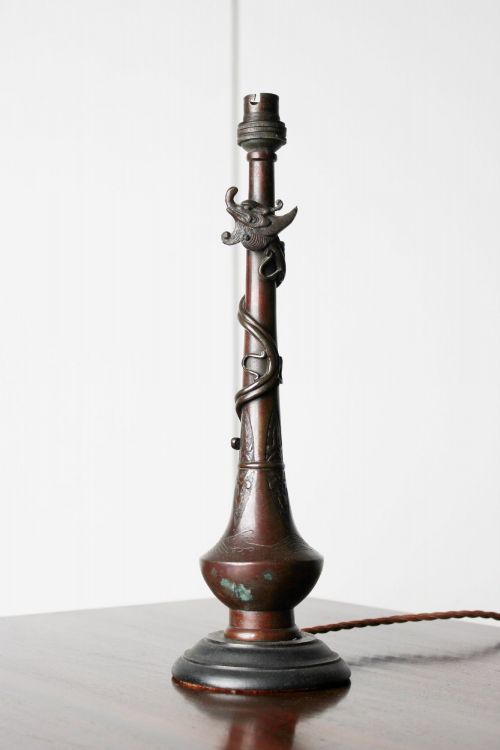


Vintage Casting Lamp Base
A vintage casting lamp base brings heavy industrial or sculptural weight to a room, offering a solid anchor for domestic lighting.
Vintage Casting Lamp Base
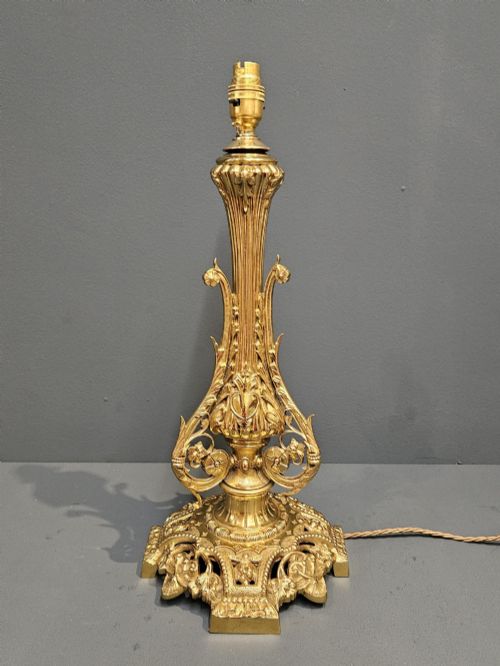
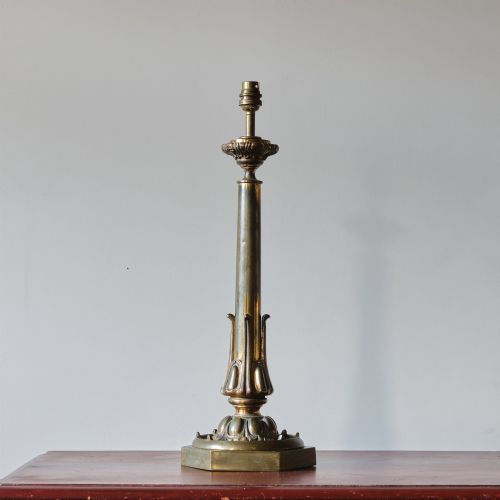
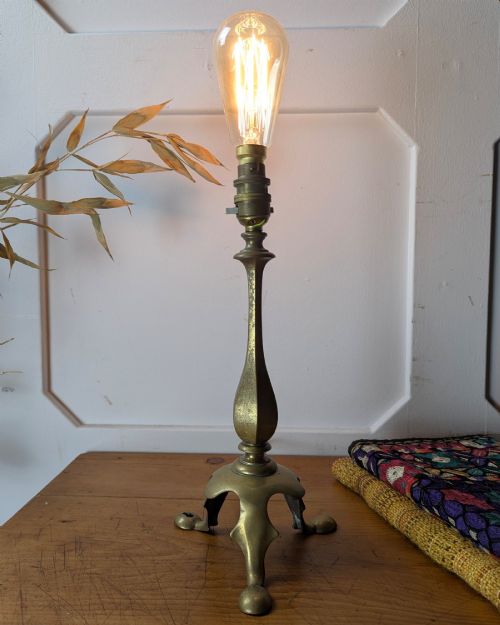
When you search for a vintage casting lamp base, you find structural supports formed in metal through founding methods rather than simple sheet fabrication. The selections span the Victorian, Edwardian, and Art Deco eras, reaching from the nineteenth century into the nineteen-thirties.
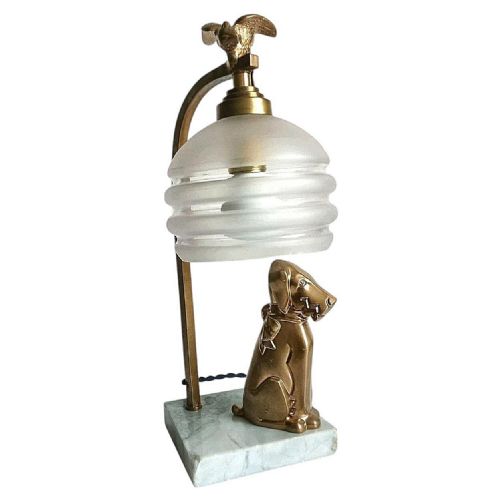
Most items appear as table lamps, desk lamps, and converted oil lamps, alongside occasional floor lamps and ceiling lights. Forms range from classical columns and balusters to figurative groups involving animals, cherubs, and human subjects.
Origins stretch across British and continental European workshops, with French designs appearing frequently alongside domestic English pieces. Materials run from cast iron and bronze to brass, spelter, and marble bases.
How they were made
Foundries produced these items by pouring molten metals such as bronze, brass, cast iron, and spelter into moulds. Makers often combined cast metal components with turned elements, marble plinths, and glass reservoirs.
Surface finishes include gilding, nickel plating, and patination, alongside enamelled details and openwork floral casting. Decorative mounts, classical masks, and figural sculptures were cast separately and fixed to heavy bases.
Vintage Casting Lamp Base Retail Price Guide 2026
Typical asking prices for vintage casting lamp base among the pieces listed under this phrase on Sellingantiques today, from the lower quarter to the upper quarter. They describe what is for sale here now, not the wider market.
Materials recorded across the inventory include bronze, cast iron, marble, brass, and glass.
What varies in quality
Quality rests in the crispness of the casting detail and the heft of the metal used in the foundation. Sculptural elements on figural bases show varying degrees of hand-chasing and refinement after the metal cools in the mould.
The integration of mixed media, such as combining bronze figures with marble plinths or opaline glass, defines the ambition of the piece. Maker attribution, through signatures or factory marks, separates standard production items from distinguished studio works.
Giovanni De Martino·Joseph Hinks·Muller Bros·P. Sega·Hawkins
The Vintage Casting Lamp Base Glossary
- Spelter
- A zinc alloy frequently used as a cheaper alternative to bronze for decorative figures and lamp bases during the Art Nouveau period. It is softer than bronze and usually carries a painted or electroplated finish.
- Baluster
- An architectural form shaped like a miniature column with a swelled lower portion, commonly seen in the profile of heavy metal lamp bases.
- Chasing
- The manual tooling of a metal casting with punches and hammers to sharpen surface details and remove mould seams after founding.
- Patna
- The surface skin or coloration developed on bronze and brass over time through oxidation, or applied artificially by the maker to simulate age.
- Corinthian column
- A classical architectural column style featuring an ornate capital decorated with acanthus leaves, often replicated in brass for tall table lamps.
Vintage Casting Lamp Base: Frequently Asked Questions
How do I identify an Art Deco casting lamp base?
Art Deco pieces from the nineteen-thirties often feature geometric lines, stylized animal figures like dogs and birds, and contrasting materials such as marble and nickel.
They lean away from Victorian floral complexity in favour of streamlined, industrial, or modernist silhouettes.
What is the difference between bronze and spelter bases?
Bronze is a heavy, durable copper alloy that takes fine detail and holds a rich natural patina over the centuries.
Spelter is a softer zinc-based metal that feels lighter and requires a surface coating or paint layer to mimic the appearance of bronze.
Were these lamps originally electric?
Many examples from the nineteenth century and early twentieth century started life as oil lamps or fluid burners before later conversion to electricity.
Factory lights, desk lamps, and specific structural columns were designed for electrical or lighting use from their initial manufacture.
How do I clean a brass casting base?
Dust gently with a soft cloth and avoid harsh chemical dips that strip away historical patination and surface character.
Leave the aged metal finish intact unless active corrosion threatens the integrity of the material.