
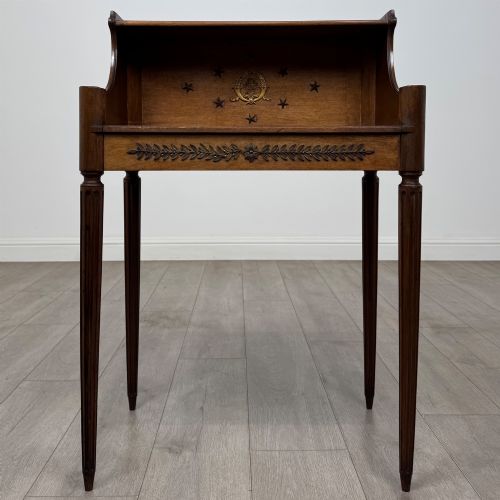
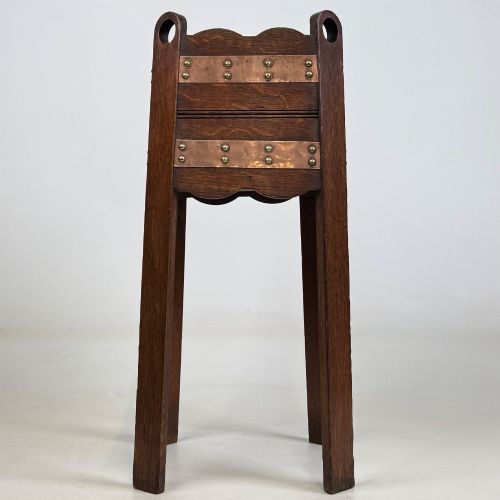
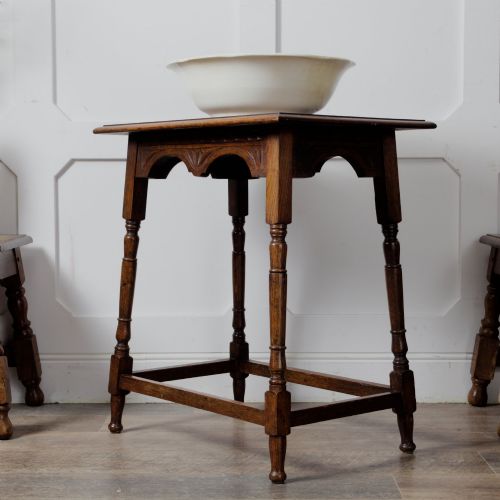
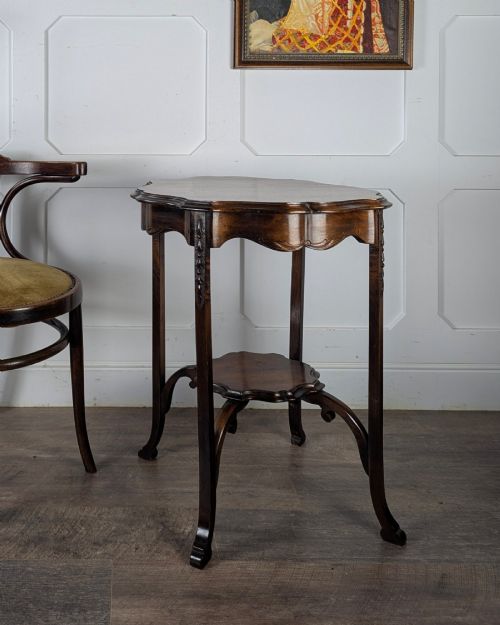
Vintage Carved Plant Stand
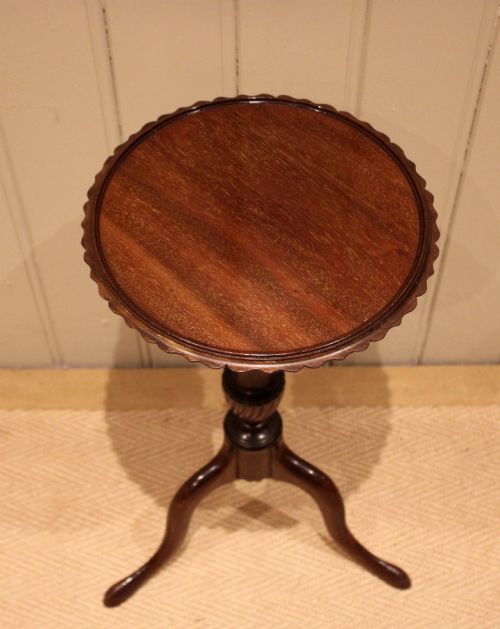
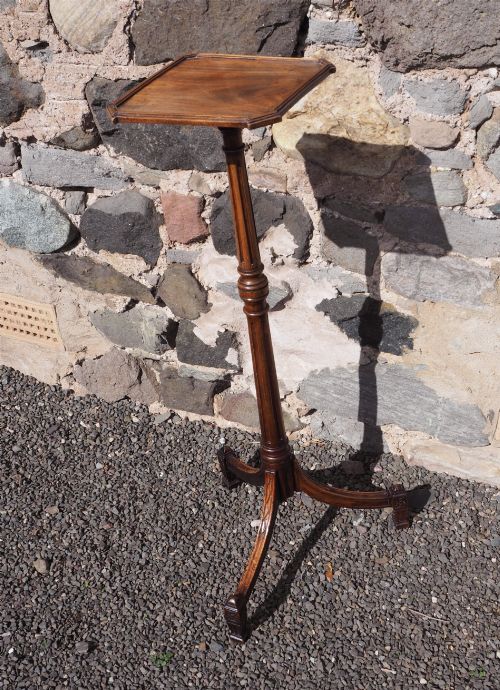
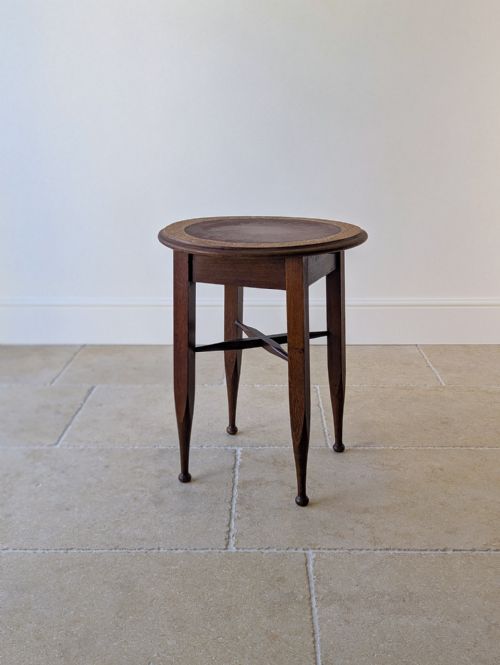
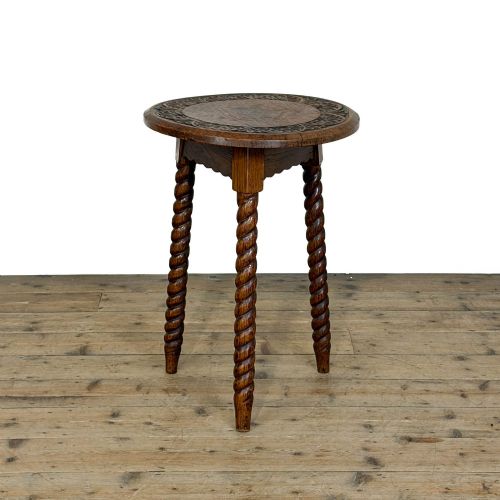
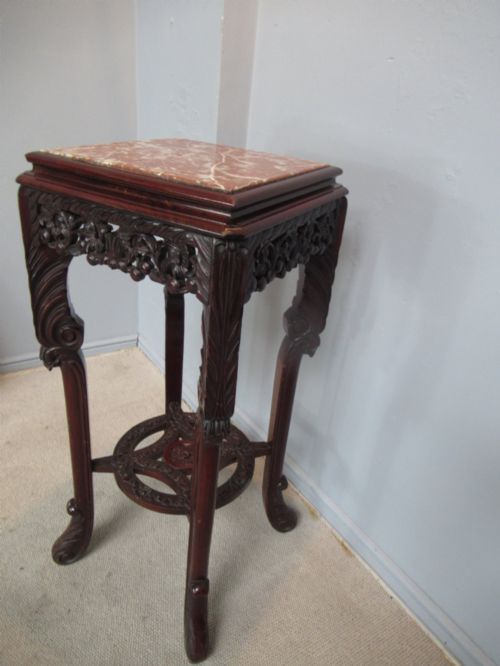
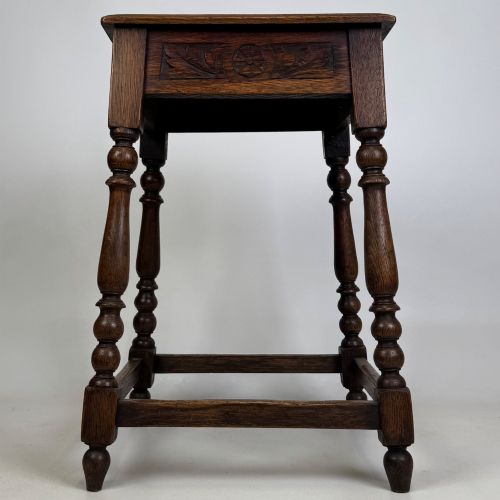
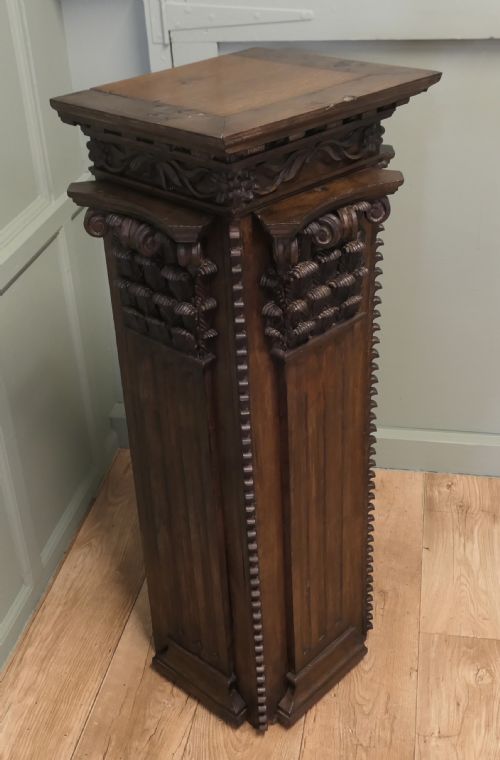
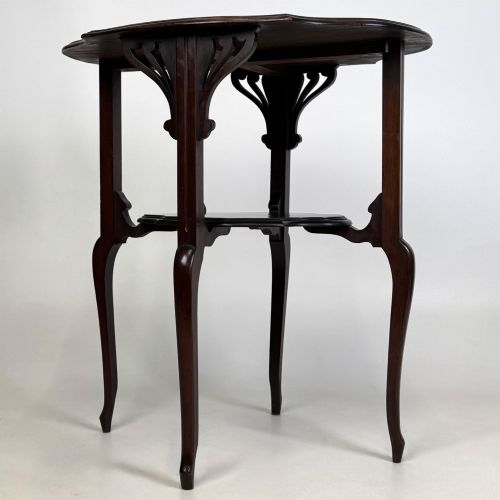
A vintage carved plant stand holds a fern or pottery bowl, bringing height and structural form to a corner.
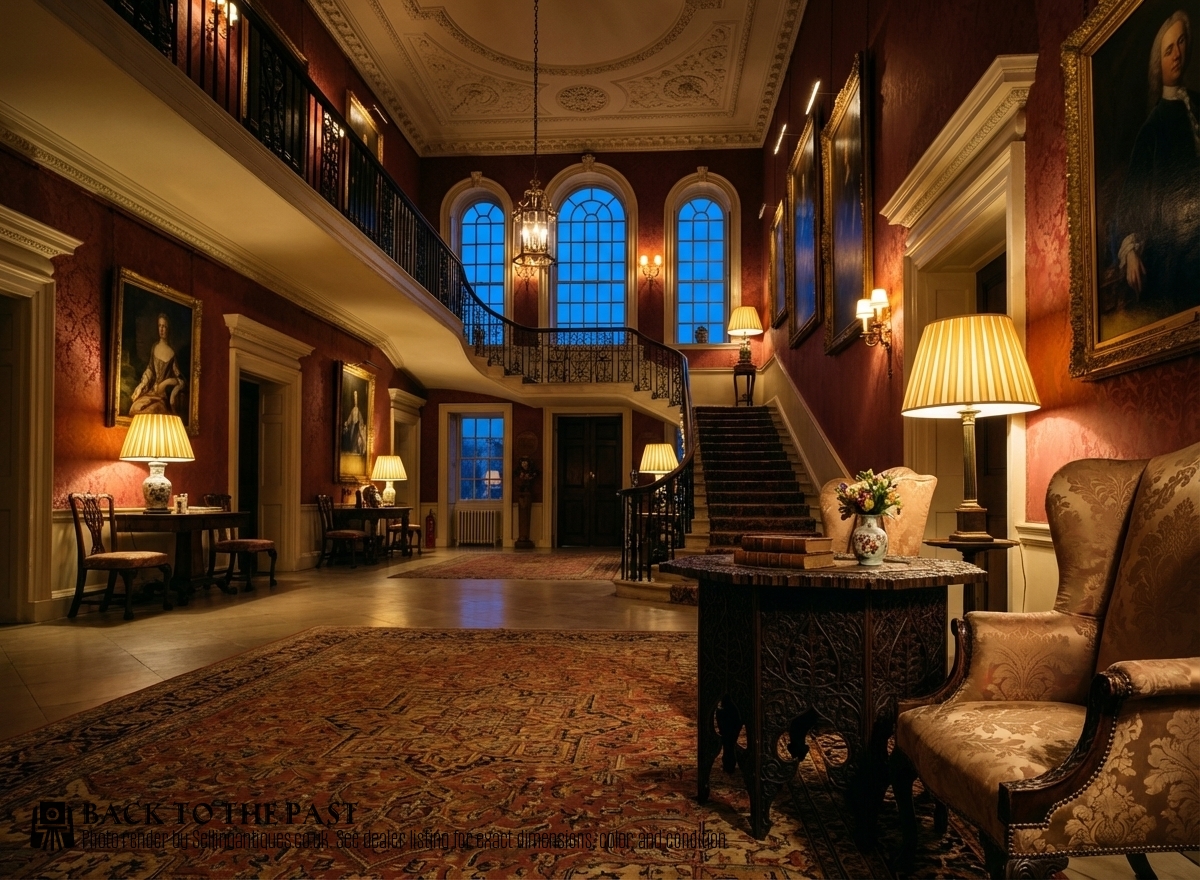
Vintage Carved Plant Stand
A vintage carved plant stand serves as an elevated platform for floral displays, jardinieres, and ornaments within a room. When searching for this phrase, buyers encounter pieces spanning the Victorian, Edwardian, and early twentieth-century periods, alongside styles ranging from Arts and Crafts to Anglo-Indian.
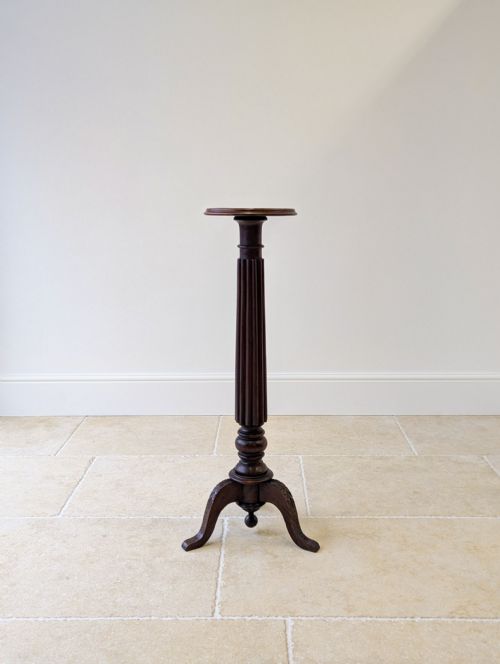
The selections on this page appear primarily in oak and mahogany, with occasional examples in walnut, rosewood, and mixed hardwoods. Forms vary from slender torcheres and pedestals to small occasional tables, tripods, and multi-tiered stands designed specifically to display foliage or sculptural objects.
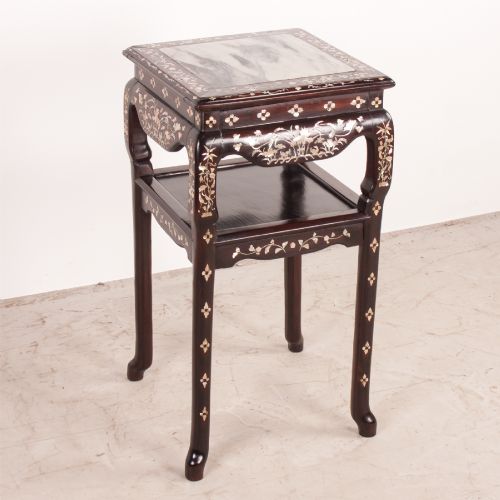
Origins stretch across British workshops, French ateliers, and Asian export studios, yielding diverse ornamental details such as marble tops, bone inlay, and chip carving. Buyers find both tall, commanding columns and low, compact tripods suited to different interior spaces.
Materials and construction methods
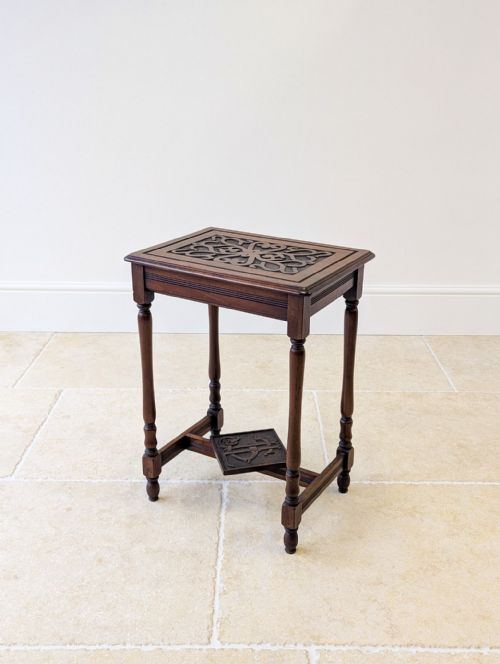
Cabinetmakers constructed these supports using durable timbers such as solid oak, mahogany, and walnut, frequently selecting dense hardwoods to bear the weight of heavy ceramic pots and stone tops. Turning lathes shaped slender columns and barley twist legs, while hand chisels produced intricate chip carving and relief ornamentation.
Surface decoration often incorporated applied elements like mother-of-pearl inlay, bone work, and brass wire, alongside traditional finishes including original green paint, ebonisation, and polished French polish. Joinery relied on sturdy mortise and tenon frames or stable tripod bases to ensure balance under heavy loads.
Listings feature oak, mahogany, walnut, and rosewood alongside exotic accents like bone inlay and marble.
Markers of distinction
Quality rests in the depth and precision of the hand carving, where crisp, confident chisel work distinguishes artisan pieces from simpler commercial production. The choice of timber also dictates standard, with rich grain patterns in solid walnut, mahogany, or figured oak elevating a stand above plain utility pieces.
Structural integrity and material combinations, such as the inclusion of inset marble slabs or intricate bone and mother-of-pearl inlay, separate standard decorative items from superior workshop examples. The balance between a slender silhouette and a heavy, stable base reveals the maker's underlying skill.
Liberty and Co·Liberty of London·Shapland and Petter
The Vintage Carved Plant Stand Glossary
- Torchere
- A tall, slender stand or pedestal originally designed to hold a torch or candle, later adapted to support flowers or sculptures. These pieces often feature turned columns and tripod or stepped bases.
- Jardiniere
- An ornamental pot or stand for holding plants and flowers. In furniture terms, it refers to elevated plant holders constructed from wood, brass, or ceramic.
- Chip carving
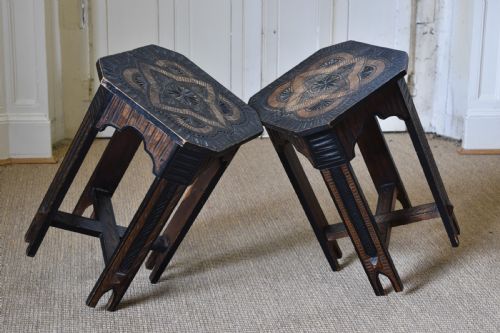
- A technique of ornamentation where small chips are removed from a wooden surface with a knife or chisel to create geometric patterns. This method appears frequently on rustic and Arts and Crafts examples.
- Occasional table
- A small, versatile table intended for light use around a room, often serving alongside plant stands and pedestals. These pieces feature in various heights and circular or square top configurations.
- Ebonisation
- A finishing process that stains timber, usually fruitwood or beech, to imitate ebony. This dark, matte or polished finish proved popular during the Victorian period.
Vintage Carved Plant Stand: Frequently Asked Questions
What is a plant stand used for?
These elevated supports hold potted plants, ferns, and heavy ceramic jardinieres to bring greenery to eye level in a room. They lift foliage off the floor, protecting carpets and improving light exposure.
Beyond botany, they serve as display pedestals for bronze sculptures, vases, and decorative lamps, acting as sculptural furniture elements in corners or hallways.
How do I style a plant stand at home?
Place a stand in an empty corner, beside a window, or flanking a fireplace to introduce vertical interest and break up flat room lines. Trailing plants work particularly well on taller pedestals, allowing foliage to cascade down the sides.
Keep the weight of the pot balanced with the sturdiness of the base, ensuring heavy marble-topped or tripod columns hold secure under larger ceramic containers.
How do I tell Edwardian stands from Victorian ones?
Victorian stands tend to feature heavier timbers, darker ebonised finishes, and more ornate, deep-relief carving or turned columns. They lean towards formal grandeur and solid, imposing silhouettes.
Edwardian and later pieces often reflect lighter Arts and Crafts influences, displaying simplified oak construction, clean geometric chip carving, and a focus on natural wood grain.
Are marble top stands durable?
Marble inset tops provide a cool, water-resistant surface that protects the surrounding wooden frame from damp soil and spilled water during plant watering. This stone insert also adds significant weight to the base, improving overall stability.
While robust against moisture, the stone requires careful handling to prevent chipping along the polished edges during relocation.