



Pierced Carved Wood Table
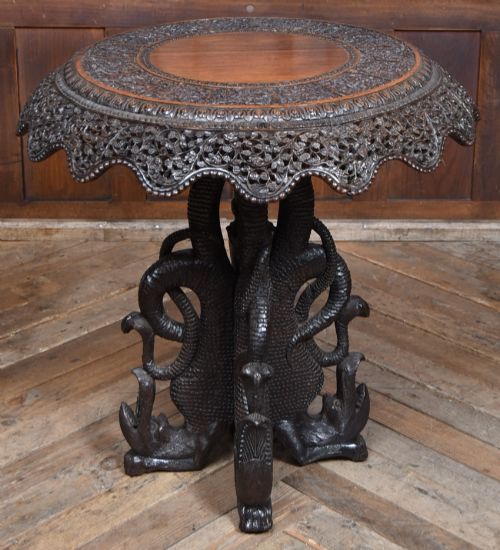
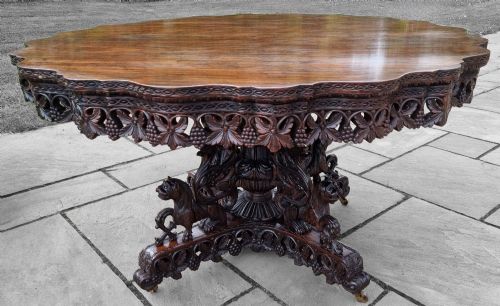
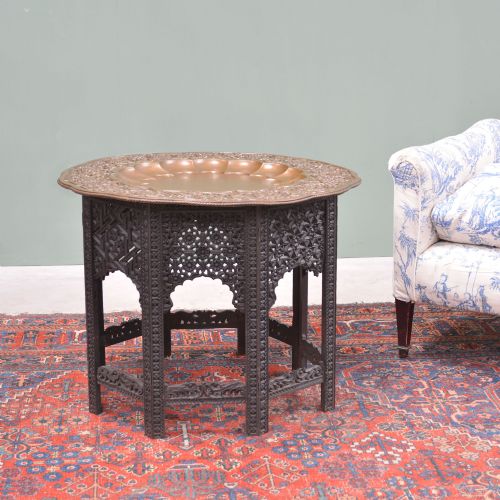
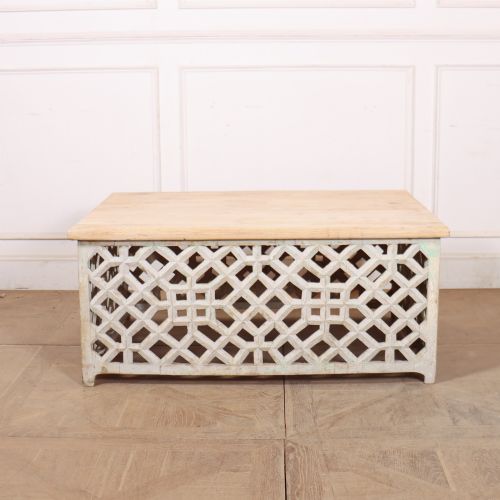
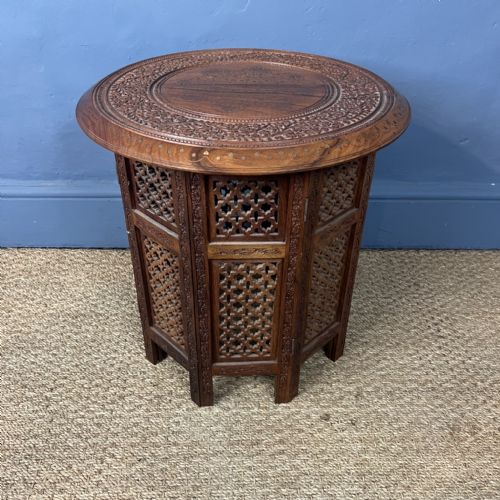
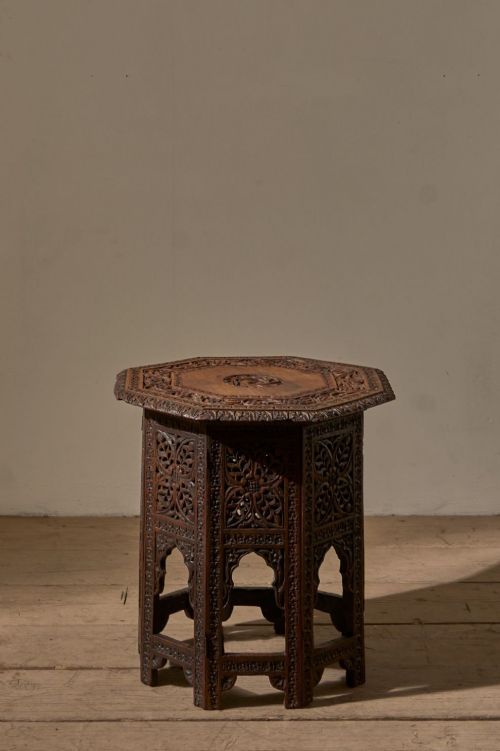
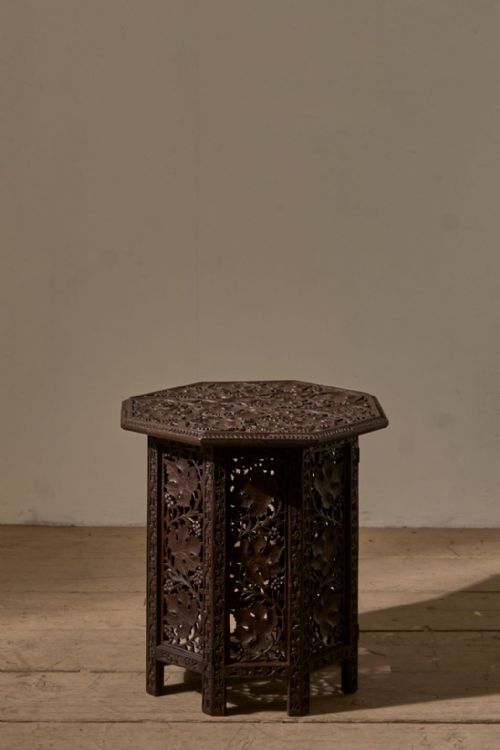
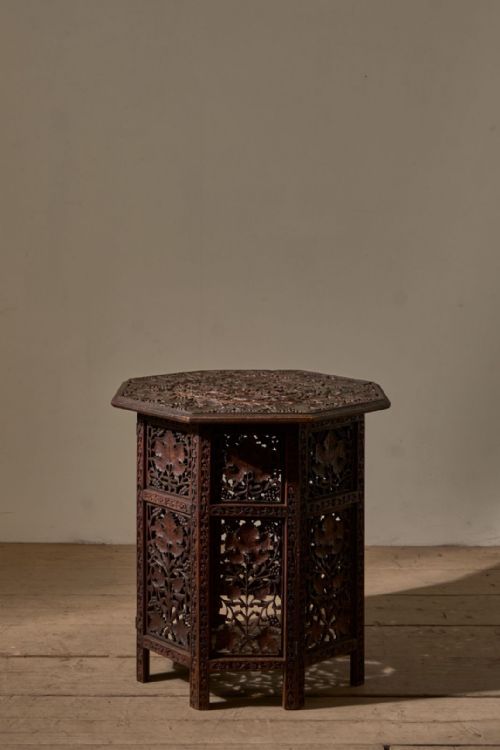
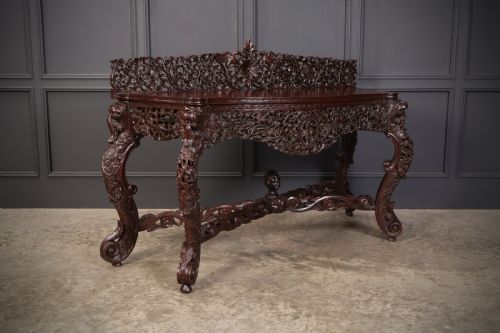
These pieces of pierced carved wood table craftsmanship bring intricate colonial and traditional designs into a room, offering surface space with deep relief carving.
Pierced Carved Wood Table
A pierced carved wood table encompasses side tables, occasional tables, console tables, and centre tables originating from Anglo-Indian, Anglo-Burmese, and Chinese traditions. You will most frequently encounter nineteenth-century Anglo-Indian examples in woods such as padauk and teak, often featuring folding bases or intricate top designs.
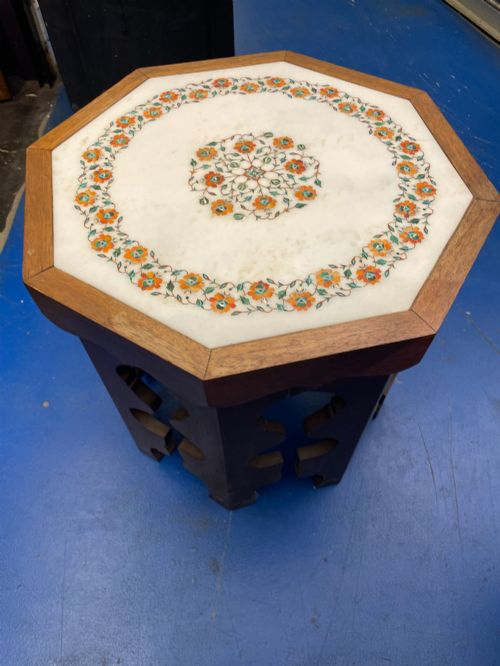
The forms range from compact octagonal side tables and tray top tables to larger console and centre tables intended for prominent display. Many incorporate distinctive regional motifs like peacocks, dragons, leaf patterns, and serpents within densely worked wooden frames.
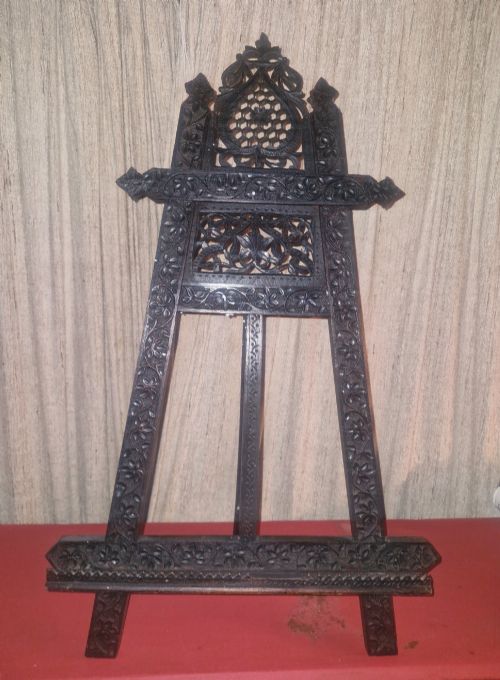
Alongside tables, the category extends to related furnishings like plant stands, table screens, and bedside tables. These diverse objects share a heavy reliance on pierced woodwork and intricate carving executed during the Victorian, Edwardian, and earlier periods.
What varies in quality
The depth and crispness of the carving dictate much of the quality, separating hurried commercial production from masterwork execution. Superior pieces maintain sharp undercut details in motifs like foliage and animals, whereas lesser examples appear shallow and rounded.
Structural integrity and the quality of timber selection also separate pieces, particularly in folding or complex tray top designs where joints must bear weight. The precision of inlaid brass or copper elements further distinguishes finer workshops from standard output.
Some nineteenth-century tables feature sneaky folding mechanisms that allow the entire carved base to collapse flat like a book.
The Pierced Carved Wood Table Glossary
- Anglo-Indian
- Describing decorative arts and furniture made in India during the British colonial period, frequently combining British furniture forms with traditional Indian carving techniques.
- Padauk
- A heavy, durable tropical hardwood with a reddish-orange hue that darkens with age, commonly utilised for fine nineteenth-century carved tables.
- Tray top table
- A table featuring a removable or fixed tray with a raised gallery rim, often found in Hoshiarpur productions where the surface is densely inlaid or carved.
- Pierced carving
- A decorative technique where material is cut entirely through from the front to the back, creating an openwork or fretwork pattern that lets light pass through.
- Jardiniere stand
- A decorative pedestal or low table designed specifically to hold a plant pot or flower bowl.
Pierced Carved Wood Table: Frequently Asked Questions
What is an Anglo-Indian table?
An Anglo-Indian table is a piece of furniture made in India during the colonial era for British residents or export. These items fused traditional British furniture forms like side tables and occasional tables with intricate local craftsmanship.
They are characterised by dense surface carving, pierced woodwork, and often exotic hardwoods such as padauk and teak. Many incorporate folding frames designed for ease of transport.
How do I clean a carved wooden table?
Cleaning a heavily carved wooden table requires gentle maintenance to protect the recessed areas from dust accumulation. Use a soft, dry brush or a microfiber cloth to lift debris from the pierced sections without snagging the wood.
Avoid liquid polishes or aggressive commercial cleaners that can build up within the carved crevices. Natural wax applied sparingly helps preserve the timber over time.
Were these tables made for export?
Many of these pieces were indeed produced specifically for the export market during the nineteenth and early twentieth centuries. European demand for exotic colonial goods drove production in regions like Hoshiarpur and Burma.
Makers adapted traditional motifs and forms to suit Western domestic interiors, resulting in portable tea tables, occasional stands, and display pieces.
What woods were commonly used?
Makers relied heavily on dense tropical hardwoods that could hold extremely fine, sharp details under a chisel. Padauk and teak appear frequently in Anglo-Indian and Burmese pieces due to their strength and rich natural colouration.
Rosewood, oak, and general Asian hardwoods were also utilised depending on the regional workshop and the specific period of manufacture.