


Vintage Cane Holder Stand
A vintage cane holder stand keeps hallways tidy and brings period character to an entrance.
Vintage Cane Holder Stand
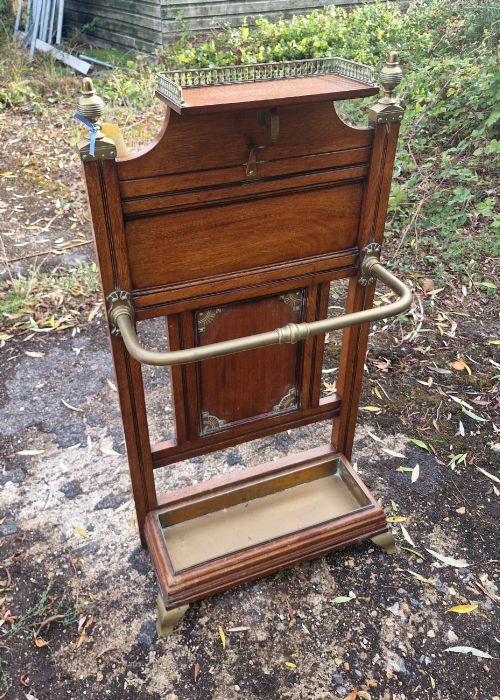
A vintage cane holder stand serves as a practical furniture piece designed to store walking sticks, umbrellas, and parasols in a home entrance or hallway. These items appear in various forms, including dedicated stick stands, combined umbrella and stick stands, hall stands, and corner arrangements.
The most common examples on this page date from the Victorian and Edwardian eras through to the 1930s, reflecting the periods spanning the nineteenth and early twentieth centuries. Makers designed these pieces to handle wet weather gear and walking aids while complementing the domestic interior styling of the period.
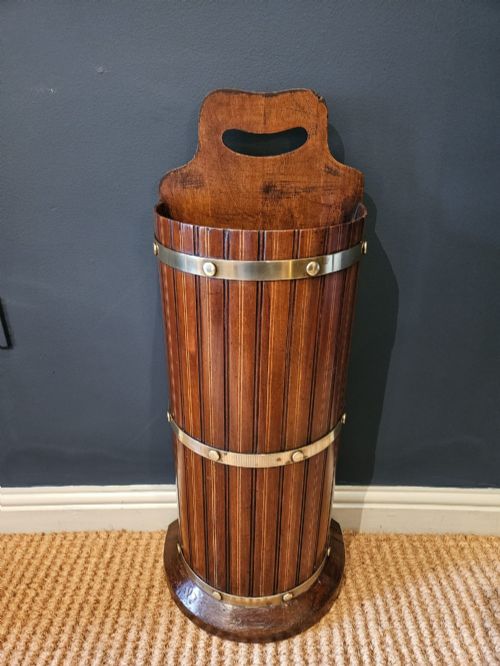
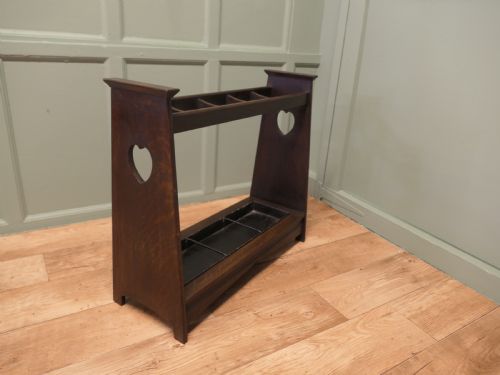
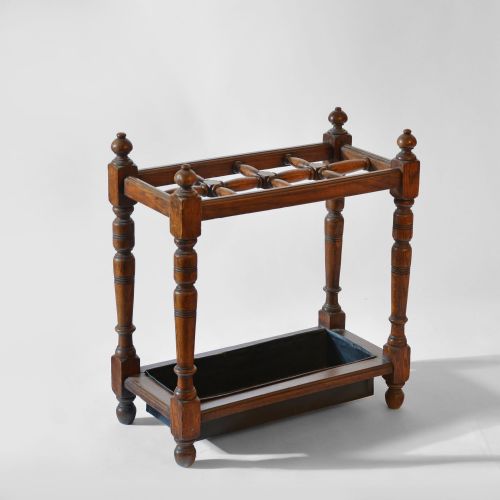
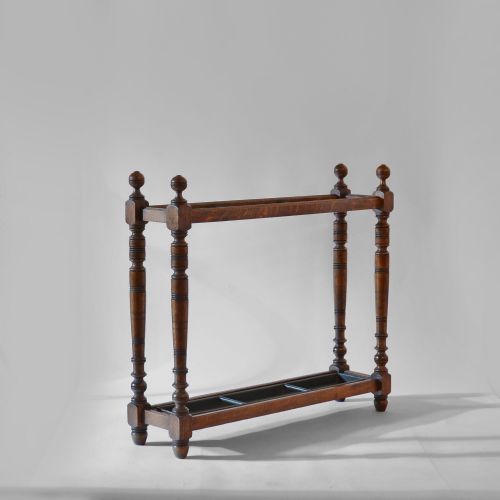
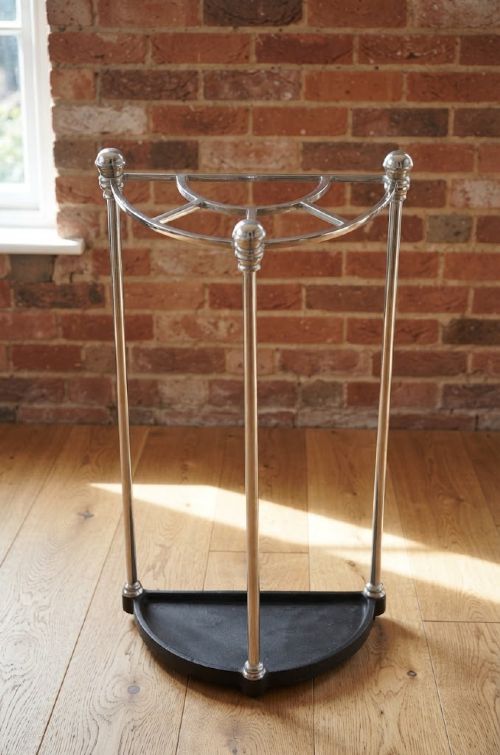
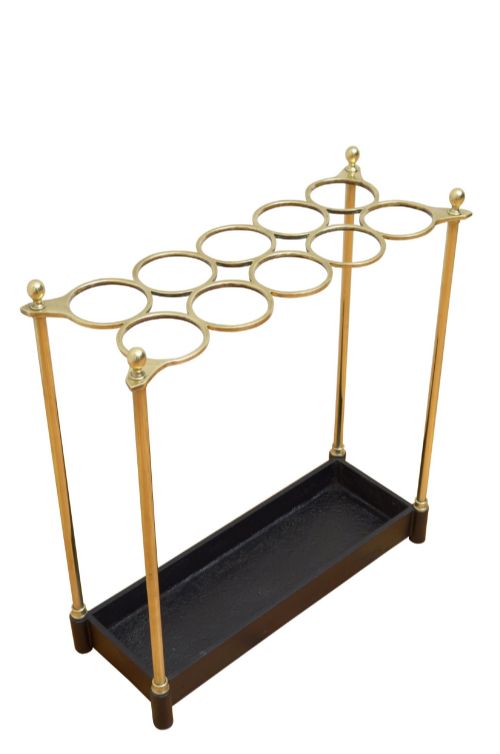
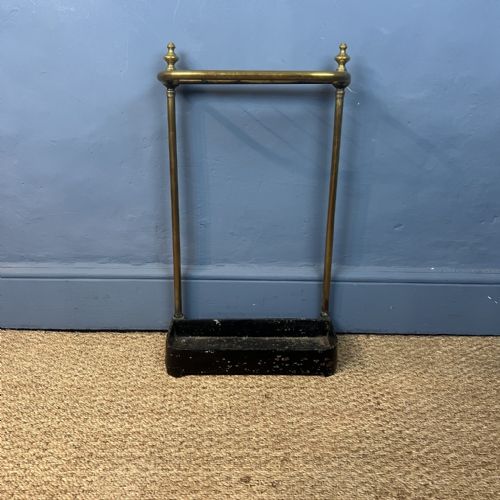
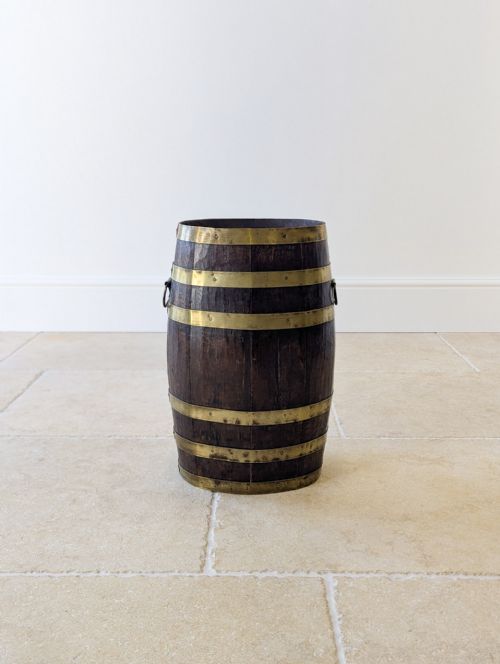
Makers produced these stands in diverse structural shapes, such as demi-lune or half-moon profiles, barrel designs, and rectangular configurations. Many incorporate built-in divisions or retain original metal drip trays at the base to catch moisture from wet items.
Materials and construction methods
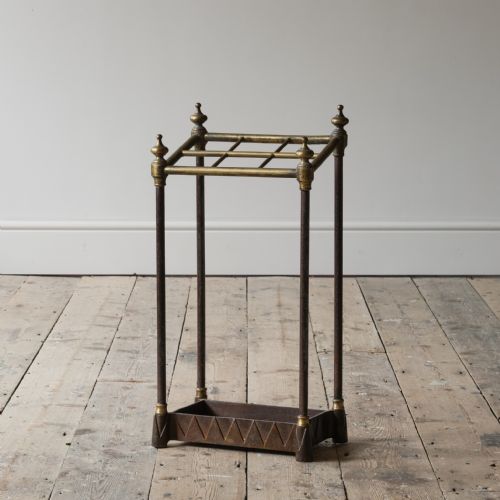
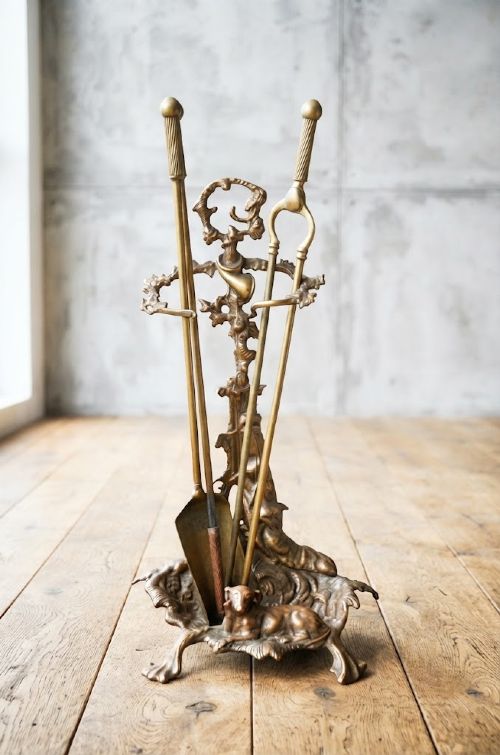
Makers utilised robust metals such as cast iron, brass, steel, and zinc, often combining them within a single piece to provide structural stability and weight. Cast iron examples frequently utilise openwork frames or decorative motifs, while brass components appear in polished tubes, ball finials, and bound edges.
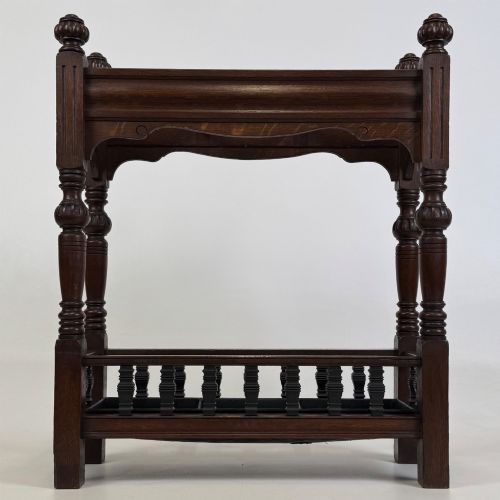
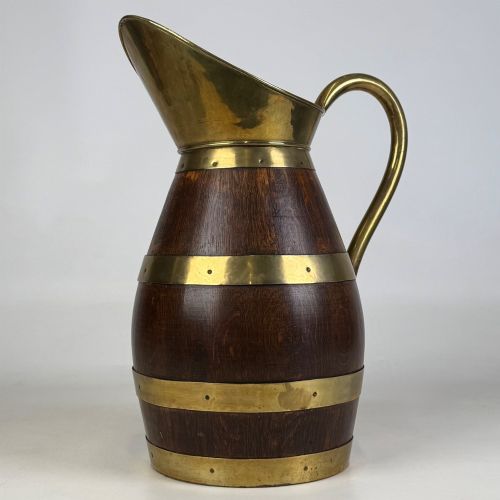
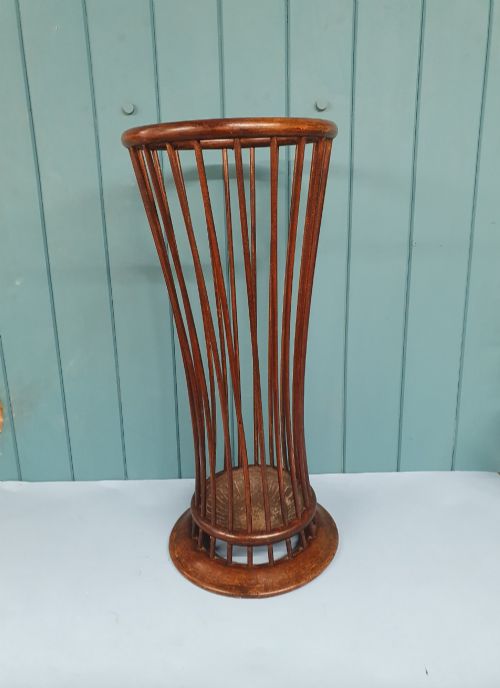
Wood is a prominent material, with numerous pieces constructed from oak, mahogany, pine, and bentwood. Workshops employed techniques like coopered construction for barrel-shaped wooden stands and steam-bending for bentwood frames, alongside Japanned and Chinoiserie surface finishes.
A football-themed cast iron stick stand brings an unexpected sporting motif to nineteenth-century hallway storage.
Distinctions in construction and design execution
Quality separates pieces through the integrity of the materials and the precision of the assembly, such as tightly fitted coopered staves in wooden barrel stands or cleanly cast metalwork with crisp detailing. Superior examples maintain structural soundness without excessive play in joints, and often retain original functional elements like metal drip trays rather than later replacements.
Design ambition distinguishes standard utility items from more refined works, with specific pieces displaying distinct stylistic movements such as Art Nouveau, Aesthetic Movement, or Arts and Crafts principles. The presence of identifiable design characteristics, decorative brass bindings, or specific structural divisions elevates the visual interest of the object.
Coalbrookdale·Thonet·Heals of London·Liberty Design
The Vintage Cane Holder Stand Glossary
- Demi-lune
- Half-moon shape. This configuration allows a stand to sit flat against a hallway wall while taking up minimal floor space.
- Drip tray
- A removable metal basin placed at the bottom of a stand. It catches water running off wet umbrellas and protects the floor.
- Coopered
- Built from vertical wooden staves held together by metal bands, similar to barrel construction. This technique appears in wooden stick stands.
- Japanned
- A European imitation of East Asian lacquerwork. It provides a dark, glossy decorative finish on specific pieces.
Vintage Cane Holder Stand: Frequently Asked Questions
What periods do these cane holders come from?
The pieces span the Victorian and Edwardian eras, the Aesthetic Movement, Arts and Crafts, and Art Deco styles. Dates range from the nineteenth century through the 1930s.
Most items reflect the domestic design trends of the late nineteenth and early twentieth centuries.
What materials were used to make them?
Makers utilised a combination of metals and woods to construct these items. Common materials include cast iron, brass, oak, mahogany, steel, and zinc plating.
Many designs combine a wooden frame with metal components or include metal drip trays.
What are the common shapes available?
Stands appear in barrel forms, rectangular layouts, corner configurations, and half-moon profiles. Many incorporate internal divisions to separate individual sticks and umbrellas.
Some examples also double as fire companion stands for hearth tools.