


Oak Umbrella Rack
An oak umbrella rack organises the hallway with solid timber, holding wet sticks and heavy coats while setting the tone for the interior.
Oak Umbrella Rack
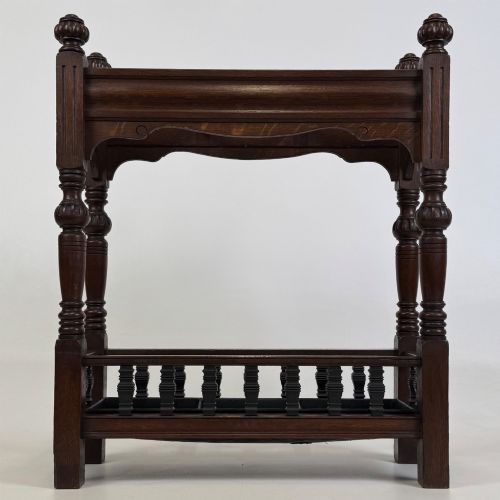
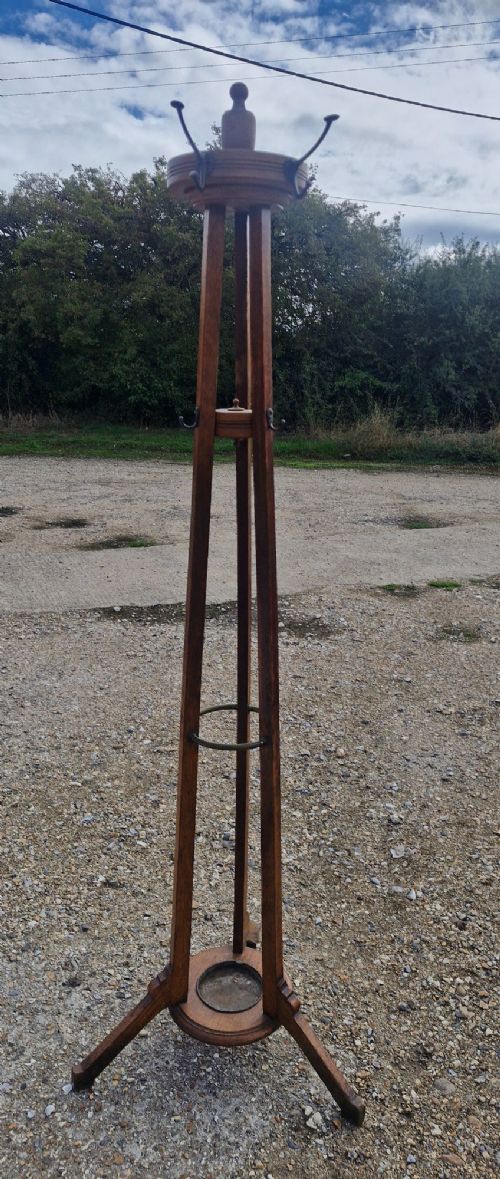
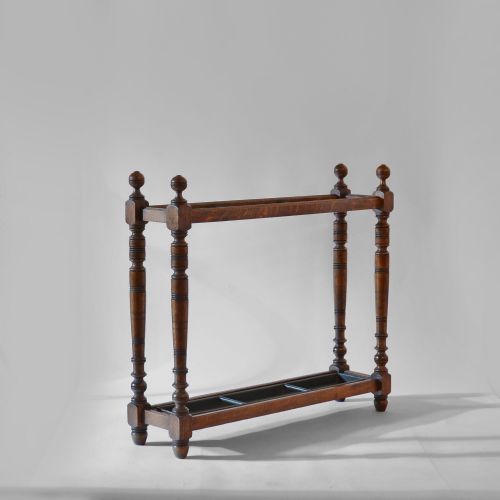
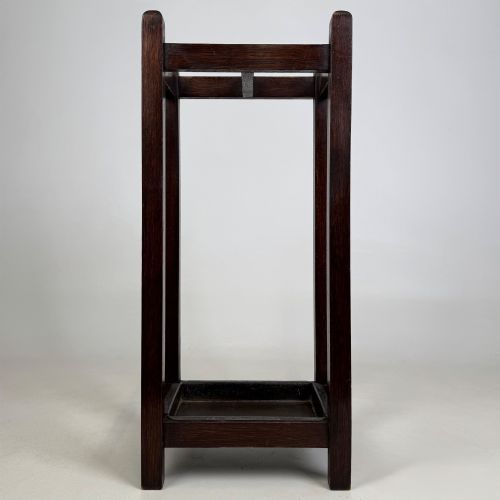
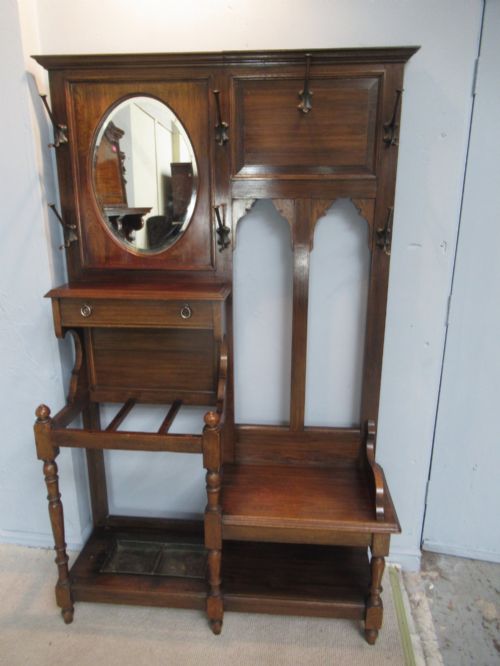
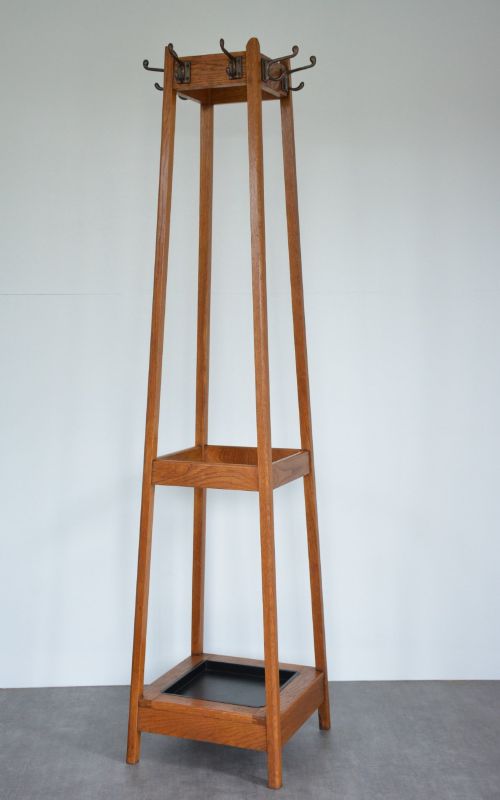
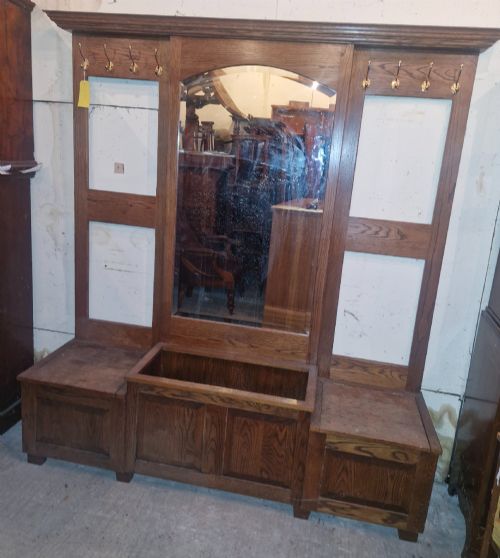
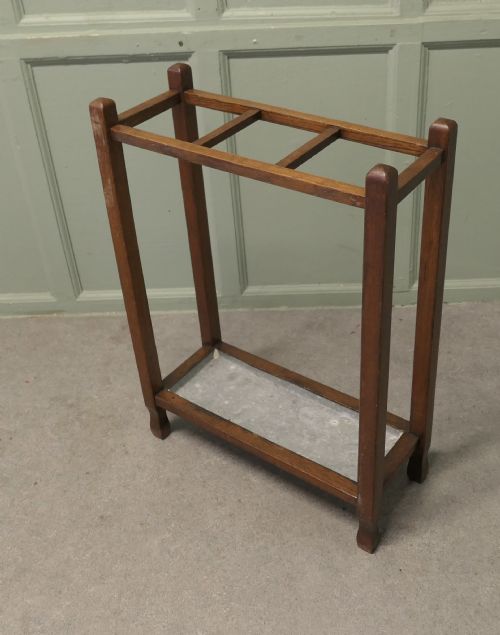
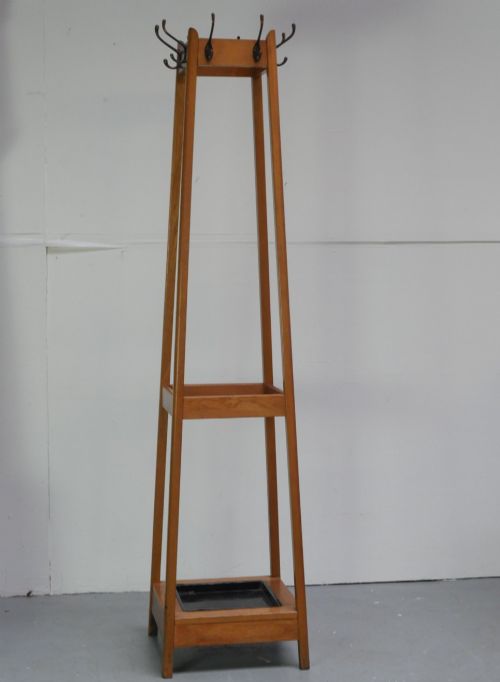
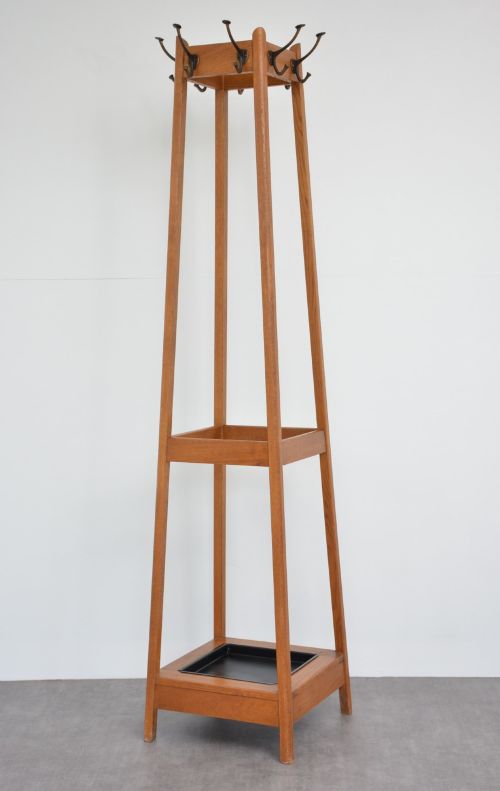
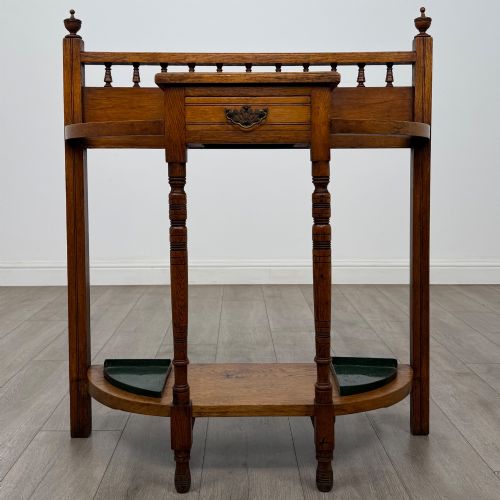
When you examine an oak umbrella rack, you encounter hall furniture designed to manage wet weather and outerwear near the front door. These pieces range from dedicated stick stands to larger hall stands combining coat hooks, mirrors, and umbrella wells.
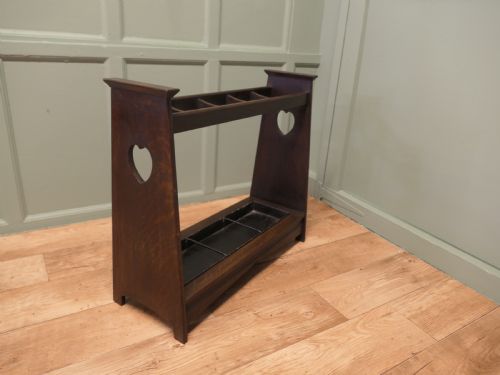
The versions met most often on this page date from the Victorian and Edwardian periods, alongside Arts and Crafts interpretations. They appear in forms spanning compact table models to substantial multi-functional furniture designed for country houses and town residences.
Makers utilised timber alongside practical metal components to catch water, producing designs that suit traditional hallways and more industrial interiors. Each piece reflects the domestic routines of the nineteenth and early twentieth centuries.
How oak umbrella racks were made
Carpenters constructed these pieces using solid oak, frequently employing pegged joints, turned spindles, and carved ornamentation. Workshops integrated carved foliage, Green Man motifs, or geometric lines depending on the prevailing style.
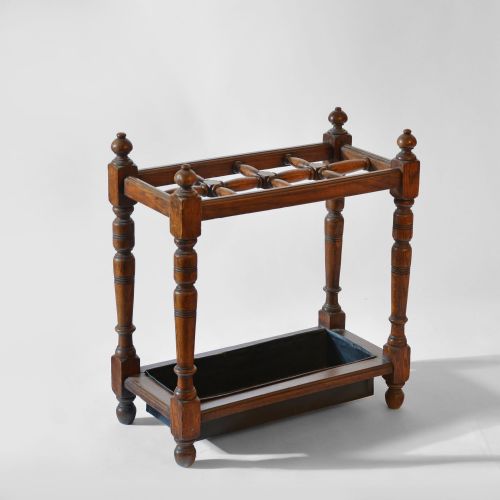
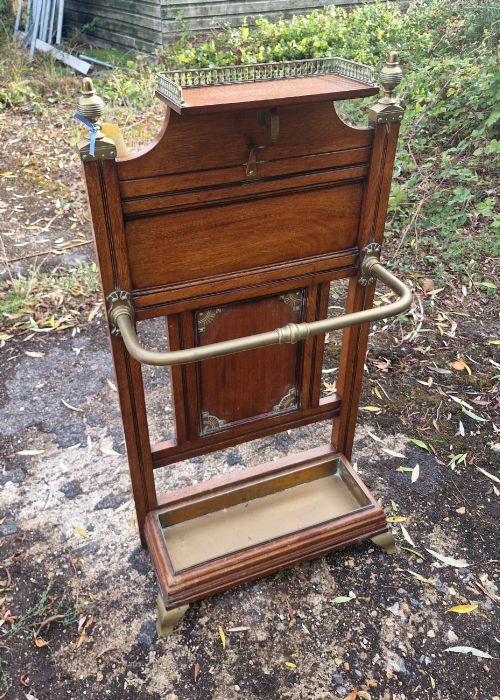
Functional metal elements such as brass, iron, cast iron, and zinc formed the drip trays and umbrella rings situated at the base. These materials resisted rust from wet canes while providing structural contrast to the timber frames.
Listings feature oak umbrella racks spanning the Victorian and Edwardian eras, alongside pieces attributed to the Arts and Crafts and Aesthetic movements.
What varies in quality
Quality rests in the substance of the timber and the integrity of the joinery rather than mere surface decoration. Heavier, denser oak frames withstand the daily weight of wet umbrellas and heavy winter coats without loosening at the joints.
The refinement of the metal drip trays and the complexity of the wood carving distinguish standard utility hall furniture from pieces produced by notable design workshops. Complete sets retaining their original metal liners and removable trays demonstrate superior preservation.
Heals of London·Liberty Design·J. Parker of Woodstock·Fischel·Astrola
The Oak Umbrella Rack Glossary
- Arts and Crafts
- A design movement prioritising traditional craftsmanship, visible construction, and simple forms over mass-produced ornamentation. It influenced much of the oak hall furniture produced around nineteen hundred.
- Drip tray
- A removable metal basin placed at the base of a stand to catch water running off wet umbrellas. These liners protected wooden floors from moisture damage.
- Hall stand
- A large piece of hall furniture combining umbrella holders, coat hooks, a mirror, and sometimes a bench seat or glove box. It served as a central reception hub in period homes.
- Aesthetic Movement
- A late nineteenth-century style focusing on visual beauty and artistic design rather than narrative function. Pieces from this movement often display refined geometric or stylized floral motifs.
Oak Umbrella Rack: Frequently Asked Questions
What is an oak umbrella rack?
An oak umbrella rack is a piece of hallway furniture designed to store walking sticks, canes, and umbrellas while keeping wet items contained near the entrance.
These stands range from simple standalone frames to integrated hall furniture incorporating coat hooks, mirrors, and metal drip trays.
How do I maintain the wood?
Maintenance involves keeping the oak away from excessive moisture and sudden temperature changes that could affect the timber. Regular dusting and occasional application of appropriate furniture wax help preserve the finish.
It remains important to empty and dry the metal drip trays regularly to prevent rust and moisture transfer to the base of the frame.
Where were these pieces used?
These pieces historically stood in the entrance halls and vestibules of Victorian and Edwardian residences. They served family members and visitors arriving from outdoors.
The inclusion of coat hooks and hat racks made them practical drop zones for daily outdoor apparel.
How do I identify the period?
Period identification relies on stylistic cues such as carved ornamentation, structural joinery, and associated design movements like Arts and Crafts or Art Nouveau. Victorian examples often feature heavier carving, while Edwardian versions tend towards lighter proportions.
Materials and hardware, including cast iron trays and brass hooks, also provide chronological indicators.