


Vintage Cabinet Pair
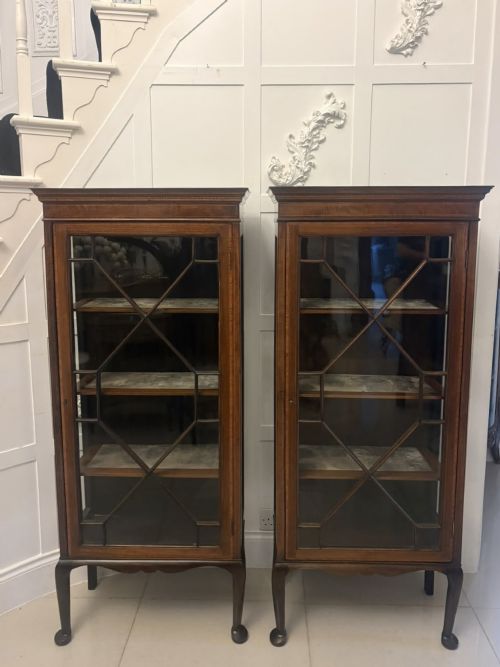
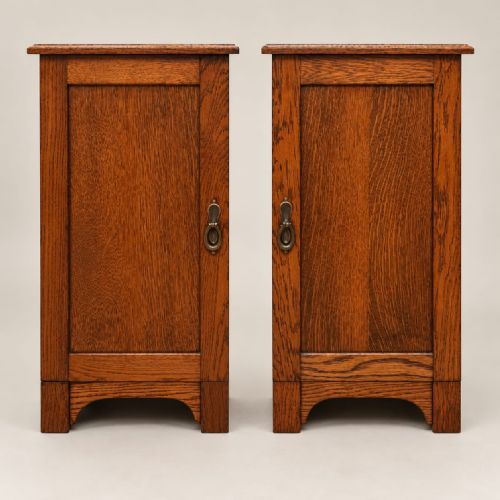
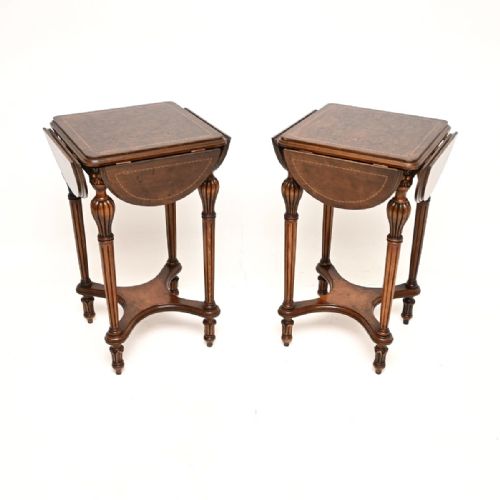
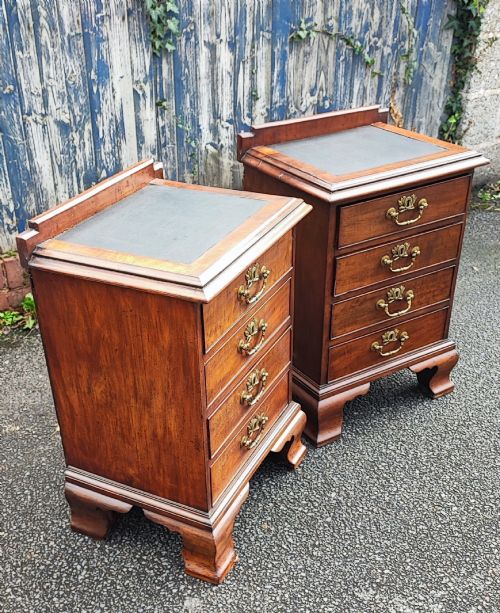
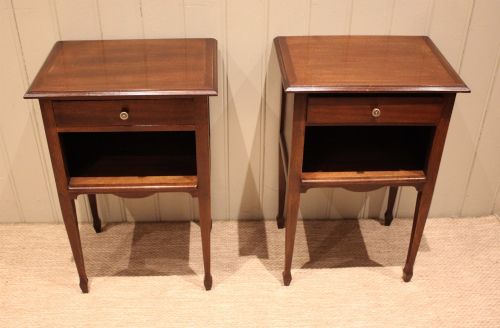
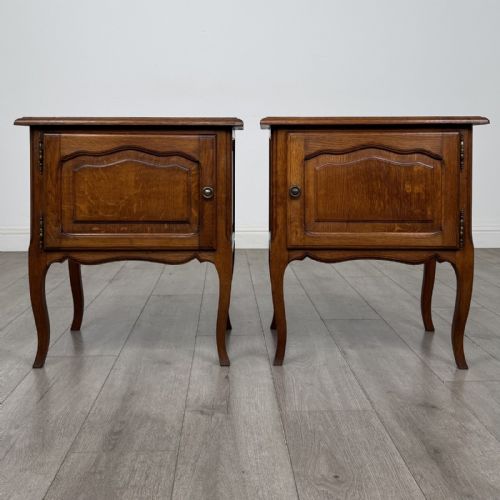
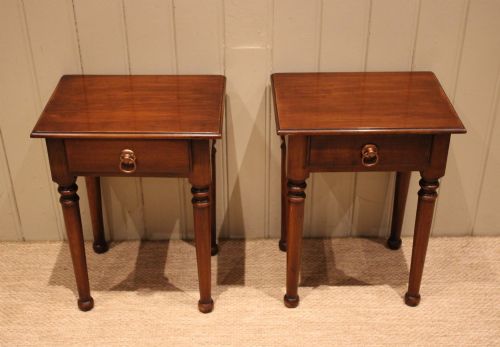
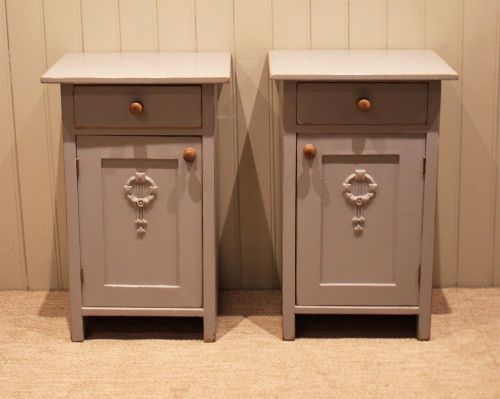
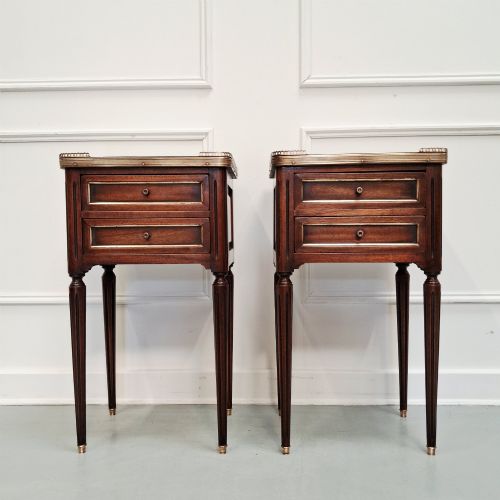
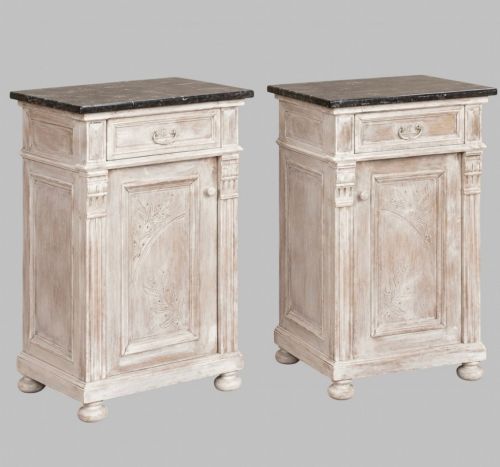
A vintage cabinet pair brings symmetry and matched storage to a room, most commonly appearing here as bedside tables and nightstands from the early twentieth century.
Vintage Cabinet Pair
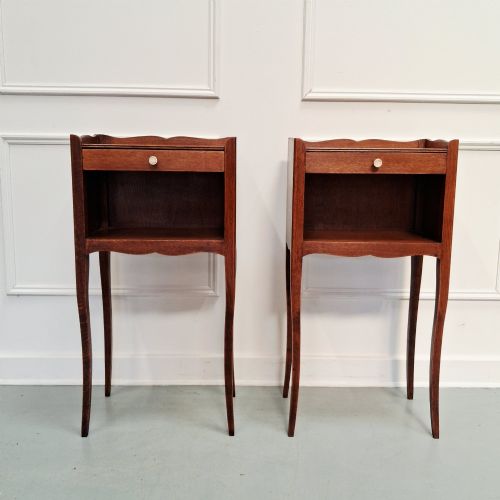
A vintage cabinet pair primarily consists of matched bedside tables, chests, and cupboards designed to sit on either side of a bed. When buyers search for a vintage cabinet pair, they encounter forms spanning the Victorian, Edwardian, and Art Deco periods.
The materials and decorative approaches vary widely across these pieces, ranging from French oak and walnut to inlaid satinwood and painted pine. Alongside traditional bedside furniture, the listings include occasional matching bookcases, display cabinets, and architectural doors.
Materials and Construction
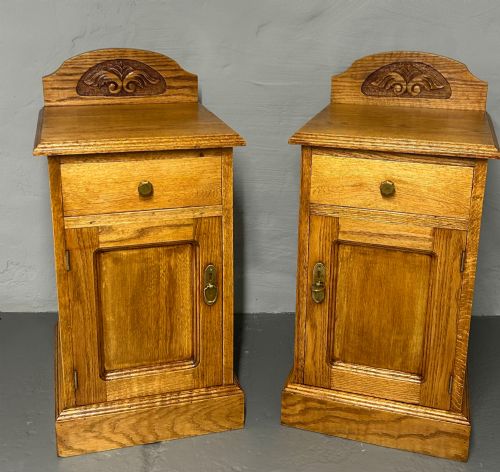
Cabinet makers utilised solid hardwoods such as mahogany, oak, walnut, and cherry wood, often applying decorative veneers like kingwood and satin birch to visible surfaces. Many examples incorporate contrasting marquetry details, while others rely on the natural grain of the timber.
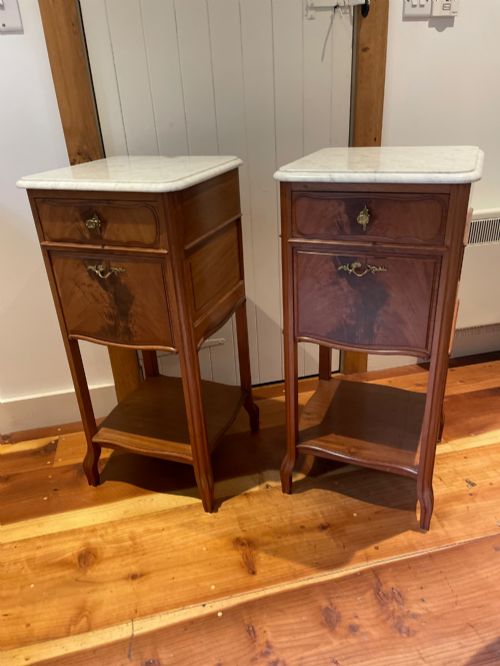
Functional additions include fitted marble tops on French provincial pieces and sliding glass doors on twentieth-century display variations. Drawers and cupboards are constructed using traditional joinery methods suited to each specific period.
Vintage Cabinet Pair Retail Price Guide 2026
Typical asking prices for vintage cabinet pair among the pieces listed under this phrase on Sellingantiques today, from the lower quarter to the upper quarter. They describe what is for sale here now, not the wider market.
French provincial styling appears frequently alongside Edwardian marquetry and Art Deco geometric forms.
Distinguishing Quality
The distinction between standard examples and superior pieces rests on the precision of the timber selection and the complexity of the cabinet work. Finely figured veneers, intricate marquetry inlay, and heavy original hardware elevate a pair beyond simple utility.
Integrity of the matching pair also dictates standing; pieces that retain their original surfaces, matching marble slabs, and uniform patination hold greater consistency than those altered or mismatched over time.
Bowman Brothers London·William Bird MD FLS·Royal Crown Derby·Nantgarw
The Vintage Cabinet Pair Glossary
- Marquetry
- Decorative veneer work arranged in pictorial patterns or geometric designs using various coloured woods. This technique requires considerable skill from the cabinet maker.
- Chevet
- A French term for a small bedside table or nightstand, frequently equipped with a combination of a drawer and a small cupboard.
- Art Deco
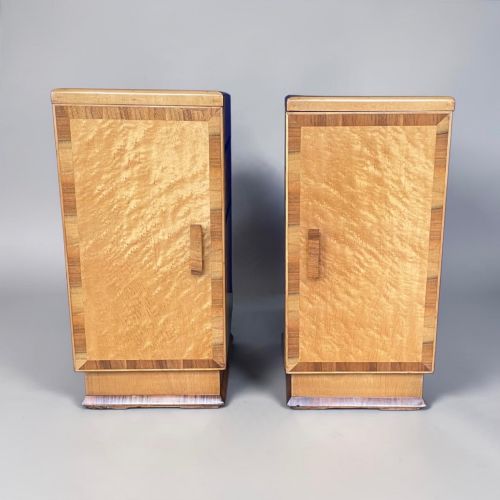
- A design style popular in the 1920s and 1930s characterised by streamlined forms, geometric shapes, and smooth surfaces. It appears frequently in satin birch and walnut.
- Satinwood
- A durable hardwood with a lustrous, golden sheen, often used in Edwardian and late nineteenth-century cabinet making for delicate inlay and veneering.
Vintage Cabinet Pair: Frequently Asked Questions
What defines a vintage cabinet pair?
A vintage cabinet pair consists of two matching storage units designed to complement each other in a room, most frequently found as bedside tables from the early twentieth century.
They share identical materials, dimensions, and decorative details, offering balanced placement on either side of a bed or within a larger living space.
How do I identify Art Deco cabinets?
Art Deco cabinets display the characteristic geometric lines and streamlined silhouettes of the interwar period. They often utilise polished walnut or satin birch veneers.
Decoration is minimal compared to earlier styles, relying instead on the natural grain of the wood and the clean geometry of the form.
Are marble top cabinets French?
Many marble-topped cabinets originate from France, where stone surfaces were commonly paired with oak, walnut, or painted pine furniture to provide a durable finish.
These pieces range from provincial nineteenth-century designs to refined Edwardian examples, adding weight and a cool surface texture to the bedside.
How should I care for waxed wood?
Waxed wooden surfaces require regular dusting with a soft, dry cloth and occasional treatment with quality beeswax to nourish the timber. Avoid placing them in direct sunlight or near heat sources.
Keeping the environment stable prevents the wood from drying out and preserves the traditional finish built up over decades.