


Vintage Bronze Canine
These vintage bronze canine pieces capture hounds, terriers, and bulldogs in weighty metal, bringing character and sculptural presence to any desk or shelf.
Vintage Bronze Canine
A vintage bronze canine brings together historical animalier sculpture and decorative objects like bookends, car mascots, and small figurines. These pieces span the nineteenth century into the Art Deco and Edwardian periods, capturing breeds from terriers and pugs to greyhounds and bulldogs.
The works originate predominantly from French and Austrian workshops, reflecting both the nineteenth-century animalier movement and early twentieth-century decorative arts. Most examples on this page date from the late nineteenth century through to the 1930s.
How they were made
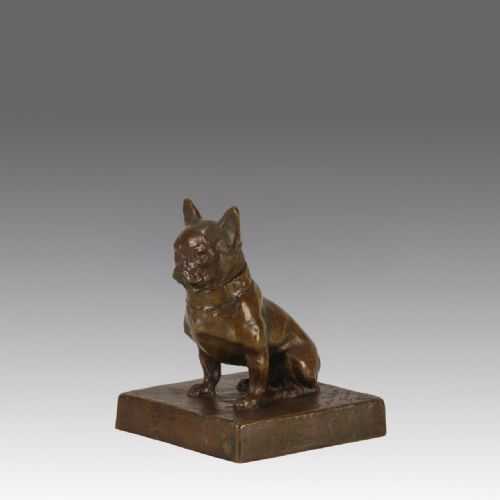
The primary material is bronze, cast using traditional foundry methods that capture fine musculature and fur detail. Alternative metals such as spelter and brass also appear in the period selections.
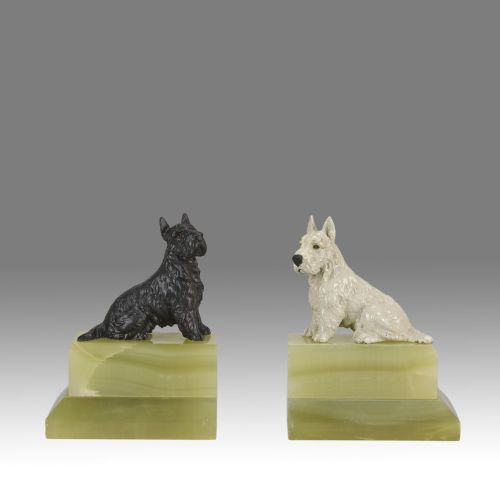
Many pieces incorporate cold-painted enamel surfaces over bronze, requiring precise hand-brushing of pigments. Bases frequently utilise contrasting natural materials like marble and onyx to add weight and stability.
Several bronze canines double as automotive mascots, ready to brave motorway speeds after a century spent indoors.
What varies in quality
Quality rests in the crispness of the casting and the fidelity of the anatomical study. Finer works preserve the nuance of the fur, posture, and expression without losing sharpness in the secondary details.
The sophistication of the surface finish dictates the tier of the piece. Hand-applied cold-painting that retains its colour and integrated signatures from established makers separate standard decorative castings from superior sculptural examples.
Prosper Lecourtier·Arthur Waagen·Antoine Louis Barye·Franz Bergman·Louis Riché
The Vintage Bronze Canine Glossary
- Animalier
- A nineteenth-century artistic movement focused on the realistic depiction of animals, particularly in bronze. Sculptors in this tradition studied anatomy closely.
- Cold-painted bronze
- A technique where bronze figures are painted with oil or enamel paints without firing in a kiln. This finish is delicate and prone to rubbing over time.
- Spelter
- A zinc alloy frequently used as a cheaper alternative to bronze during the nineteenth and twentieth centuries. It is lighter and softer than true bronze.
- Car mascot
- A decorative figurine mounted on the radiator cap of an automobile, popular during the early twentieth century. Many bronze dog models served this dual purpose.
Vintage Bronze Canine: Frequently Asked Questions
How do I care for cold-painted bronze?
Dust gently with a soft, dry brush and avoid all cleaning agents or moisture. The cold-painted surface sits on top of the metal and can flake if handled roughly.
Keep pieces away from direct sunlight to preserve the original enamel colours.
Were these dogs meant as bookends?
Some specific models, particularly pairs from Vienna, were cast as functional bookends with heavy bases to support volumes. Others were created solely as decorative figurines or cabinet bronzes.
Single sculptures were designed purely for display on desks or mantelpieces.
What is an animalier bronze?
Animalier refers to nineteenth-century art focused on accurate animal subjects in action or repose. Sculptors spent time observing anatomy in menagerie settings to achieve realism.
This tradition informs many of the hounds and sporting dogs seen in this selection.
How can I tell bronze from spelter?
Bronze is heavier, colder to the touch, and rings with a clear tone when tapped gently. Spelter is a softer zinc alloy that feels lighter and shows a greyish metal beneath worn areas.
Patination also ages differently on the two metals.