
Vintage Brass Paraffin
These vintage brass paraffin lamps bring period weight and warm flame-lit glow into a room, spanning Victorian and Edwardian forms.
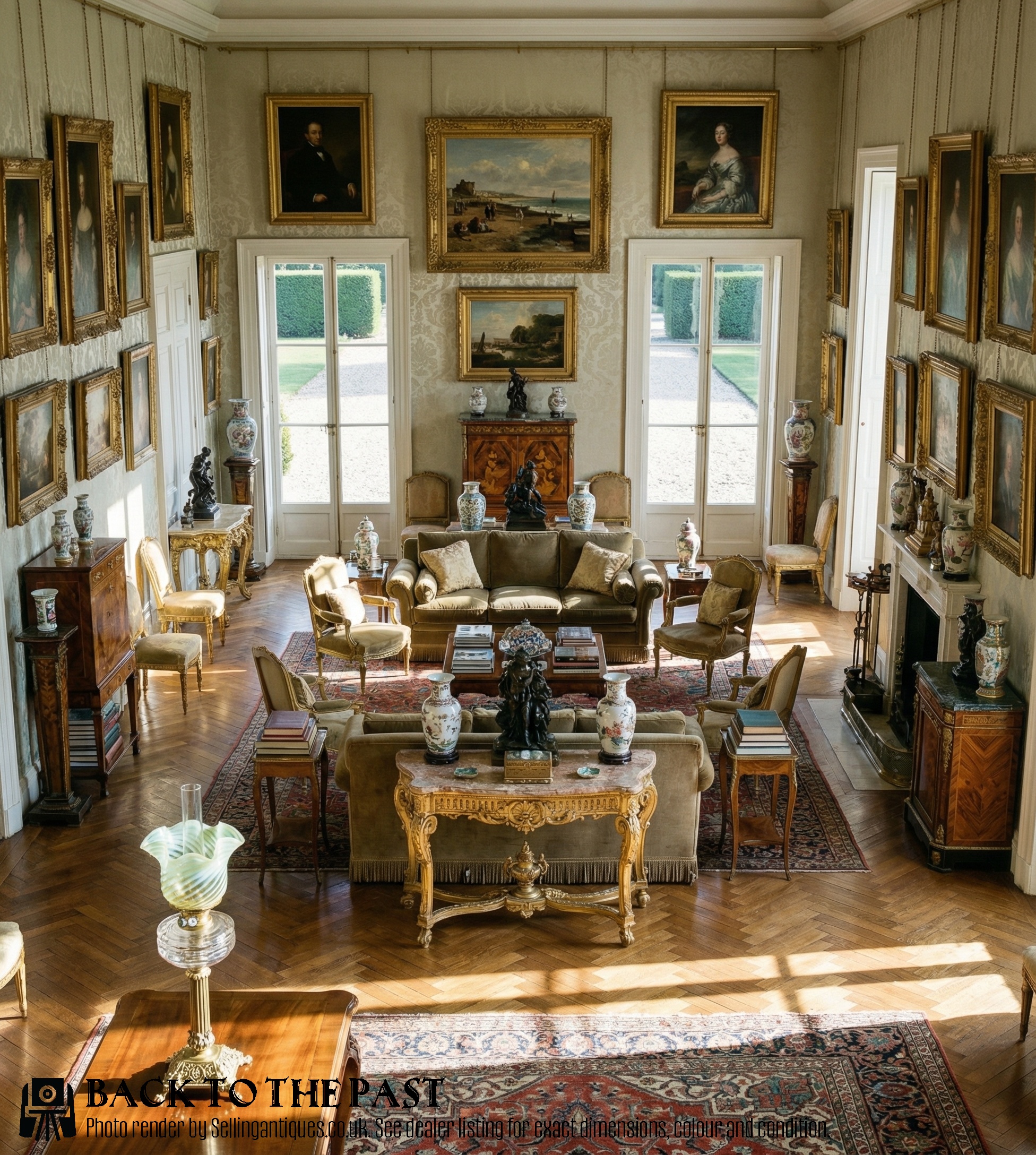
Vintage Brass Paraffin
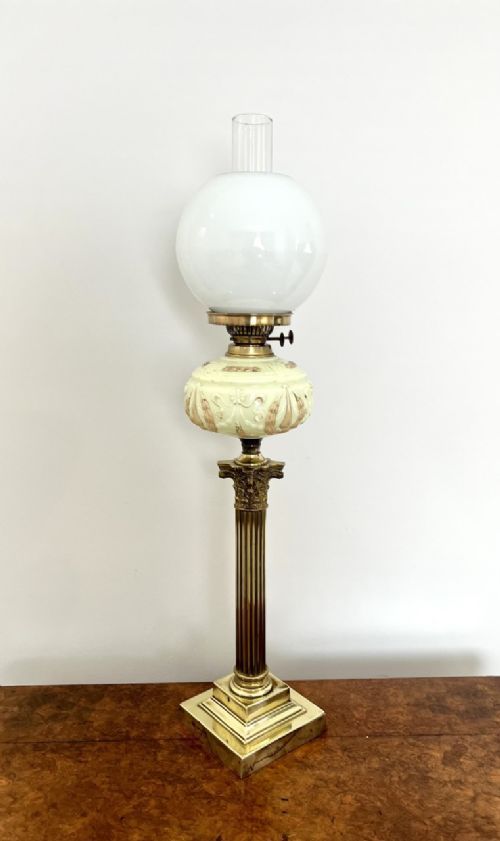
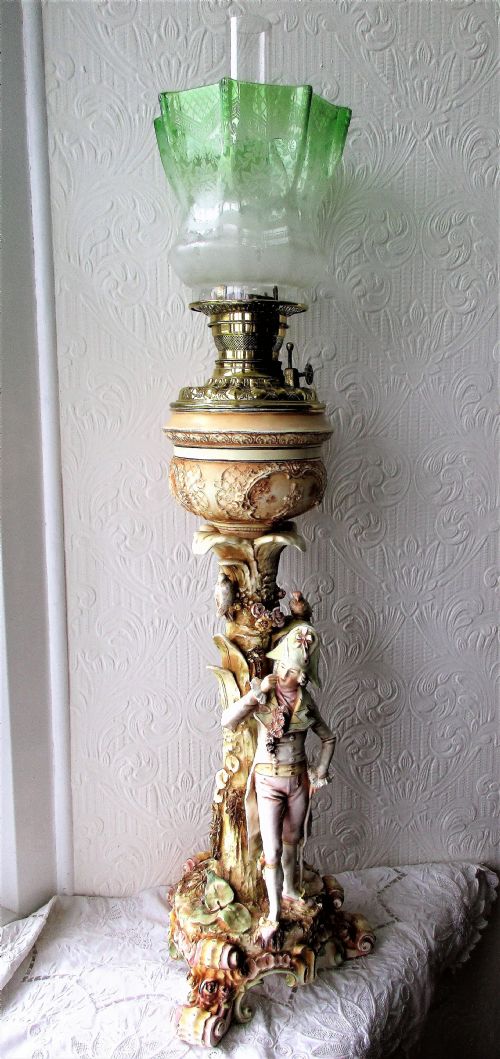
Vintage brass paraffin lamps include tall column designs, figural bases, and hanging fixtures produced across the nineteenth and early twentieth centuries. When searching for vintage brass paraffin, buyers encounter lighting apparatus designed to burn lamp oil using textile wicks housed in metal burners.
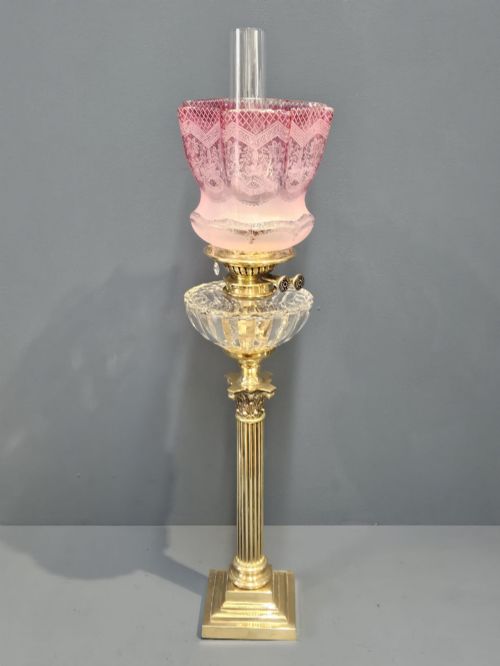
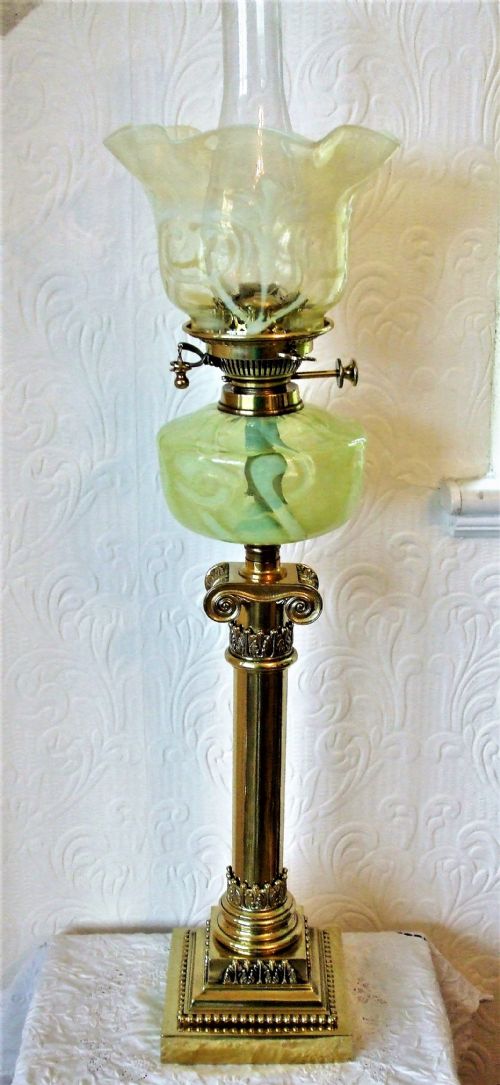
The selections on this page draw predominantly from Victorian and Edwardian periods, stretching from the mid-nineteenth century through the 1930s. Forms range from simple table lamps to elaborate Corinthian and Ionic column styles paired with coloured glass reservoirs.
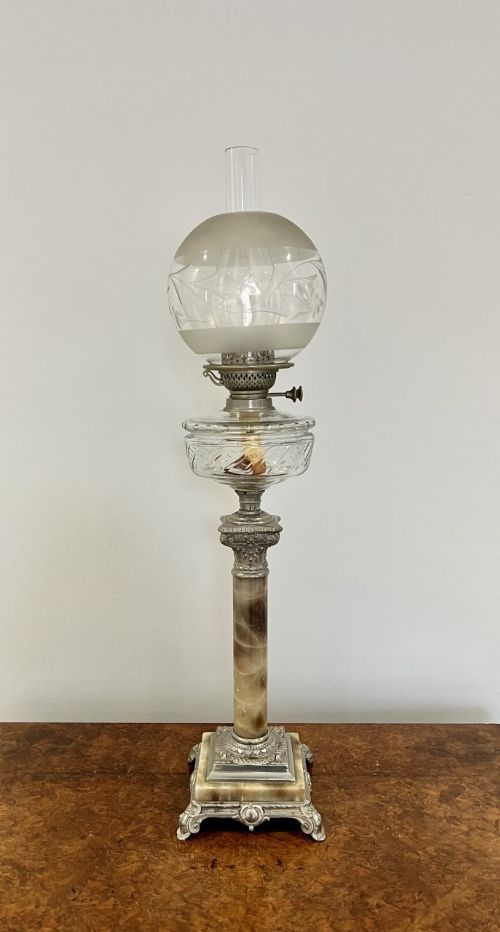
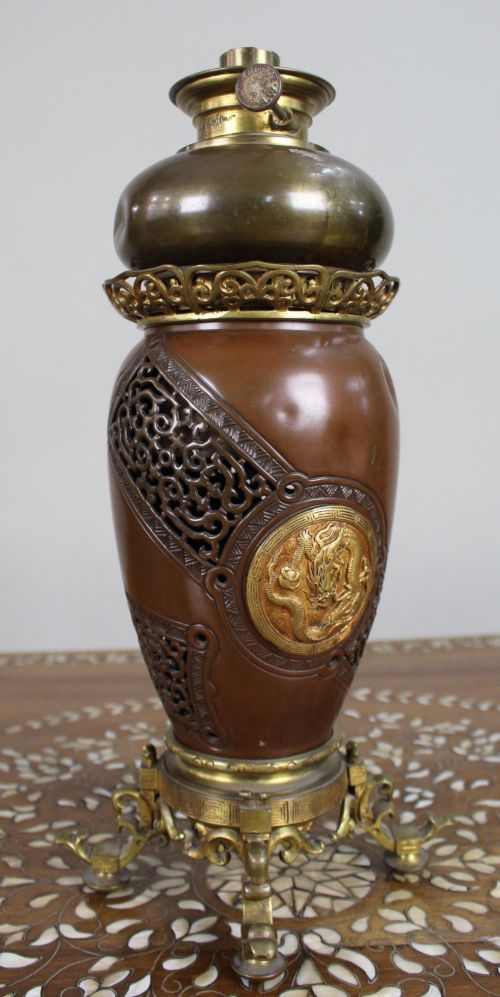
Makers and inventors of the era incorporated ceramic elements, onyx, and bronze alongside standard brass construction. Domestic lighting of this type served as primary illumination before widespread electrification transformed British interiors.
Materials and construction methods
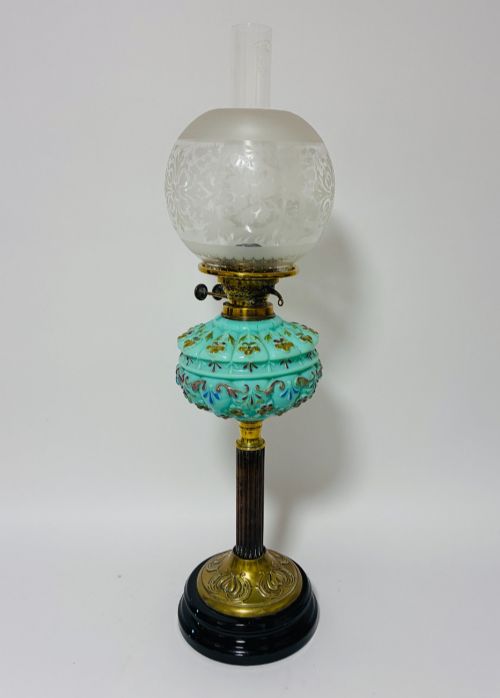
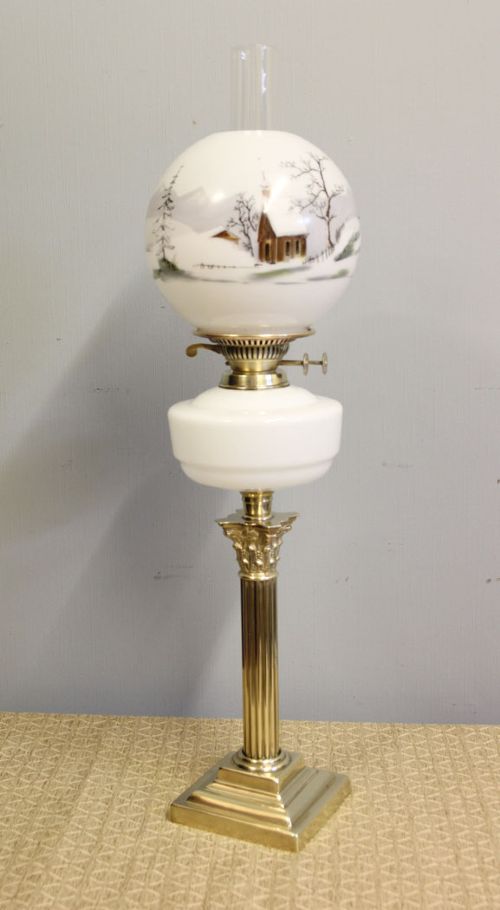
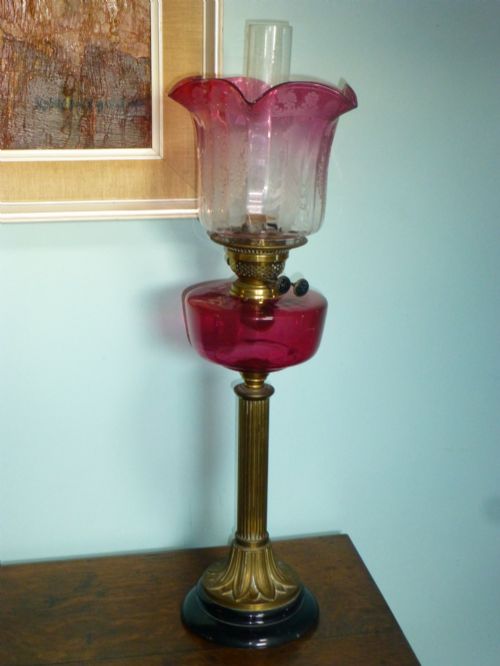
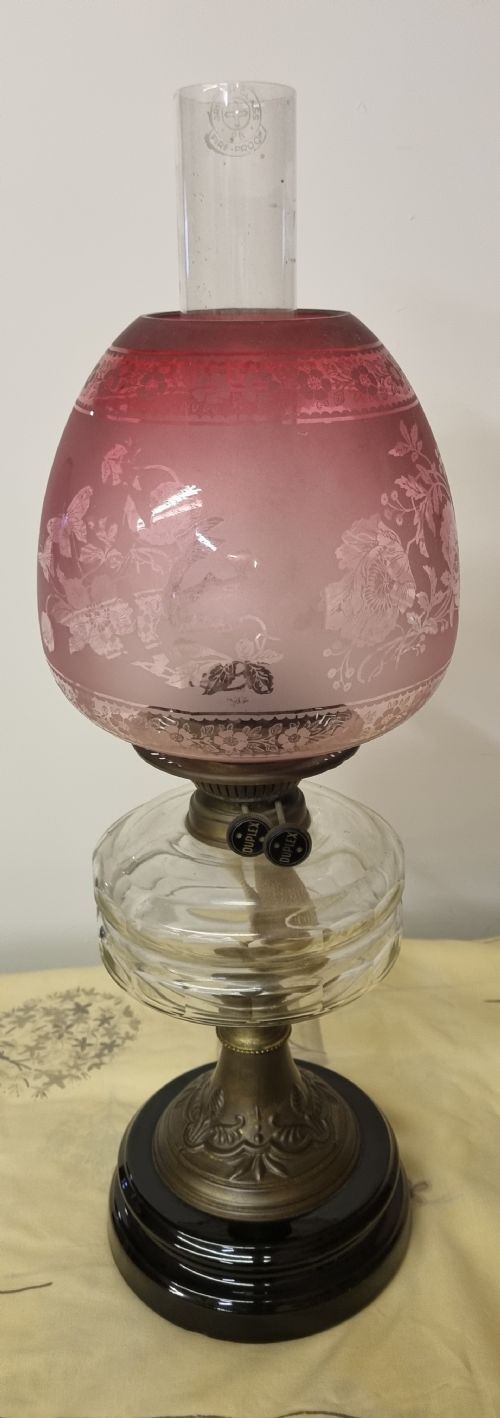
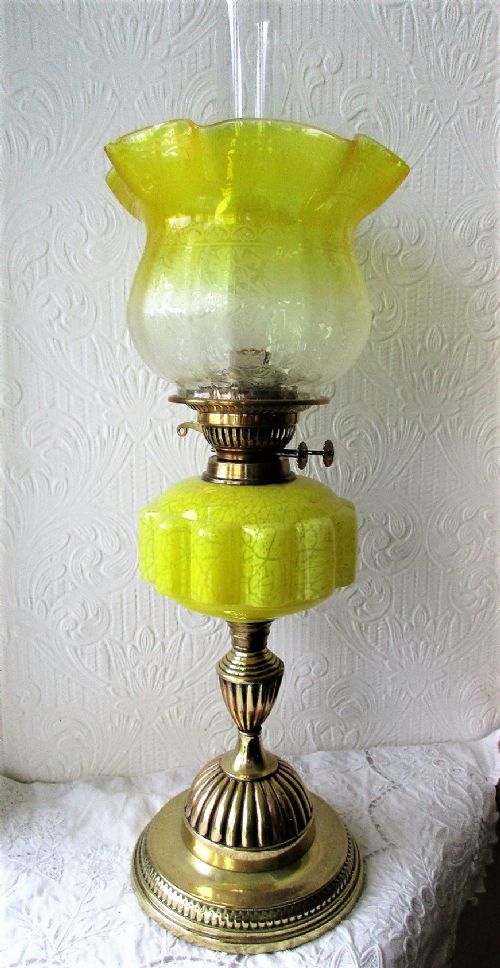
Brass forms the primary structural body of these lamps, often cast, turned, and polished to produce fluted columns and decorative stepped bases. Workshops combined this yellow metal with hand-blown glass fonts in cranberry, opaline, and clear finishes.
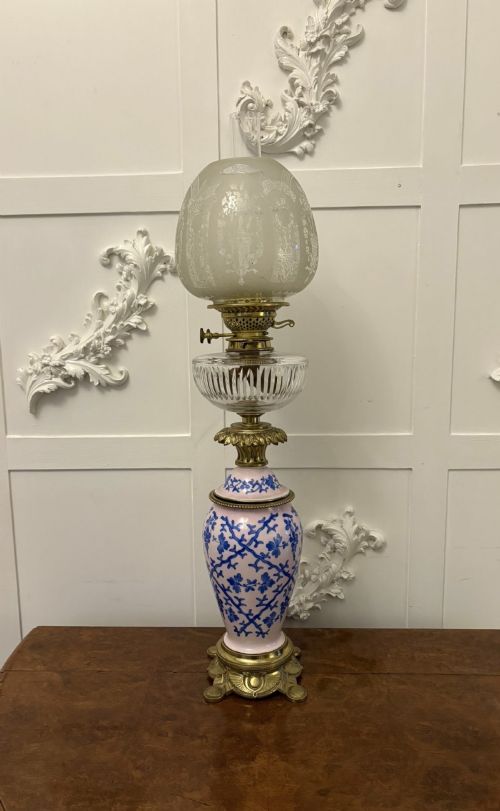
Manufacturers integrated ceramic bodies and hand-painted porcelain figural supports into the metal framework to add colour and texture. Burner assemblies utilised engineered brass mechanisms with thumb wheels to advance the flat or circular wicks.
Distinctions in manufacture and design
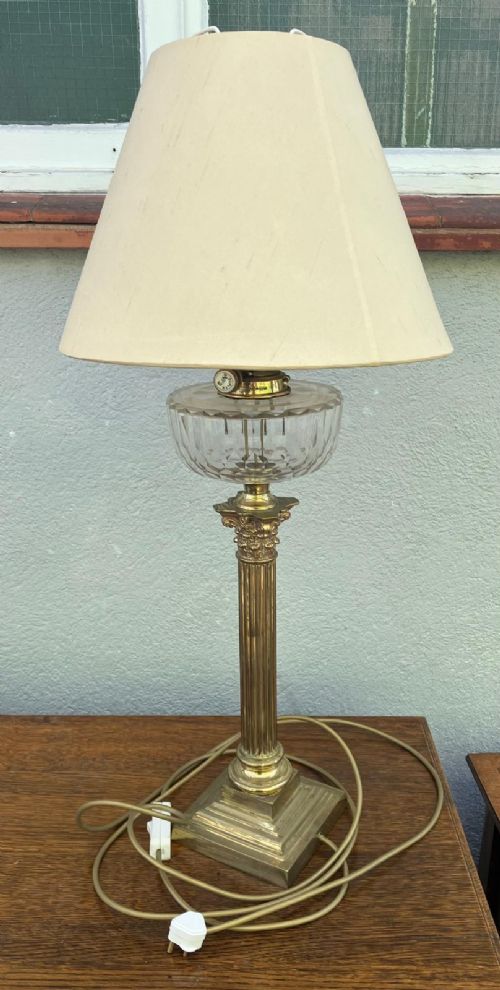
Quality separates standard domestic lighting from ambitious exhibition pieces through the crispness of brass casting and the weight of the metal components. Better examples feature substantial Corinthian capitals, heavy weighted bases, and complex double-burner mechanisms.
The artistic merit of the associated glassware defines the upper tier of the range, particularly hand-painted cranberry shades, etched tulip glass, and opaline components. Marked burners from recognised makers indicate commercial standing and original component integration.
Eli Griffiths & Sons·Hinks·Gustave Serrurier Bovy·Wild and Wessel
The Vintage Brass Paraffin Glossary
- Duplex burner
- A double-wick burner system designed to produce a brighter flame than single-wick variants. It requires two flat wicks advanced simultaneously by dual thumb wheels.
- Font
- The oil reservoir of the lamp, situated above the base and beneath the burner. These containers appear in brass, ceramic, and coloured glass.
- Corinthian column
- An architectural column style featuring ornate acanthus leaf capitals, frequently utilised for tall Victorian and Edwardian lamp standards. This classical revival form provided height and stability.
- Opaline glass
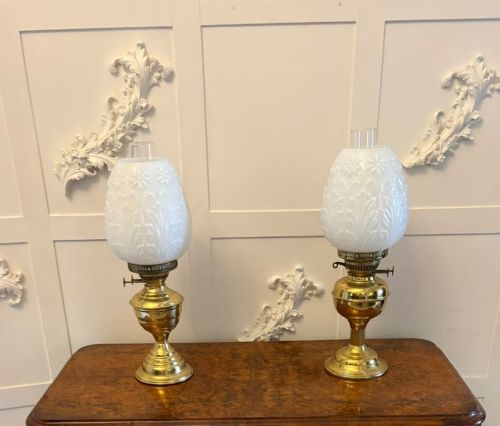
- An opaque, milky-white glass popular for Victorian and Edwardian lamp shades and fonts. It diffuses the flame light into a soft, even glow.
Vintage Brass Paraffin: Frequently Asked Questions
How do I operate a vintage paraffin lamp?
Fill the reservoir with clean lamp oil, ensuring the wick is thoroughly saturated before lighting. Adjust the thumb wheel to expose a small portion of the wick, then apply a flame evenly across the top.
Regulate the flame height using the wheel to prevent smoking and soot accumulation on the glass shade. Extinguish the flame by turning the wheel down until the wick retracts below the burner gallery.
Can I use these lamps for daily lighting?
These historical pieces function mechanically as they did in the past, though modern users often treat them as decorative interior objects. Ensure the burner mechanism moves freely and the font remains free of leaks before introducing fuel.
Keep burning lamps away from draughts and flammable materials. Many owners choose to display them unlit or fit them with internal electrical conversions for contemporary convenience.
How do I identify a Victorian lamp?
Victorian examples frequently display heavy cast brass components, classical revival columns, and rich cranberry or opaline glass shades. Look for period proportions, such as stepped square bases and structural integrity in the metalwork.
Maker names stamped onto the brass burner thumbscrews often point to nineteenth-century production. Stylistic cues like Neoclassical Revival motifs also anchor pieces firmly in the Victorian era.
What is an Edwardian oil lamp?
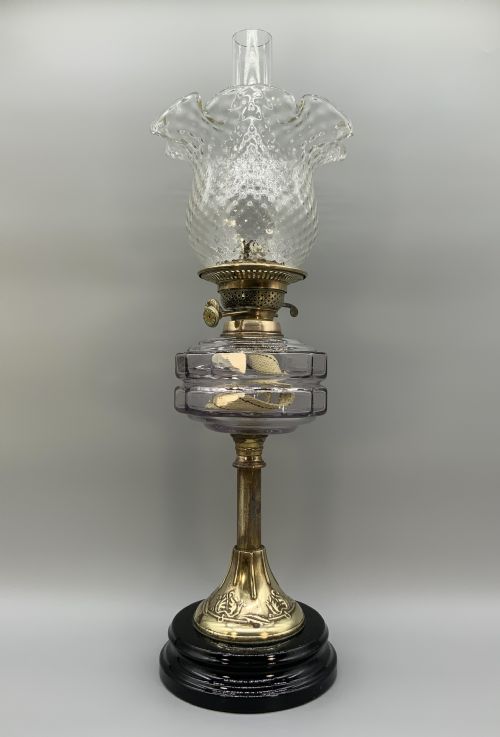
Edwardian lamps date from around 1900 to the early decades of the twentieth century, sometimes showing transitional Art Nouveau or Secessionist influences. These pieces maintain functional paraffin burners while reflecting lighter, more fluid decorative tastes.
Onyx inserts, ceramic combinations, and slender brass columns characterise this period. They represent the final era of widespread oil lighting before domestic electricity took over.