
Vintage Brass Paraffin Lamp
A vintage brass paraffin lamp brings weight, warmth and bright coloured glass to a room, exactly as it did over a century ago.
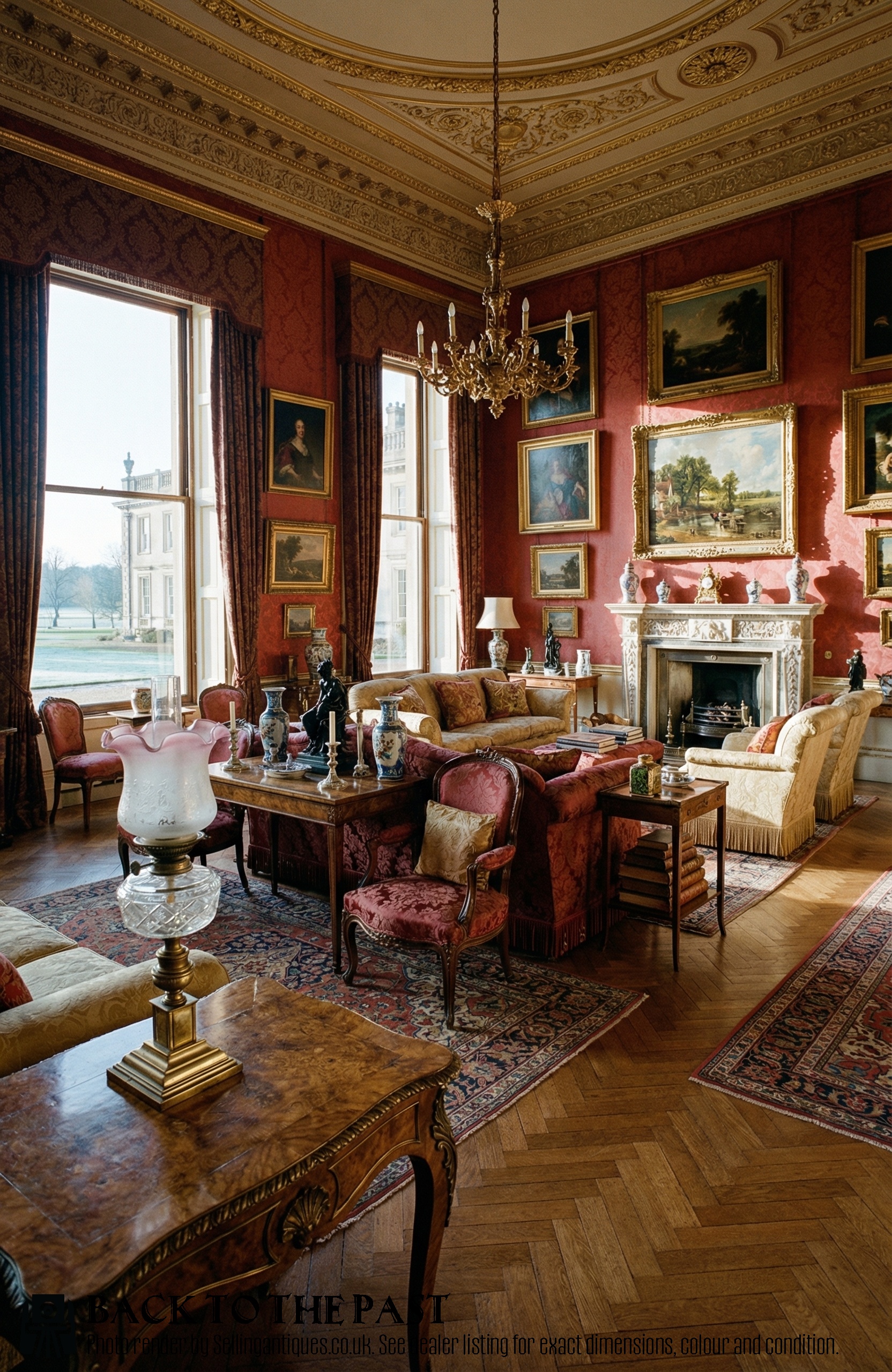
Vintage Brass Paraffin Lamp
When you search for a vintage brass paraffin lamp, you are looking at nineteenth and early twentieth century lighting apparatus designed to burn oil for illumination. These pieces combine heavy cast or spun metal bases with oil reservoirs and burners.
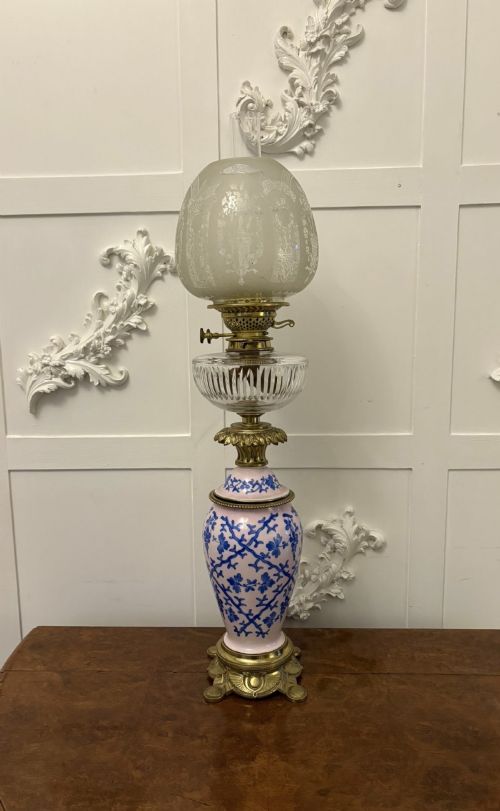
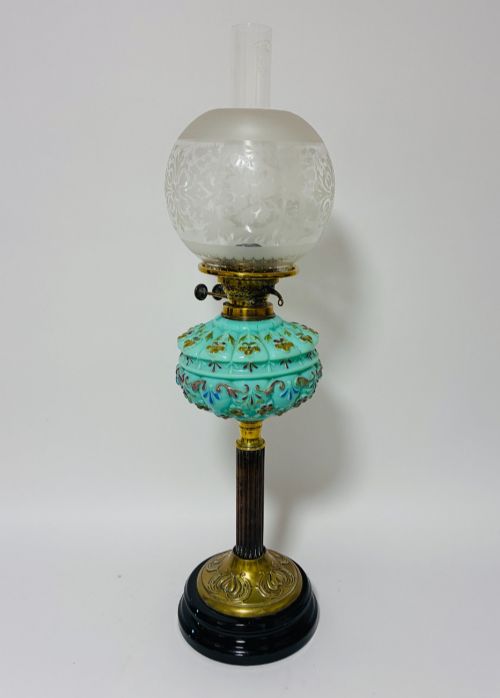
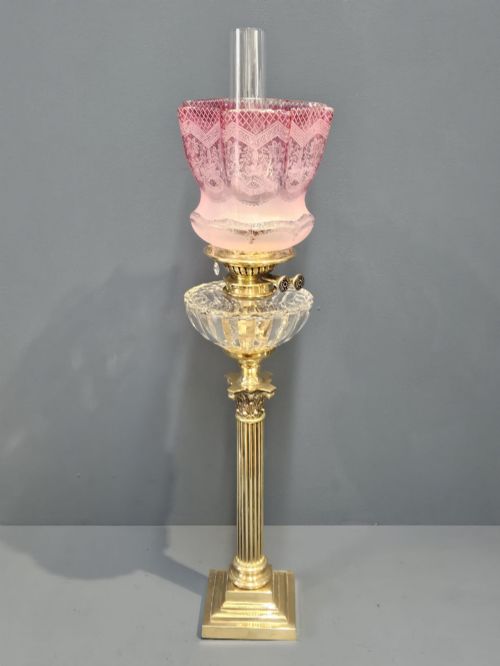
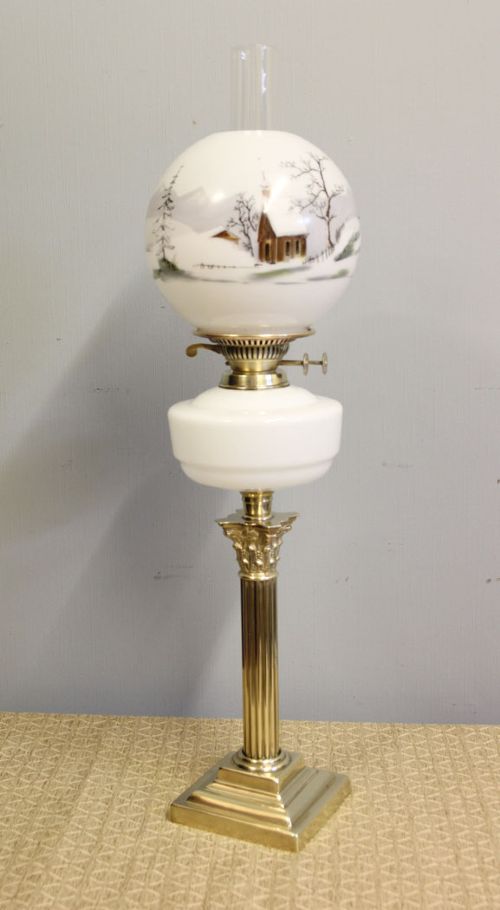
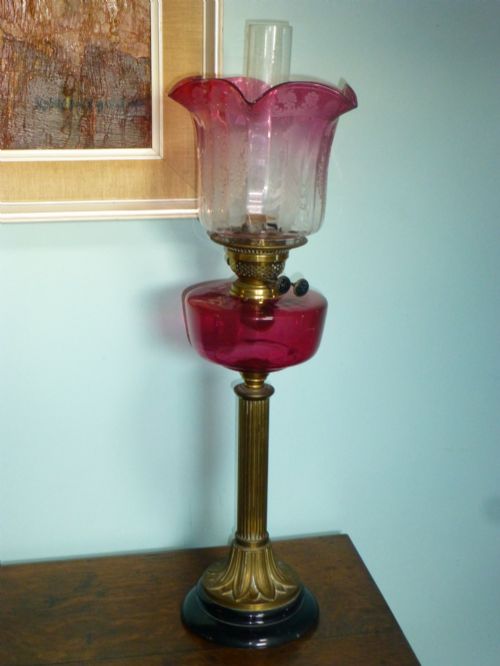
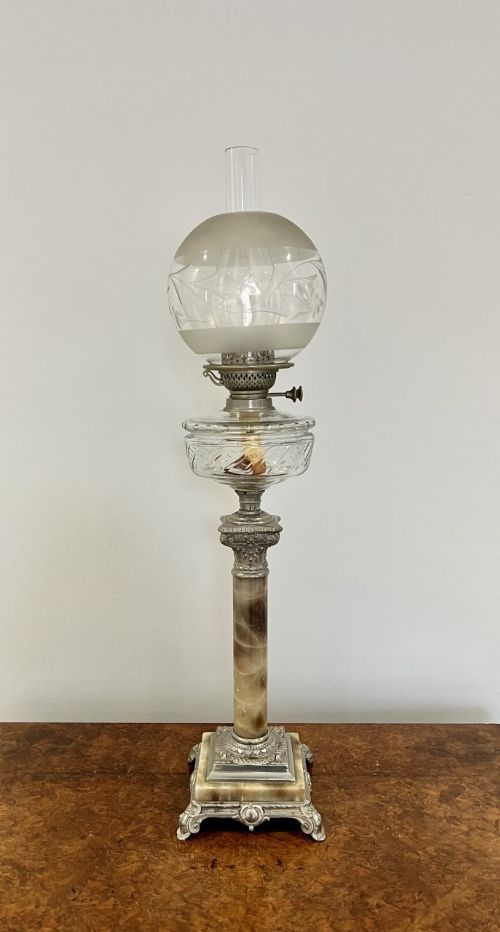
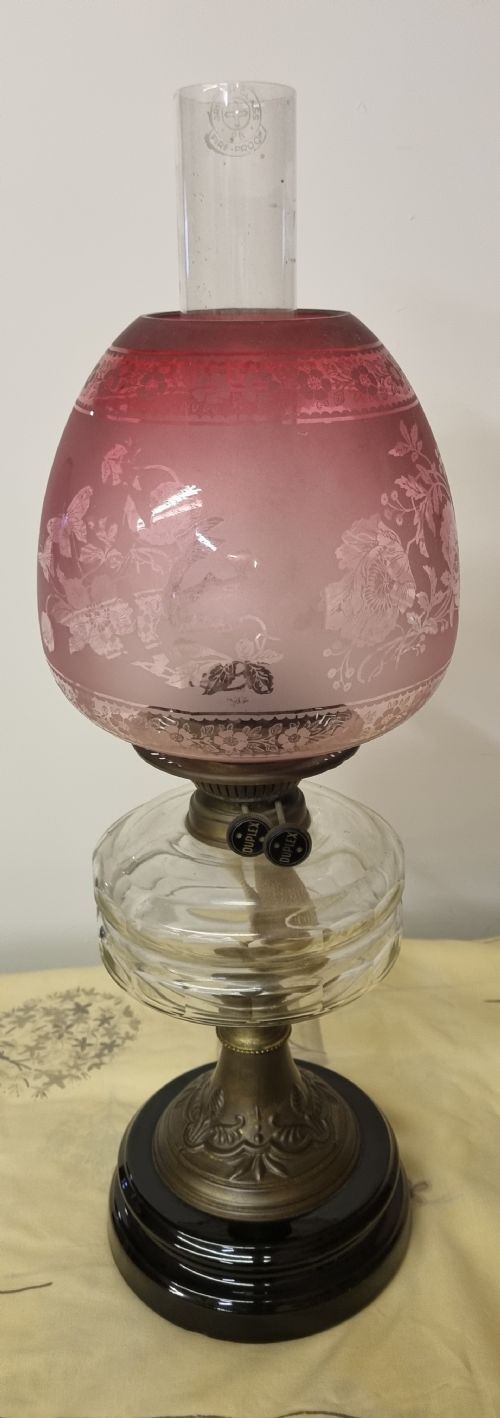
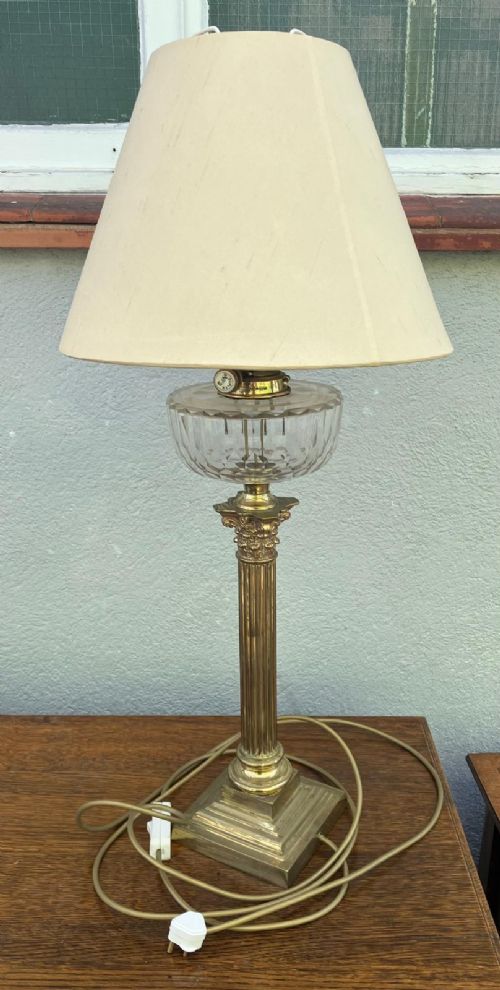
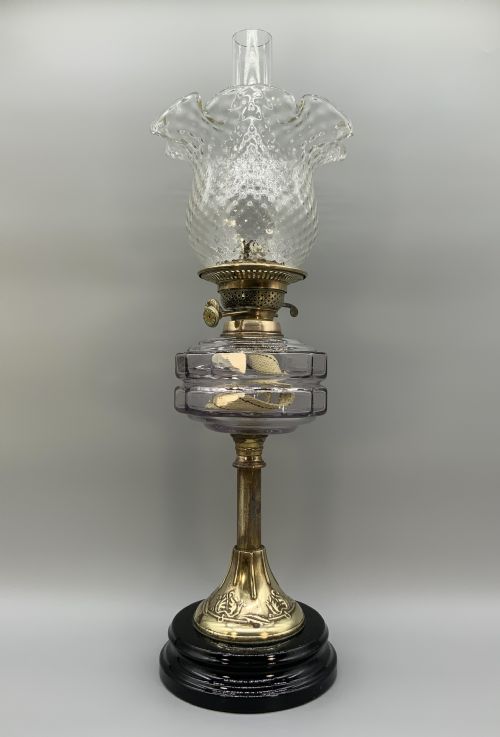
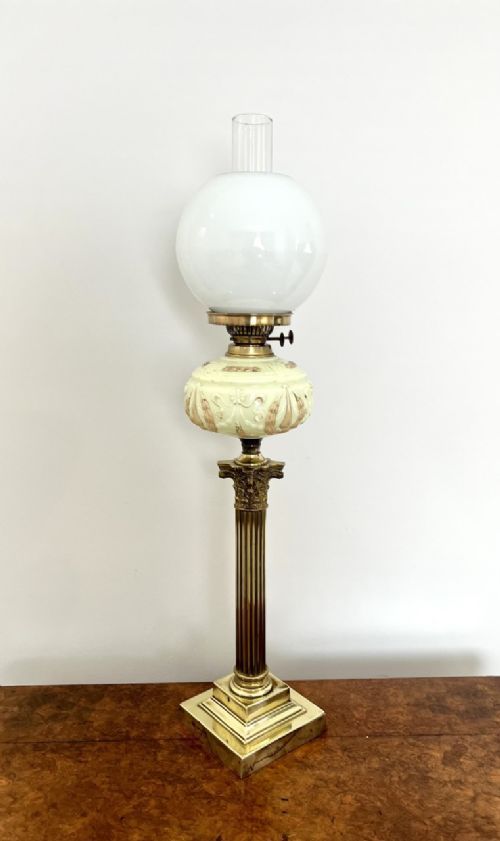
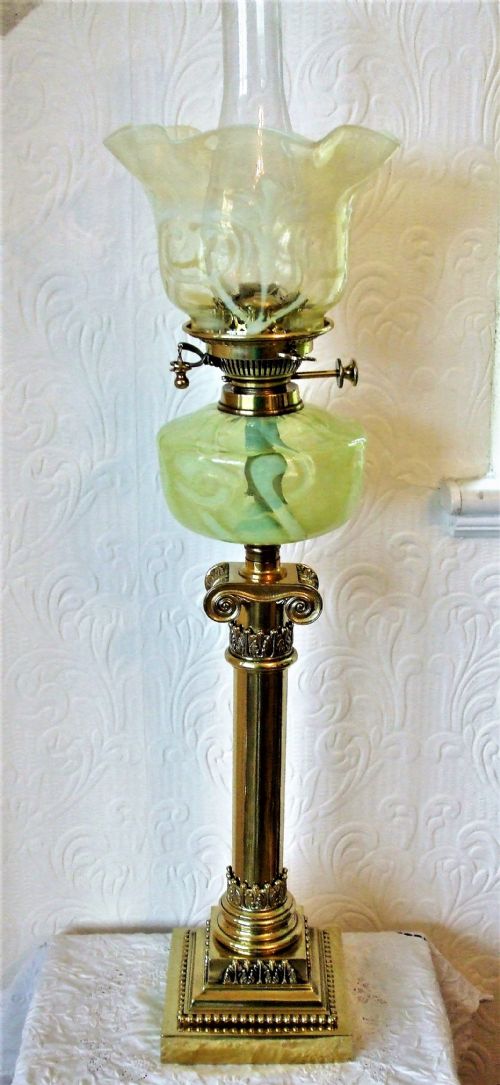
The version you are most likely to meet on this page is the Victorian or Edwardian table lamp, frequently featuring a polished metal column, a coloured glass font and a matching glass shade. Many examples incorporate classical architectural forms such as Corinthian or Ionic columns.
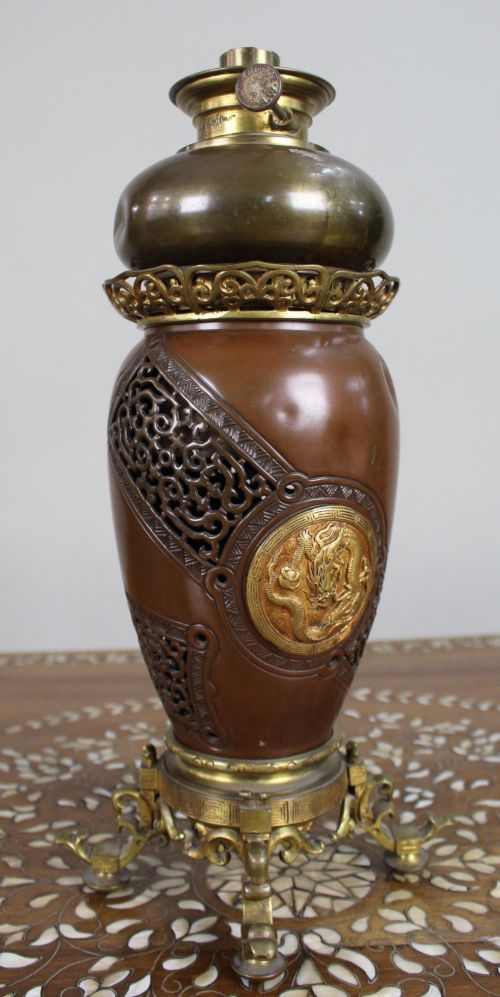
Origins span English workshops alongside examples from the Meiji period and European designers. Forms range from simple domestic table models to twin-burning duplex lamps and hanging ceiling lights.
Materials and construction methods
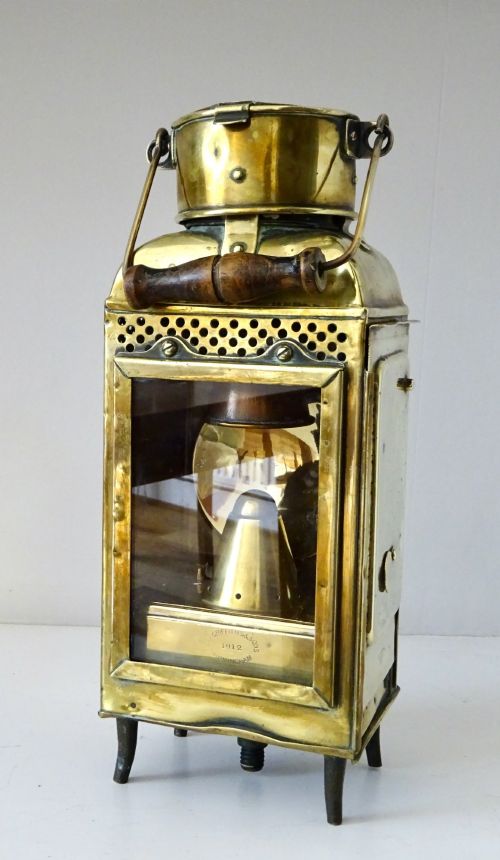
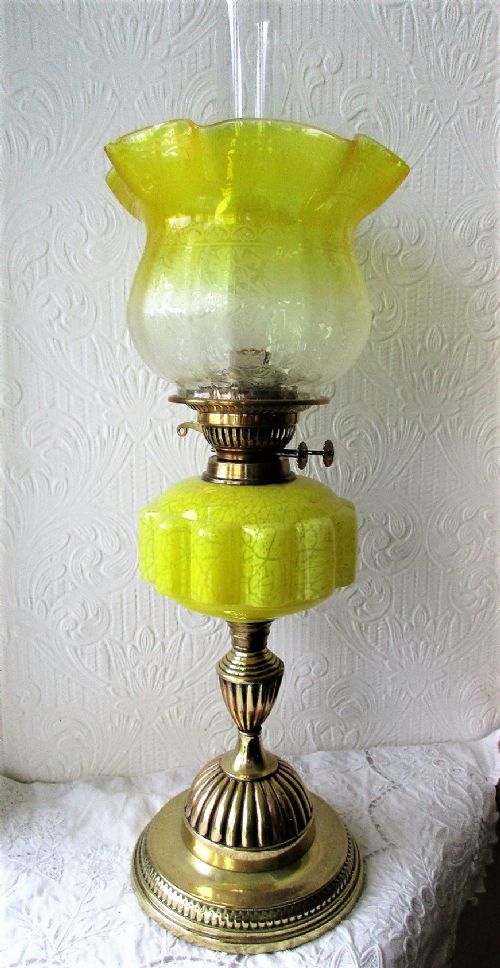
These lamps rely on brass as the primary structural metal, often paired with copper, bronze or cast iron weighted bases to ensure stability. Manufacturers combined metalworking techniques with glass production, utilising hand-blown, etched, cranberry, opaline or clear glass for the fonts and shades.
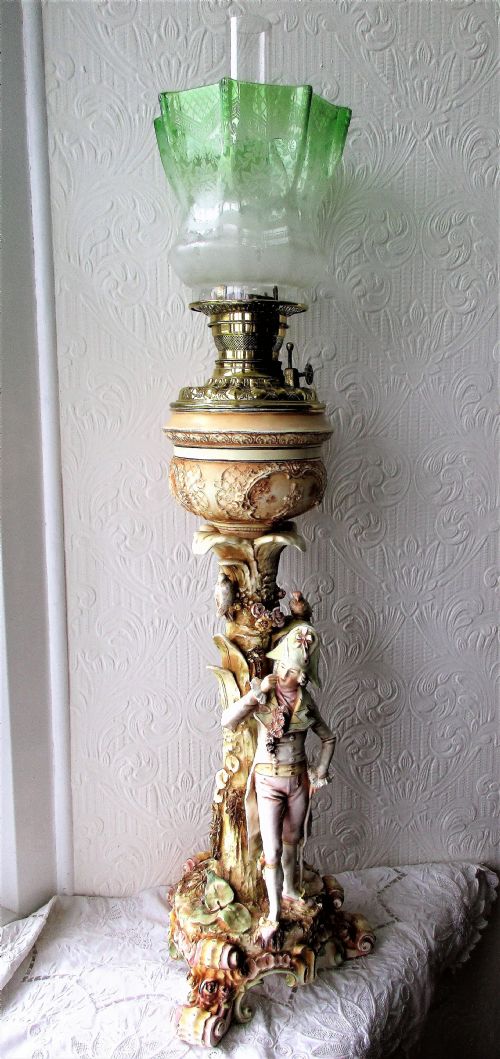
Ceramic and porcelain elements frequently appear integrated into the bodies or columns, sometimes decorated with hand-painted botanical or figurative scenes. Burner mechanisms in brass required precision engineering, utilising twin-wick duplex systems or specialised burner brands to control the flame effectively.
Some Victorian pulpit lamps doubled as heaters to keep clergymen warm during lengthy winter sermons.
Factors of distinction
The distinction between ordinary and exceptional examples rests upon proportion, casting crispness and the harmony of components. Top-tier lamps display sharply rendered acanthus leaves on Corinthian capitals, heavy gauge metal that resists bending and heavy glass shades that match the font in colour and period style.
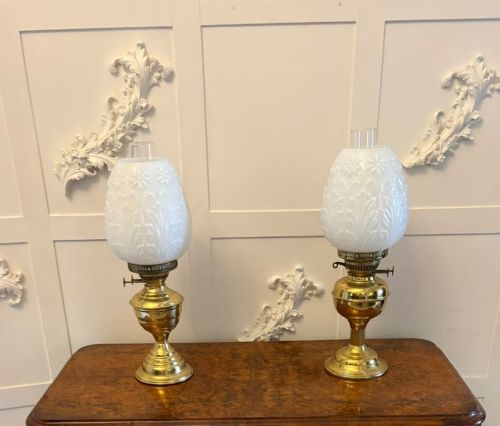
Maker-marked burners from established firms indicate higher workshop standards. Simpler domestic models use lighter spun brass and plain clear glass, whereas superior pieces integrate contrasting ceramic bases, layered coloured glass, and intricate hand-etched decoration.
Eli Griffiths and Sons·Gustave Serrurier Bovy·Hinks and Son·Wild and Wessel
The Vintage Brass Paraffin Lamp Glossary
- Font
- The oil reservoir of the lamp. This component sits above the base and is frequently manufactured from coloured, cut or painted glass.
- Duplex burner
- A double-wick mechanism designed to produce a brighter flame. This fitting requires two matched wicks adjusted simultaneously.
- Opaline glass
- A milky, semi-translucent glass type popular for Victorian and Edwardian lamp shades. It diffuses light with a soft glow.
- Collar
- The threaded metal ring cemented to the top of the glass font to hold the burner. This connection secures the working mechanism to the reservoir.
Vintage Brass Paraffin Lamp: Frequently Asked Questions
How do I identify a Victorian oil lamp?
Victorian models commonly feature heavy brass Corinthian or Ionic columns, clear or coloured glass fonts, and period burner mechanisms. Look for construction details such as threaded brass collars and heavy cast metal bases.
Dates generally fall between eighteen sixty and nineteen hundred, reflecting the height of domestic oil lighting before electric bulbs became universal in homes.
Can these lamps still burn paraffin?
While the original brass burners and mechanisms remain intact on many examples, modern safety standards and preservation concerns generally discourage burning oil in antique reservoirs.
Most buyers choose to display them as decorative objects, though some modern collectors professionally adapt them for electrical illumination without altering the antique metalwork.
What is a duplex burner?
A duplex burner uses two parallel flat wicks housed in a single mechanism to draw fuel from the font. This arrangement creates a wide flame that produces significantly more light than a single-wick burner.
Found on larger Victorian and Edwardian table lamps, these burners often bear stamped manufacturer names on the brass thumb-wheels.
How do I clean a brass lamp?
Careful dusting with a soft, dry cloth is usually sufficient for antique brass to preserve the aged patina that collectors value. Avoid harsh chemical polishes that strip surface character and remove historical signs of age.
Glass shades and fonts can be washed gently in warm soapy water separately from the metal components, ensuring no moisture remains trapped in antique cement joints.