


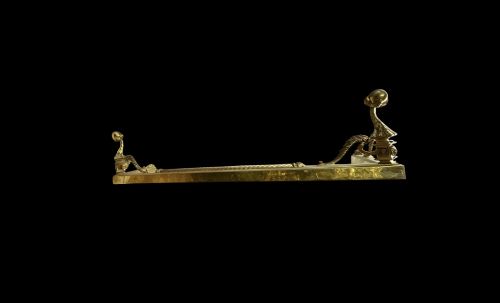


Vintage Brass Fire Kerb
A vintage brass fire kerb frames the hearth with polished metal, protecting the floor while anchoring the fireplace room.
Vintage Brass Fire Kerb
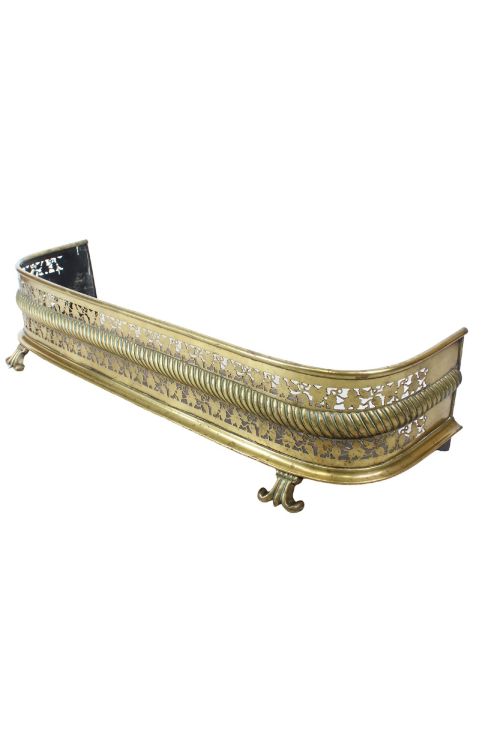
A vintage brass fire kerb, commonly styled as a fireplace fender or curb fender, sits directly on the hearth to contain stray embers and hot coals. These fireplace accessories span several distinct periods, with Victorian and Edwardian examples appearing most frequently alongside 19th-century designs.
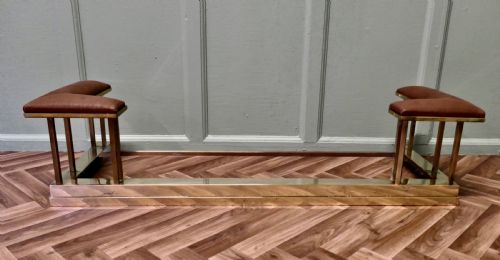
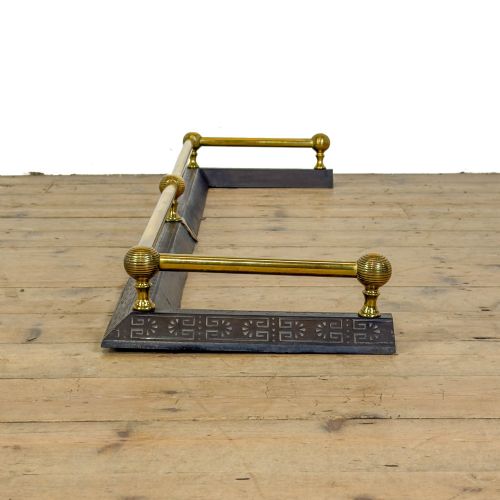
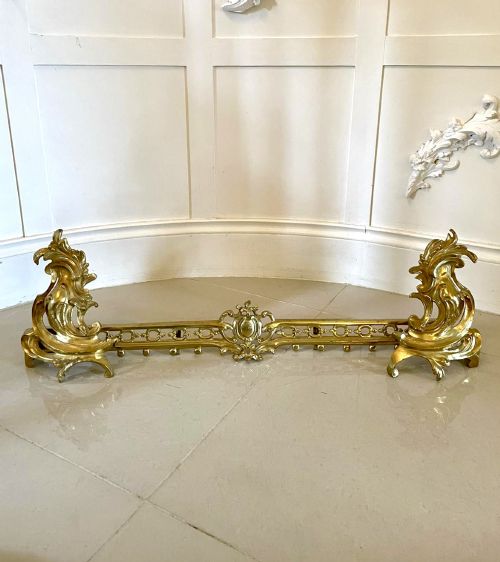
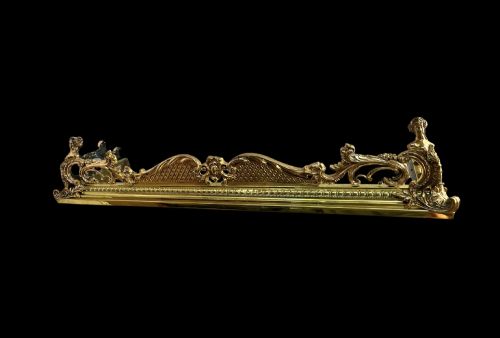
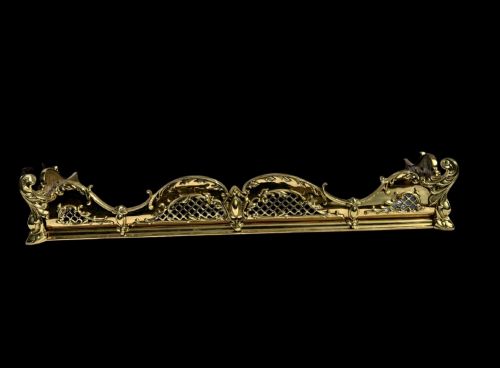
The selection ranges from simple extending brass rails to ornate French Rococo, Louis XVI Neoclassical, and flowing Art Nouveau styles. Materials often combine brass with iron, steel, copper, or bronze, occasionally incorporating leather seating pads on club fenders.
How they were made
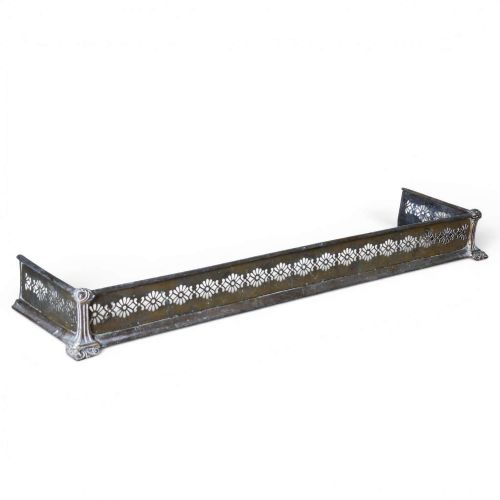
Craftsmen utilised cast brass, sheet brass, and tubular metal, frequently mounting the polished components upon sturdy iron or steel bases for necessary weight. Pierced sheet metal work, stamped scrollwork, and turned spindles required precise hand-fitting by Victorian and Edwardian metalworkers.
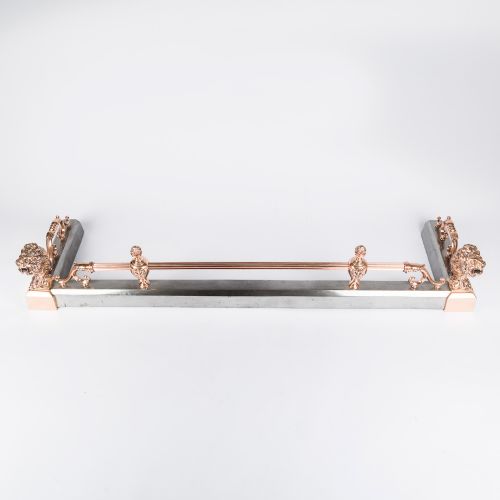
Extending mechanisms allowed single fenders to adjust in length, while specialised club fenders incorporated leather-upholstered corner seats directly onto the brass frames for fireside warmth.
The inventory spans Victorian, Edwardian, Regency, and early 20th-century periods, showcasing brass alongside iron, steel, copper, bronze, and leather.
What varies in quality
Weight and gauge of the metal dictate the structural integrity of a kerb, distinguishing heavy cast pieces from lighter folded sheet construction. The crispness of cast brass ornaments, delicate piercing work, and the integration of secondary metals like bronze and copper reveal the original maker's skill.
Subtleties in patination, the smoothness of extending joints, and the quality of leather upholstery on club variants separate utilitarian hearth guards from finer decorative examples.
The Vintage Brass Fire Kerb Glossary
- Club fender
- A low fireside guard featuring upholstered leather seat pads on the corners, allowing people to sit close to the hearth. These sturdy frames combine brass supports with comfortable seating.
- Pierced brass
- Sheet metal punched or cut through with decorative openwork patterns such as lattices or foliage. This technique lightens the visual weight of the heavy metal frame.
- Curb fender
- An alternative spelling and term for a fire kerb or fender that sits on the floor around the hearth perimeter. It forms a physical barrier between the open fire and the room.
- Spindle fender
- A design featuring vertical turned metal rods arranged in a row around the hearth frame. These spindles allow light from the fire to pass through while containing embers.
Vintage Brass Fire Kerb: Frequently Asked Questions
How do I clean a brass fire kerb?
Dust the metal regularly with a soft cloth to prevent soot buildup. Avoid harsh chemical cleaners that strip the historic patination from the brass.
For deeper cleaning, use a mild metal polish applied sparingly with a clean rag. Buff gently to maintain the warm finish without rubbing away the age of the piece.
What is a club fender used for?
A club fender serves as both a protective hearth barrier and a low seating bench. The corner seats were traditionally used to warm up close to the fire.
These versatile pieces became popular in gentlemen's clubs and large country houses during the late Victorian and Edwardian periods.
Are these fenders adjustable in length?
Many period examples feature extending mechanisms that allow the frame to slide wider or narrower. This engineering enabled owners to fit the heavy metal guard precisely to different hearth sizes.
Fixed-size models also appear frequently, requiring exact measurements of your fireplace opening before purchase.
How do I identify a Victorian brass kerb?
Victorian examples often display heavy cast brass construction, pierced sheet designs, or turned spindles. They frequently incorporate iron or steel internal components for added structural weight.
Stylistic cues range from ornate Rococo revival scrolls to simpler mid-19th-century geometric patterns.