


Polished Steel Fender
A polished steel fender keeps stray embers from the hearth while bringing a bright metallic finish to the fireplace.
What a polished steel fender is
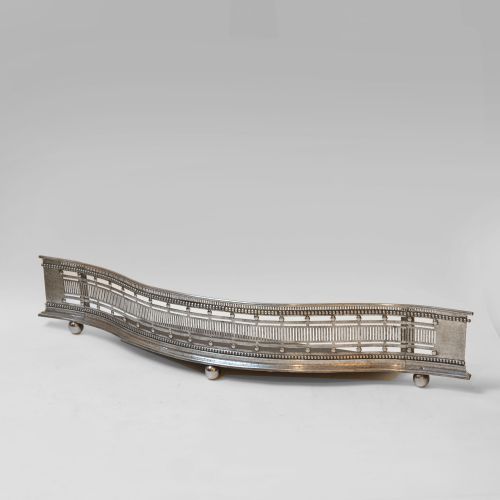
A polished steel fender sits directly on the hearth around the base of the fireplace, containing ash and sparks while framing the grate. These metal barriers range in date from the mid-eighteenth century through to the nineteenth century, covering the Georgian, Regency and Victorian periods.
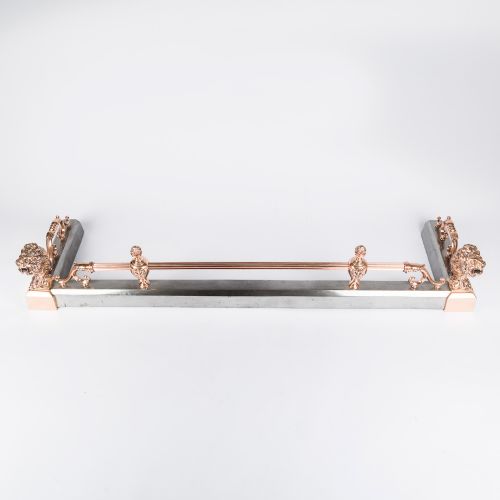
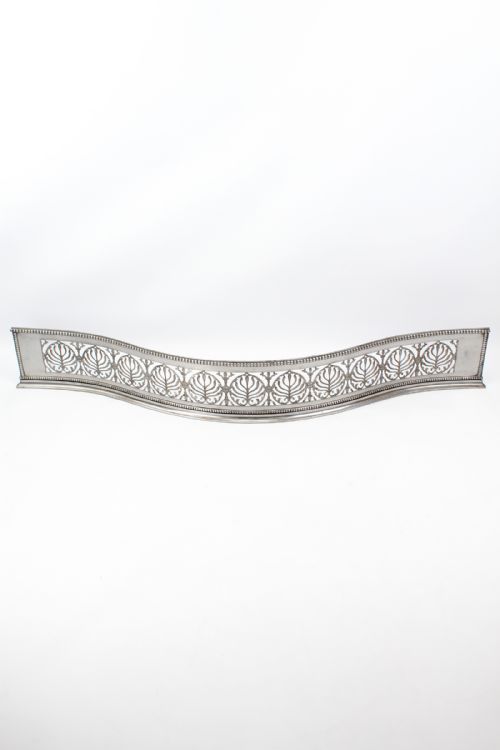
The simplest examples take a straight or bowfront shape in plain steel, whilst grander variations incorporate brass galleries, copper accents, and upholstered leather seats in club fender formats. Forms vary from serpentine and D-shaped profiles to extended lengths designed for substantial fireplaces.
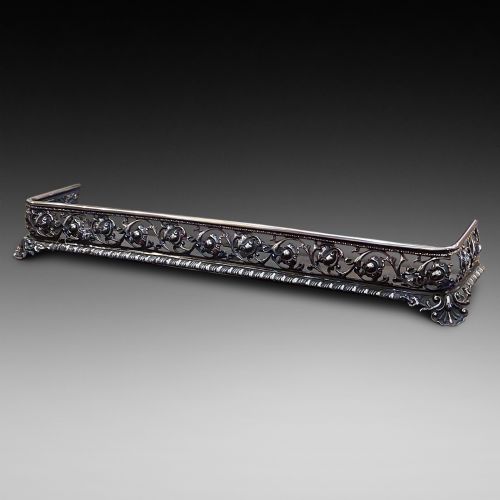
Buyers encountering this selection will find standard metal curbs alongside ornate club fenders featuring decorative flower and dragon detail, pierced panels, or cut steel work. Origins span the Georgian and Victorian eras, utilising the characteristic lustre of polished iron and steel.
How they were made
Makers constructed these pieces using heavy iron and steel plate, often hammering and cutting the metal into serpentine or bowfront outlines. Pierced decorative motifs were hand-punched or cut directly into the steel surface to create openwork patterns.
Many examples combine polished steel with contrasting metals, incorporating cast or sheet brass mounts, copper sections, and gilt brass details. Upholstered club versions integrate leather seats supported by internal iron and steel frameworks.
Retail Price Guide 2026
Typical UK retail prices for polished steel fender, calculated from the Sellingantiques database of over a million retail prices indexed since 2003. This retail price guide relies exclusively on Sellingantiques data; no external sources or auction records are used, so the figures do not describe the wider market.
Some nineteenth-century makers incorporated dragon details alongside traditional floral motifs into their steel hearth guards.
What varies in quality
Quality rests in the precision of the metalwork, distinguishing heavy hand-cut steel and crisp serpentine shaping from simpler folded plates. Superior examples show refined proportions, particularly in complex pierced friezes and tightly fitted corner joints.
The integration of secondary materials defines the upper tier, where cast brass mouldings, detailed floral engravings, or original leather upholstery elevate the piece. The depth and clarity of the polish across the steel surface further separate standard items from finer workshop output.
Thomas Hadden
The Polished Steel Fender Glossary
- Fender
- A low metal barrier placed in front of an open fireplace to contain falling coals and sparks. They are typically fashioned from steel, iron, or brass.
- Serpentine front
- A curved shape that swells outward in the centre and curves inward at the ends, creating a gentle wave effect along the front edge.
- Club fender
- A low, upholstered-seat variation of the standard hearth guard that allows people to sit close to the fire. They often feature leather upholstery and brass or steel frames.
- Pierced
- A technique where patterns are cut or punched directly through sheet metal to let light through and create decorative openwork friezes.
- Bowfront
- A convex curved front profile that arcs outward toward the viewer, commonly seen on Georgian hearth guards.
Frequently Asked Questions
How do I clean a polished steel fender?
Maintain the bright metal surface using dry cloths and gentle metal dressings suitable for historic steel. Avoid harsh abrasives that can strip the original finish.
Keep the metal away from damp environments to prevent surface oxidation and rust spots from forming on the iron components.
What is a club fender?
A club fender incorporates upholstered leather seats along the top rails of the metal hearth barrier. This design originated to provide additional seating directly beside the fireplace.
Such pieces often feature extended proportions and combine steel frames with brass detailing and padded leather tops.
How do I date a steel fender?
Examine the silhouette, construction methods, and decorative motifs to establish the period. Georgian examples often display serpentine or bowfront outlines with pierced steelwork.
Victorian variations frequently introduce mixed metals, combining steel with brass galleries, copper accents, or larger proportions.
Will these fit any fireplace?
Dimensions vary considerably, from compact hearth guards to long club versions designed for substantial chimney breasts. Measure your fireplace opening and hearth space carefully before selecting a piece.
Pay attention to the internal width and depth to ensure the metal curb sits correctly around your specific grate.