

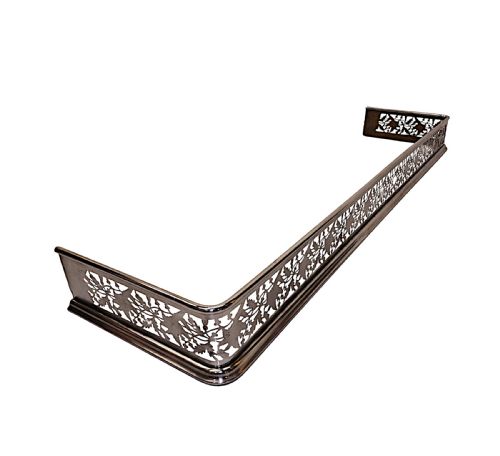
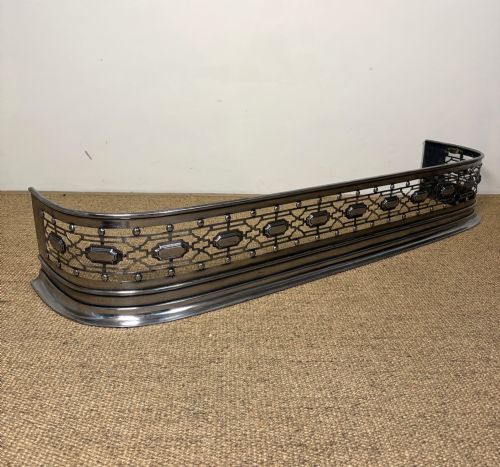
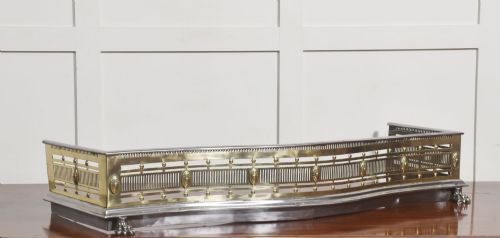
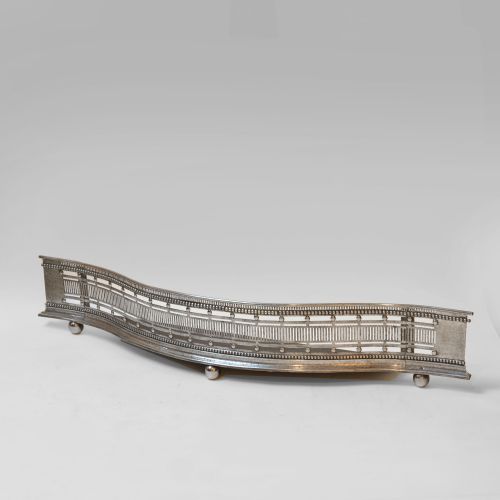



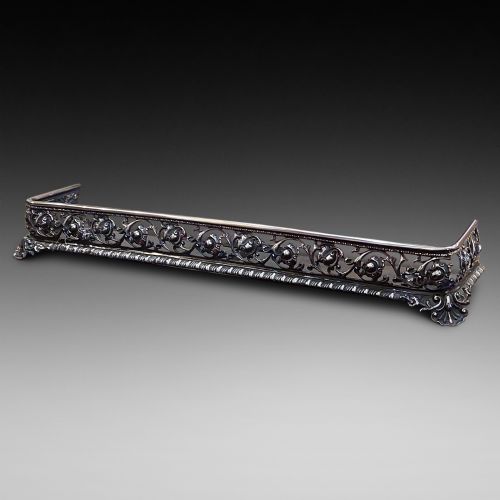

Pierced Steel Fender
A pierced steel fender sits before a hearth, turning a utilitarian necessity into a refined architectural boundary for the fire.
Pierced Steel Fender
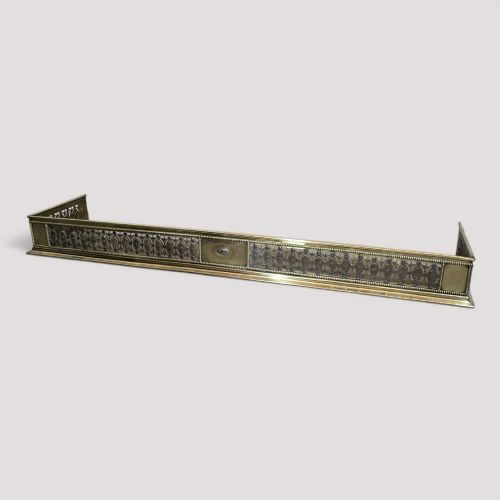
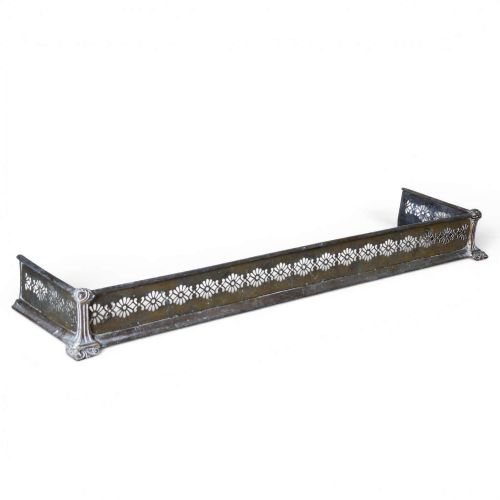
A pierced steel fender forms a low protective barrier around a fireplace hearth, catching falling embers while framing the hearth visually. The pieces found here span the Georgian and Victorian eras, alongside a single representative dated to seventeen fifty.
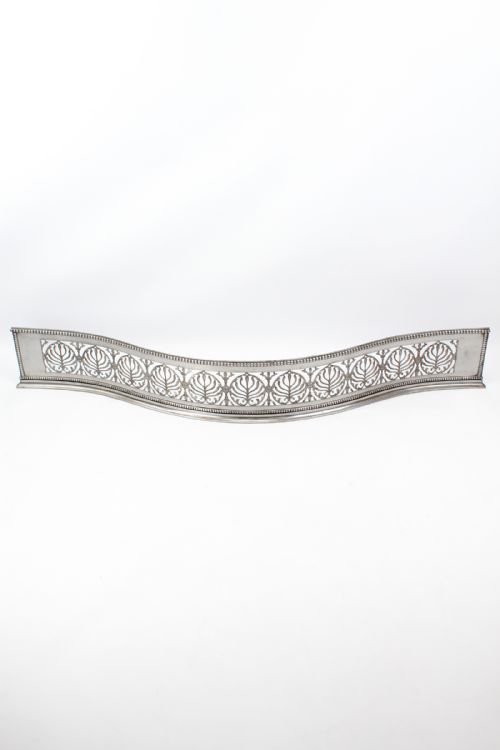
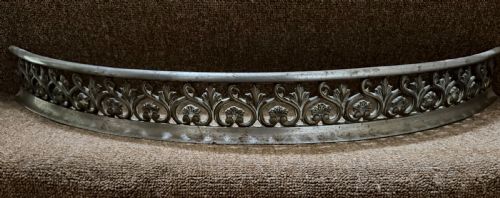
Most examples favour a Georgian aesthetic, appearing in standard straight formats or curved bowfront and serpentine profiles. Alongside purely steel iterations, makers frequently incorporated brass mounts, cut steel details, and iron elements to contrast with the polished body.
These hearth guards originate primarily from eighteenth and nineteenth-century English workshops, serving domestic sitting rooms and formal parlours alike. Their survival depends heavily on the durability of heavy gauge metalwork combined with periodic maintenance.
Construction and metalwork
Blacksmiths and metalworkers shaped these objects from sheets of iron and steel, utilising hand-puching and cold-chiselling techniques to create intricate pierced patterns across the metal. Polished steel surfaces required intensive manual abrading to achieve a bright finish that reflected the firelight.
Makers integrated contrasting brass feet, rims, and cut steel studs through riveting or brazing, joining distinct metals into a cohesive architectural unit. Engraving often ornamented the top rails and flat surfaces, adding linear definition to the pierced friezes.
Pierced Steel Fender Retail Price Guide 2026
Typical asking prices for pierced steel fender among the pieces listed under this phrase on Sellingantiques today, from the lower quarter to the upper quarter. They describe what is for sale here now, not the wider market.
Object forms include straight curbs alongside bowfront and serpentine profiles designed for varying hearth shapes.
Judging metalwork quality
Superior quality rests in the precision of the pierced decoration and the crispness of any engraved detailing, where steady handwork separates fine smithing from hurried production. Heavier gauge steel provides structural integrity that prevents warping under decades of hearth heat.
The harmony between steel bodies and secondary brass or cut steel embellishments dictates visual success, with tighter joinery and balanced proportions marking the better workshops. Surfaces retaining an even, historic polish rather than aggressive modern abrasion command greater appreciation.
The Pierced Steel Fender Glossary
- Fender
- A low metal guard placed around the base of a fireplace to contain coals and protect the room's flooring. These barriers range from simple iron bars to highly decorative pierced plates.
- Serpentine
- A shape featuring a gentle, undulating curve that flows outward in the centre and curves back at the ends. This profile is frequently seen on finer Georgian hearth surrounds.
- Bowfront
- A curved convex architectural profile that projects outward into the room. On fireplace accessories, this shape allows the barrier to clear hearthstones gracefully.
- Cut Steel
- Faceted steel studs riveted individually to a metal backplate to catch and reflect light like small diamonds. This technique adds brilliant sparkle to polished ironwork.
- Hearth Curb
- Another term for the low border or boundary framing the fireplace opening. It provides a solid masonry or metal edge against which the room's floor terminates.
Pierced Steel Fender: Frequently Asked Questions
What is a pierced steel fender?
A pierced steel fender is a decorative metal barrier placed on the floor directly in front of a fireplace hearth. It functions primarily to keep stray embers and hot coals contained safely within the hearth area.
Beyond safety, these metal guards serve an aesthetic purpose by framing the fireplace opening and adding architectural polish to the room. The perforated designs allow light from the fire to filter through the metalwork.
How do I clean polished steel?
Polished steel requires gentle maintenance to preserve its bright finish without stripping the historic patina or scratching the metal surface. Fine steel wool or specialised metal polishes are used sparingly to remove active tarnish or light oxidation.
Keeping the metal dry is essential because steel is susceptible to atmospheric moisture near unheated chimneys. Regular dusting and occasional light waxing help protect the polished surface from future corrosion.
How do I measure for a fender?
Measuring requires taking the exact width and depth of the hearthstone area where the guard will rest against the floor. Account for any protruding hearth surrounds or skirting boards that might interfere with straight or curved metal edges.
Fenders must sit squarely on non-combustible flooring material just outside the fireplace opening. Checking the interior and exterior dimensions ensures the piece clears the grate legs comfortably.
Are these fenders safe for use?
These antique metal barriers remain fully functional for containing solid fuel fires when placed on a proper hearth. Steel and iron construction withstands high temperatures without degrading under normal domestic use.
Buyers should ensure the fender is stable and heavy enough to remain stationary if bumped. Modern fire safety regulations still benefit from the traditional ember-catching role these guards provide.