



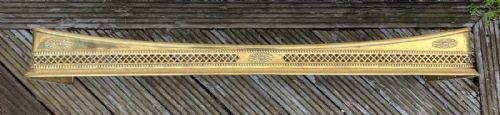
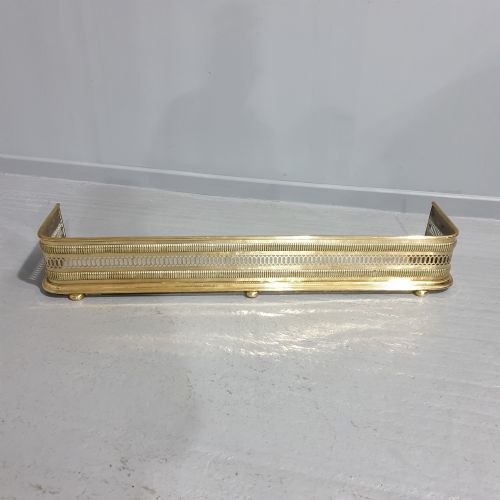
Georgian Brass Hearth Curb
A georgian brass hearth curb keeps the coals contained while bringing a warm metallic gleam to the fireplace.
Georgian Brass Hearth Curb
A georgian brass hearth curb sits at the base of a fireplace to protect the room from stray embers and hot ash. These heavy metal barriers define the hearth area and frame the grate, anchoring the entire fireplace arrangement in the room.
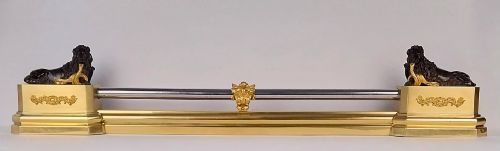
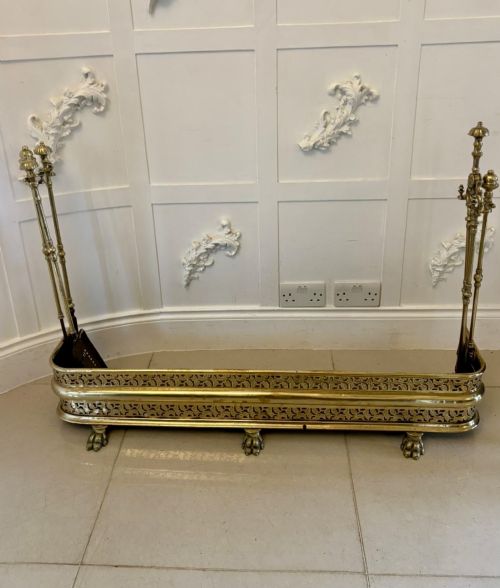
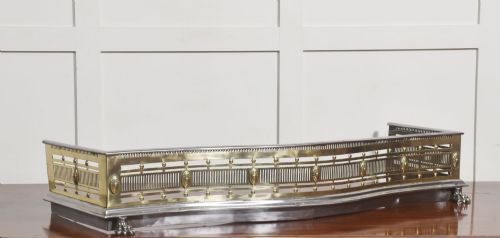
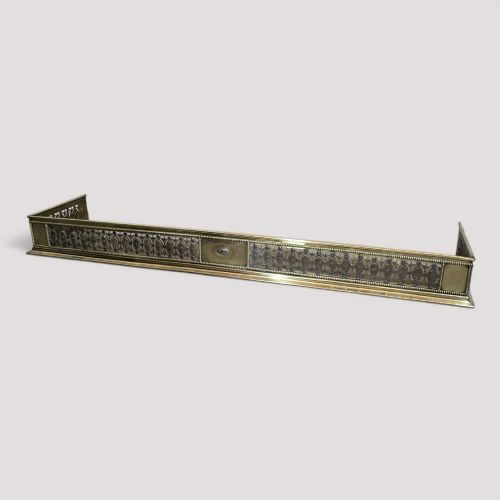
The pieces seen on this page span the Georgian, Regency, and Victorian periods, with examples ranging from curved kerb designs to straight fenders incorporating steel, cast iron, and cut steel. Many feature polished brass or cast brass construction alongside details like pierced metalwork and scrolled decoration.
Buyers will encounter forms influenced by Neoclassical and Adam styles, as well as specific makers such as George Bullock. These hearth furniture accessories combine functional containment with the decorative metalwork typical of nineteenth-century interiors.
How they were made
These fenders combine brass with iron and steel, often pairing polished brass or cast brass frames with cut steel or cast iron components. This mixed-metal construction allowed makers to contrast the bright golden sheen of brass against the dark, gunmetal grey of polished steel.
Makers shaped the metal through casting, piercing, and curving to achieve ornate decorative schemes. Pierced metalwork and scrolled elements required careful hand-finishing, while cut steel applications added faceted sparkle to the polished surfaces.
Georgian Brass Hearth Curb Retail Price Guide 2026
Typical asking prices for georgian brass hearth curb among the pieces listed under this phrase on Sellingantiques today, from the lower quarter to the upper quarter. They describe what is for sale here now, not the wider market.
Listings here feature items from the Georgian, Regency, and Victorian eras, utilising polished brass, cast iron, and cut steel.
What varies in quality
The standard of a hearth curb depends on the weight of the metal and the crispness of the casting. Heavy cast brass and thick polished steel indicate superior construction that resists heat distortion and heavy daily use.
Design complexity also separates standard items from finer examples. Fenders with pierced patterns, cut steel embellishments, or distinctive styling associated with designers like George Bullock demonstrate greater artisan skill during manufacture.
The Georgian Brass Hearth Curb Glossary
- Hearth curb
- A low metal barrier placed around the edge of a fireplace hearth to contain fuel and sparks. It serves both a protective function and a decorative framing role.
- Cut steel
- Small, faceted steel studs riveted to a backing plate to catch the firelight. This technique provides a brilliant sparkle distinct from plain polished metal.
- Pierced brass
- Sheet brass that has been perforated with decorative patterns using saws or punches. This method lightens the visual weight of the heavy metal frame.
- Regency style
- A design period spanning the early nineteenth century characterised by classical restraint and archaeological revival. These pieces often feature clean curves and disciplined ornamentation.
Georgian Brass Hearth Curb: Frequently Asked Questions
What is a hearth curb used for?
A hearth curb acts as a physical barrier at the base of the fireplace. It stops rolling logs and hot embers from spilling onto the floorboards or carpets.
Beyond safety, it frames the fireplace ensemble and adds a finished architectural look to the room.
How do I clean brass and steel?
Polished brass requires gentle cleaning with a soft cloth and a dedicated metal polish to maintain its brightness. Care must be taken not to scrub away thin historic platings or antique patination.
Steel components should be kept dry and lightly oiled to prevent rust from forming in damp conditions.
Are these fenders suitable for daily use?
Most antique fenders are robustly constructed from heavy cast brass and iron, making them fully functional around modern hearths. Their solid metal frames easily withstand the radiant heat of an open fire.
Buyers should measure their hearth dimensions carefully to ensure the curb fits the fireplace opening correctly.
How do I date a brass fender?
Dating relies on observing the prevailing styles, such as Neoclassical Adam motifs, Regency curves, or Victorian pierced patterns. The choice of materials, including combinations of polished steel and cast brass, also points to specific nineteenth-century decades.
Construction marks and assembly methods provide further clues regarding the manufacturing period.