

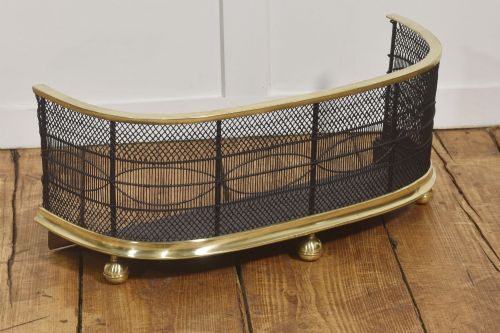


Regency Brass Fender
A regency brass fender grounds a hearth with architectural weight and polished gleam, framing the open fire with the clean lines of the period.
Regency Brass Fender
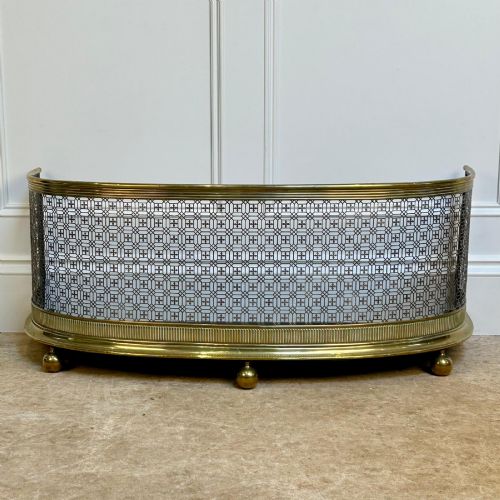
A regency brass fender sits at the base of a fireplace to contain stray embers and protect the floor, taking the form of a low metal barrier around the hearth. When you search for a regency brass fender, you encounter low kerbs, curved guards and flat frames designed to fit neatly against the chimney breast.
The pieces on this page span the nineteenth century and the Georgian era, with strong representation from the Regency and William IV periods. Most examples combine solid brass with iron or steel frames, while others incorporate woven wire mesh for added protection.
Materials and construction methods
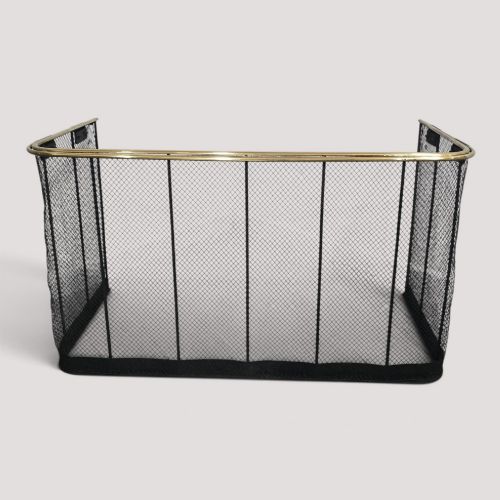
Makers shaped these items using heavy cast brass, polished sheet brass and wrought iron, joining structural elements with rivets and screws. Many incorporate woven wire mesh or woven iron wire to form protective fire guards that allowed heat to circulate while blocking sparks.
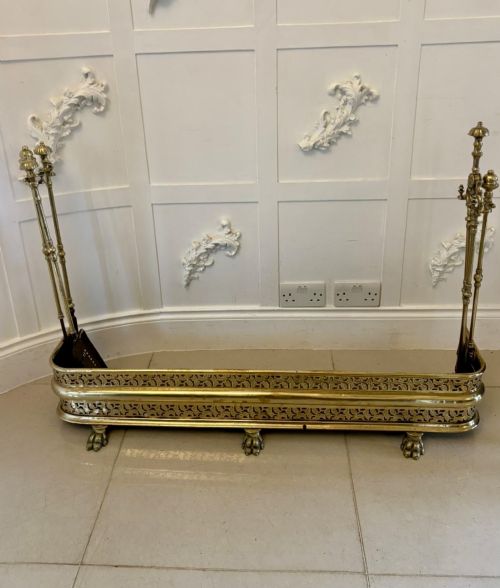
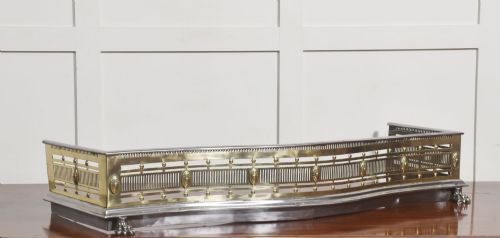
Surface finish depended on the primary metal, with polished steel and bright brass demanding regular attention to maintain their sheen. Pierced work and fretted patterns appeared alongside applied brass garlands and cast details such as lions.
Regency Brass Fender Retail Price Guide 2026
Typical asking prices for regency brass fender among the pieces listed under this phrase on Sellingantiques today, from the lower quarter to the upper quarter. They describe what is for sale here now, not the wider market.
Assessing quality and character
Quality reveals itself in the thickness of the metal and the crispness of any pierced decoration or cast ornament. Thicker gauge brass and solid iron cores provide the weight needed to stay firmly in place on a stone hearth.
The presence of original fittings, such as matching fire irons or integrated kerb sections, separates standard domestic examples from finer workshop productions created in the manner of makers like George Bullock.
The Regency Brass Fender Glossary
- Kerb fender
- A low metal barrier placed directly on the floor around the hearth opening. It forms the primary boundary between the fire and the room.
- Nursery fender
- A tall guard incorporating wire mesh or wirework designed to keep children and trailing garments safely away from open flames. These often date from the early nineteenth century.
- Pierced brass
- Sheet metal cut through with decorative geometric or floral patterns. This technique reduced weight while allowing light from the fire to shine through the design.
- D end
- A fender shape with rounded ends that curve back toward the fireplace wall. This profile became popular during the Regency period for grates set into flat masonry.
Regency Brass Fender: Frequently Asked Questions
What is a regency brass fender used for?
These metal barriers were placed on the floor in front of an open hearth to stop burning coals and sparks from rolling out onto wooden floorboards or rugs.
They also served a decorative purpose, framing the fireplace to give the room a finished appearance during warmer months when fires were not lit.
How do I clean a brass fender?
Dust the surface regularly with a soft cloth and apply a traditional metal polish sparingly only when the brass has lost its brightness. Take care around iron mesh or steel sections to avoid transferring cleaning compounds to vulnerable areas.
Avoid harsh abrasive pads that can scratch the original metal surface and diminish the patina built up over decades.
What is the difference between a fender and a guard?
A standard fender is a low kerb sitting flat against the hearth, primarily designed to contain fuel and ash within the fireplace opening. A fire guard includes vertical panels or wire mesh to create a taller barrier extending up in front of the fire.
Many examples combine both functions by adding a high wire mesh screen to a sturdy brass base frame.
How do I spot a Regency period piece?
Regency items often feature classical Neoclassical motifs such as pierced frets, crisp mouldings and D-end curves that match the architectural style of the early nineteenth century. Construction details like hand-cut joinery and heavy gauge cast brass help distinguish older pieces from later reproductions.
Evidence of wear, including subtle dents and polishing marks on the underside, confirms the long history of these hearth accessories.