

Antique Brass Curb
An antique brass curb establishes the visual anchor of a hearth, combining sturdy metalwork with period ornamentation to frame the fireplace floor.
Antique Brass Curb
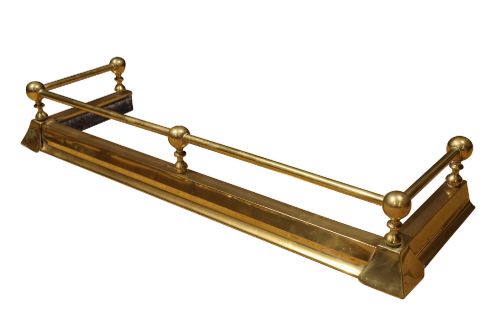
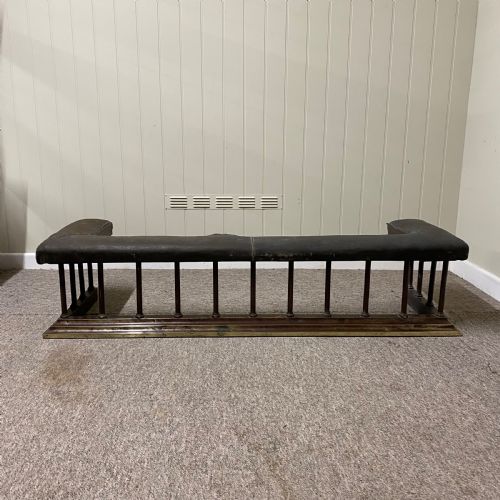
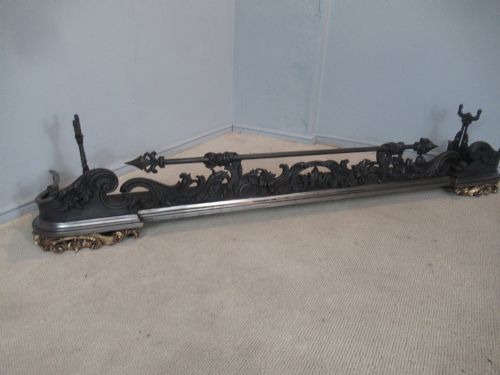
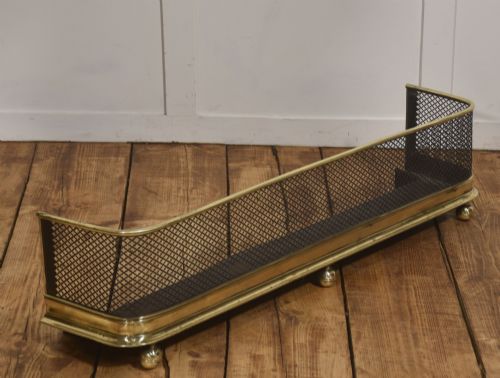
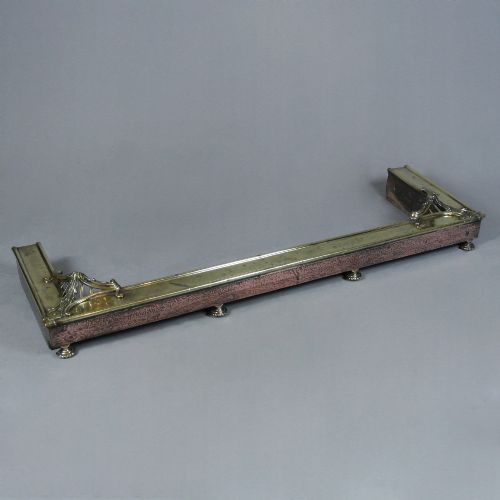
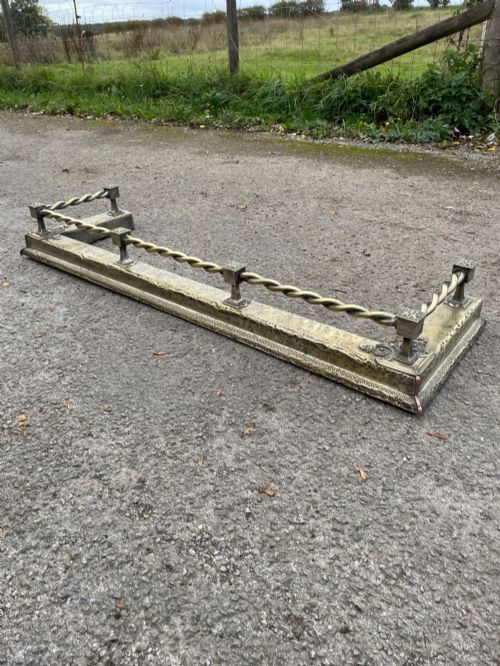
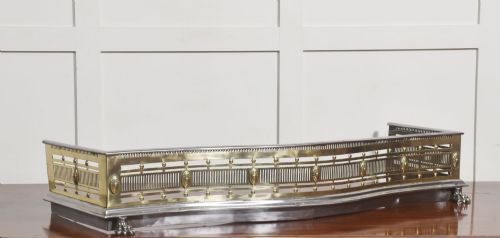
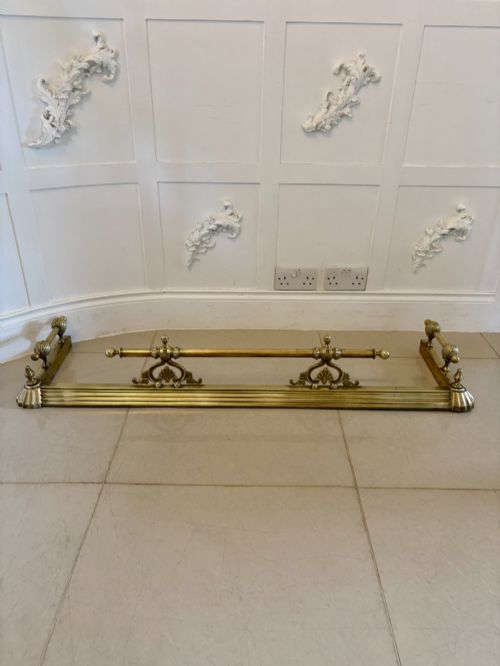
When you search for an antique brass curb, you are examining hearth furniture designed to contain embers and protect flooring in nineteenth and early twentieth century rooms. The forms appearing on this page range from simple extendable rails to elaborate club fenders fitted with leather seating.
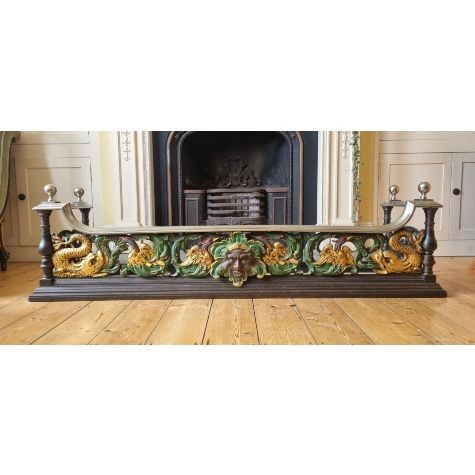
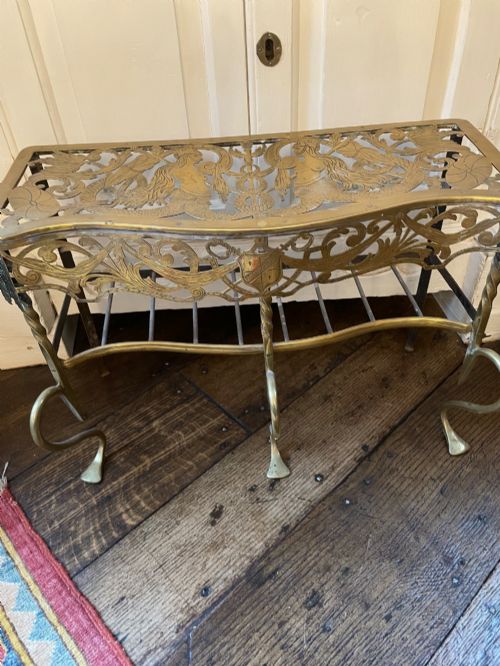
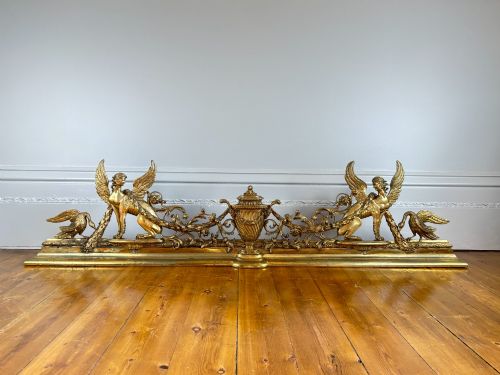
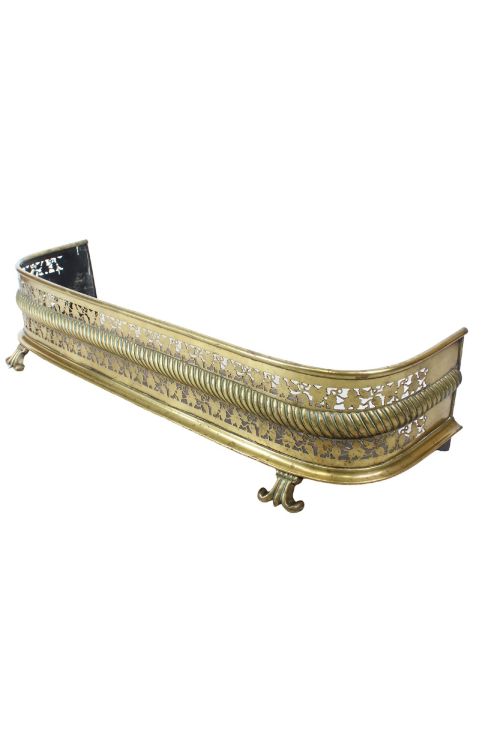
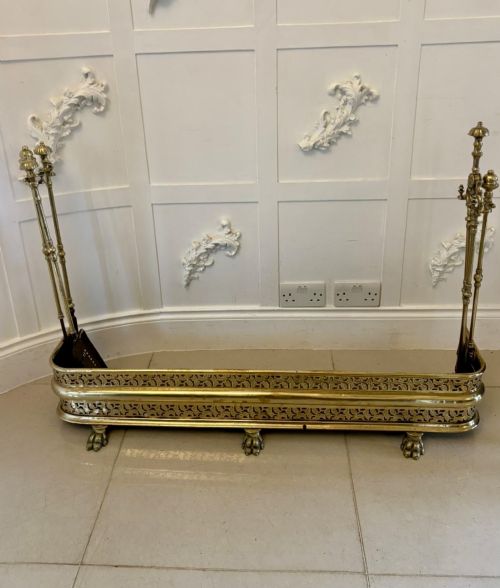
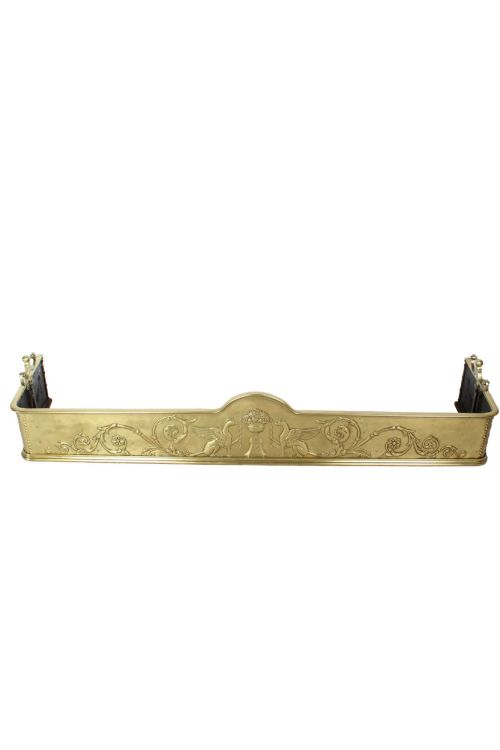
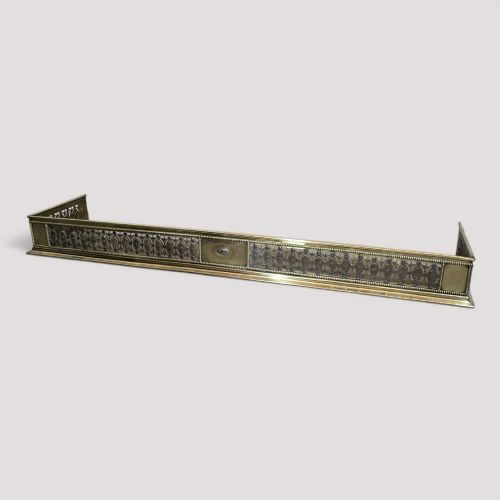
Victorian examples dominate the selection, frequently employing pierced brass galleries, cast iron internals, and steel components. You will also encounter Edwardian iterations, earlier Regency designs, and French styles featuring ormolu or gilt bronze details.
The primary function involves surrounding the hearth area, though many pieces double as low seating in the case of club fenders. These architectural items define the domestic fireplace, anchoring the room with solid metal construction.
Materials and construction
Makers constructed these curbs using a combination of brass, cast iron, and steel, often pairing a bright outer brass shell with a heavy iron or steel frame for structural integrity. Pierced sheet brass and cast brass elements provide the decorative surfaces, while leather upholstery appears on specialised club variants.
Techniques relied upon casting, hand-piercing, and riveting, with individual components joined to allow for extending mechanisms on adjustable models. Gilt bronze, ormolu, and copper finishes are applied to highlight ornamental motifs in French Rococo, Neoclassical, and Art Nouveau styles.
Antique Brass Curb Retail Price Guide 2026
Typical asking prices for brass curb among the pieces listed under this phrase on Sellingantiques today, from the lower quarter to the upper quarter. They describe what is for sale here now, not the wider market.
Listings feature brass, iron, steel, and leather, spanning Victorian, Edwardian, Regency, and Art Deco periods.
Evaluating craftsmanship and condition
Quality reveals itself in the weight of the metal and the crispness of the cast or pierced ornamentation. Superior examples display deep relief work, robust structural iron inner frames, and securely joined corners rather than thin, pliable sheet metal.
The integration of secondary materials such as mature tan leather on club fenders or cut steel detailing dictates the upper tier of the range. Original patination and intact fire irons further distinguish exceptional specimens from standard production pieces.
E F Caldwell New York
The Antique Brass Curb Glossary
- Curb
- A low metal barrier placed around a hearth to contain ash and stray coals. This term is frequently used interchangeably with fender.
- Club fender
- A hearth fender equipped with upholstered seat cushions, popular in larger reception rooms. They often feature leather tops supported by brass pillars.
- Ormolu
- Gilt bronze ornamentation applied to furniture and hearth fittings, common in French revival pieces. It provides a rich, gold-coloured finish.
- Pierced brass
- Sheet metal cut through with decorative openwork patterns. This technique lightens the visual weight of the heavy brass border.
Antique Brass Curb: Frequently Asked Questions
What is an antique brass curb used for?
These metal barriers sit on the floor directly in front of an open fireplace to prevent hot embers from rolling onto carpets or floorboards. They served a practical safety purpose while defining the hearth as a focal point of the room.
Over time, certain variants like club fenders evolved to incorporate padded leather seats, turning the hearth surround into a sociable bench close to the warmth of the fire.
How do I style a club fender in a modern room?
A club fender works well as a grounding element in a living room, providing both metallic texture and low seating. Positioning one around an active or decorative fireplace creates an instant sense of architectural history.
Keep the surrounding floor space clear to let the brass and leather details command attention without crowding the hearth area.
How do I tell a Victorian curb from an Edwardian one?
Victorian examples often feature heavier Neoclassical casting, ornate pierced brass galleries, or French Rococo influences. The iron and steel internals tend to be substantial and dark.
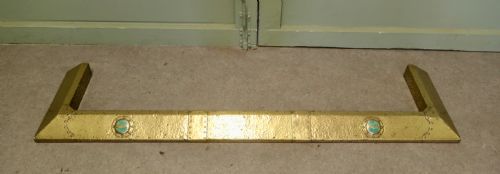
Edwardian pieces frequently show lighter proportions, occasionally incorporating simpler Arts and Crafts motifs or cleaner lines while retaining the traditional brass construction.
Can these fenders be adjusted for different fireplace sizes?
Many period examples feature sliding mechanisms designed to accommodate varying hearth widths. These adjustable versions allow the side sections to telescope inward or outward.
When measuring for a curb, check whether the piece is a fixed length or an extending model to ensure proper fit against your chimney breast.