

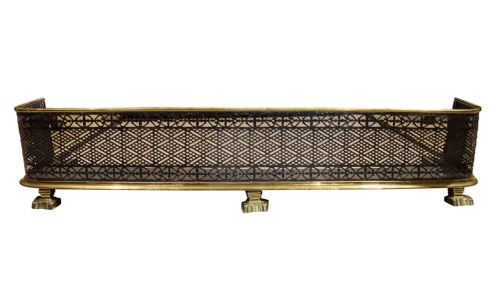
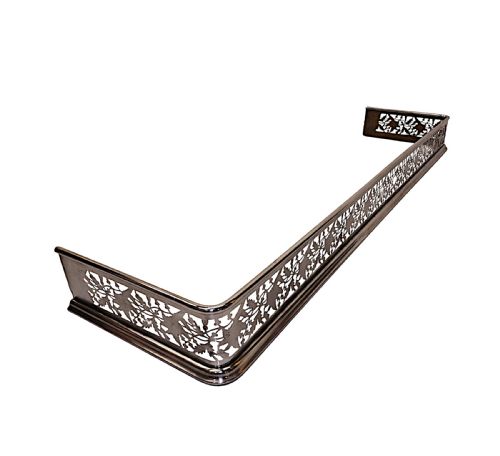
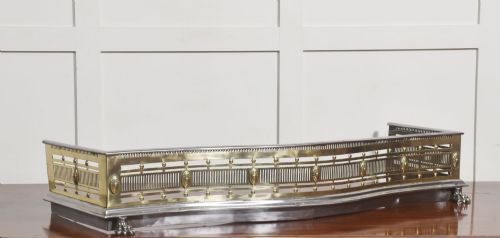
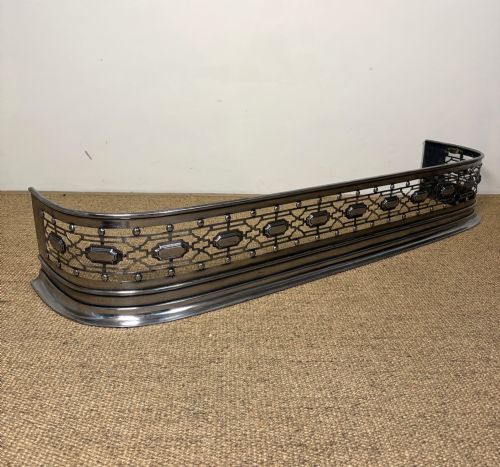


Steel Hearth Fender Guard
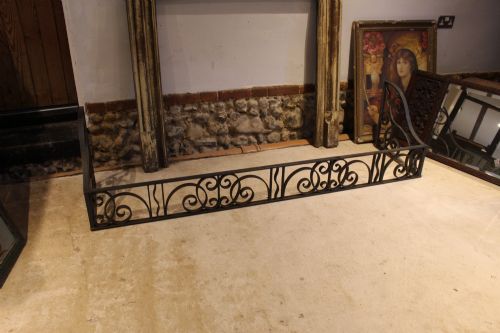
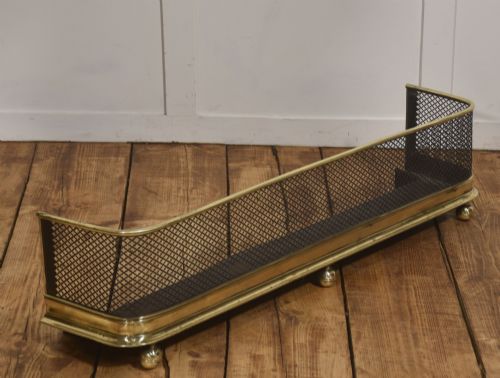
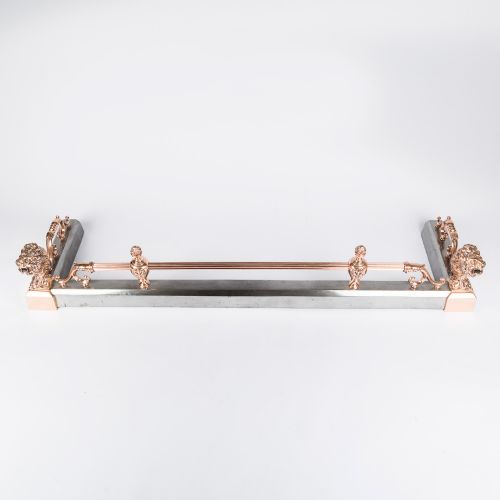
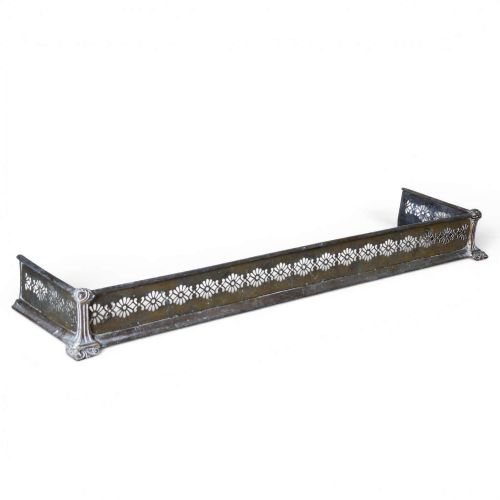
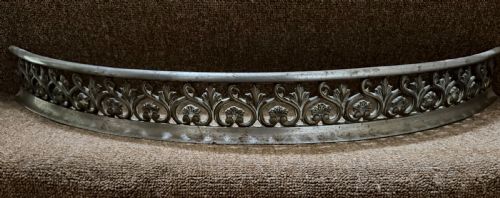
A steel hearth fender guard protects the room from stray embers while framing the fireplace with clean metalwork.
Steel Hearth Fender Guard
A steel hearth fender guard sits directly on the floor around the fireplace hearth to contain sparks and hold fire irons. The selection on this page centres on sturdy metal frames designed for daily domestic use.
The assortment spans several centuries, drawing heavily from Georgian, Victorian, and Edwardian periods. Common variations range from simple pierced low guards to substantial club fenders fitted with leather seating.
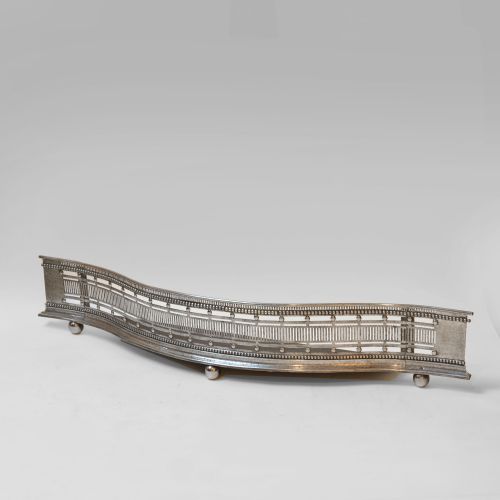
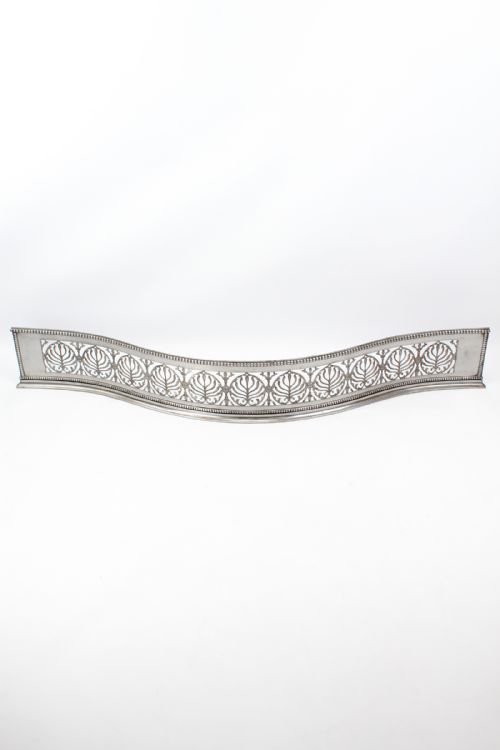
Makers shaped these utilitarian objects to suit changing domestic fashions, employing clean bowfront and serpentine layouts. Many examples combine steel bodies with contrasting brass galleries, bronze details, or oak bases.
How they were made
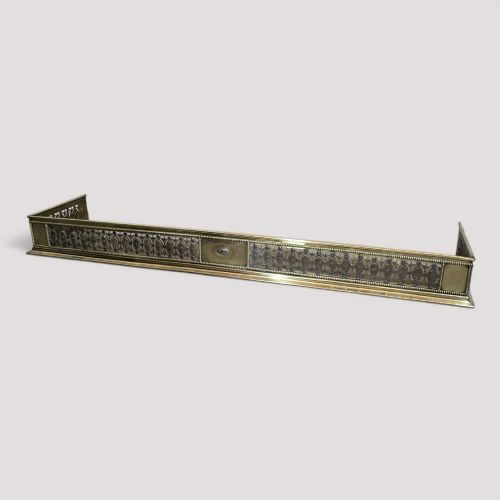
Blacksmiths and metalworkers built these guards primarily from steel and iron, frequently combining them with polished brass, copper, and bronze elements. Pierced decoration, cut steel studs, and engraved patterns added texture to the solid metal foundations.
Upholstered versions incorporate supple leather seats fixed over sturdy wooden frames, creating low benches around the hearth. Traditional construction methods relied on riveting and joining heavy sections of metal to withstand the heat of the hearth.
Steel Hearth Fender Guard Retail Price Guide 2026
Typical asking prices for steel hearth fender guard among the pieces listed under this phrase on Sellingantiques today, from the lower quarter to the upper quarter. They describe what is for sale here now, not the wider market.
One robust nineteenth-century club fender originated directly from the smoking room of the exclusive In and Out Club.
What varies in quality
The distinction between standard utility guards and finer specimens lies in the precision of the piercing and the crispness of the engraved detailing. Heavier gauge steel and intricate serpentine shaping require advanced metalworking skill.
Secondary materials influence the overall character, with polished steel, cast bronze mounts, and hand-tooled leather elevating the design. Well-preserved surface patination and intact decorative mounts separate superior examples from plain replacements.
George Bullock
The Steel Hearth Fender Guard Glossary
- Serpentine
- A gentle undulating curve shaped into the front metal bar of the guard. This flowing outline softens the rigid geometry of the fireplace surround.
- Pierced
- A decorative technique where holes or slots are cut through the steel plate in geometric or floral patterns. This openwork allows heat to circulate while reducing the weight of the guard.
- Club fender
- A low, U-shaped hearth guard featuring upholstered leather seats along the top. Originally utilised in gentlemen's clubs, they provide practical fireside seating.
- Cut steel
- Small multifaceted steel studs riveted onto the body to catch the firelight. This technique demands meticulous hand-fecundity to ensure each stud reflects the glow.
- Bowfront
- A curved frontal projection that sweeps outward toward the room. This shape accommodates larger hearth baskets and creates a softer line against the floor.
Steel Hearth Fender Guard: Frequently Asked Questions
What is a club fender?
A club fender is a low hearth guard equipped with cushioned leather top rails for seating. They originated as practical seating solutions close to the warmth of the fire.
These pieces combine rigid metal framing with comfortable upholstery, serving both as safety barriers and informal benches within the room.
How do I choose the right size?
Measure the width and depth of your fireplace hearth carefully before selecting a guard. The frame should sit comfortably around the perimeter without obstructing foot traffic or hearth tools.
Note the internal dimensions listed to ensure the guard clears your existing fireplace surround and fire basket.
Can I use these with an open fire?
These metal guards were built specifically to contain embers and protect flooring from stray sparks. Their sturdy steel and iron construction handles hearth heat reliably.
Keep in mind that upholstered leather seating sections should remain at a safe distance from direct, intense flames.
How do I maintain polished steel?
Maintain polished steel surfaces by keeping them dry and applying a light protective microcrystalline wax. Regular dusting prevents moisture from settling into the metal grain.
Avoid abrasive cleaners that can strip away historic patination and scratch the polished finish.