




Vintage Brass Dinner Gong
A vintage brass dinner gong is a striking household summons that brings period character to a hallway or dining room.
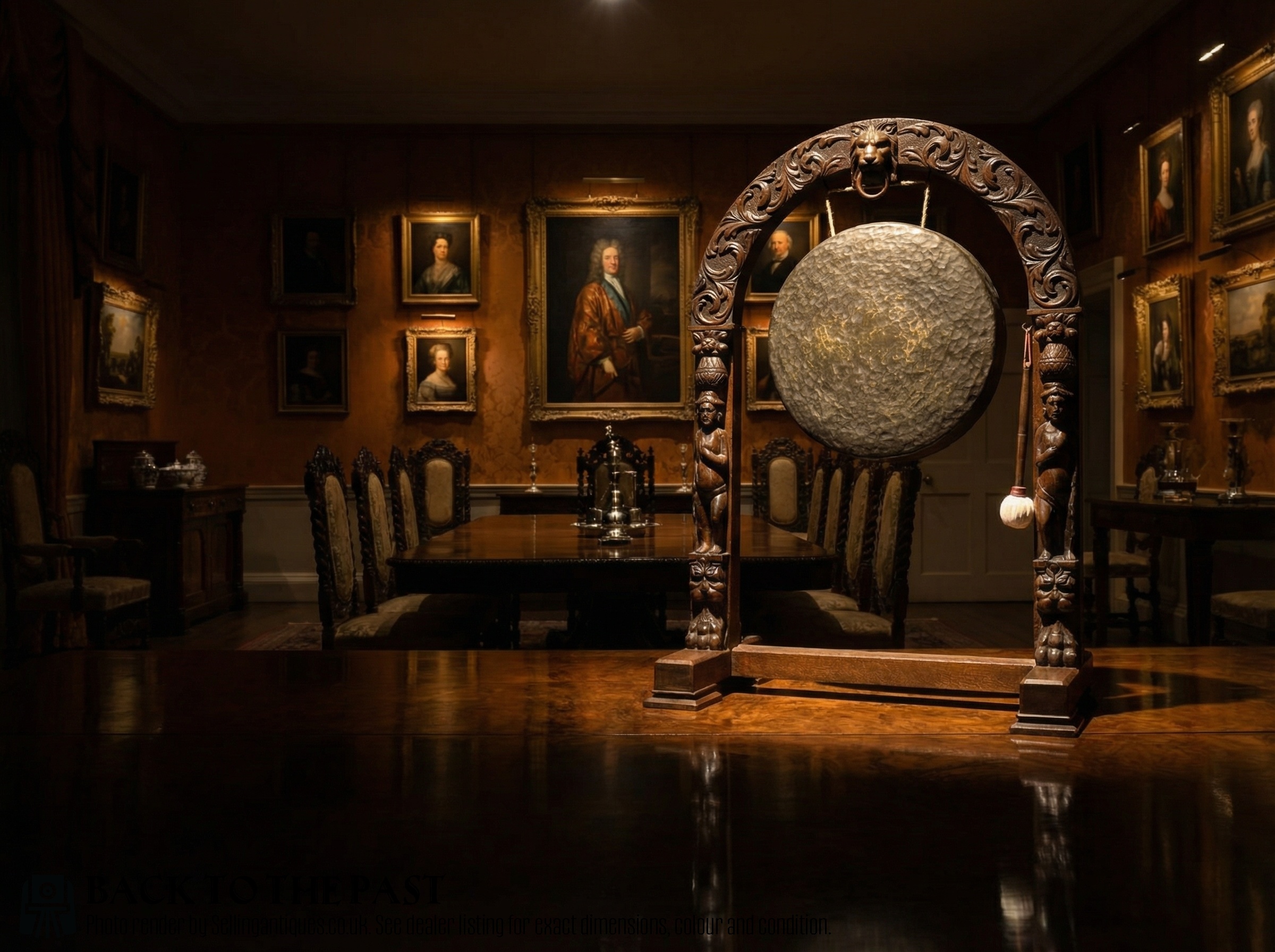
Vintage Brass Dinner Gong
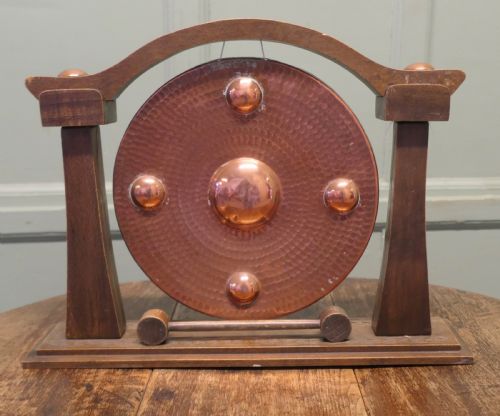
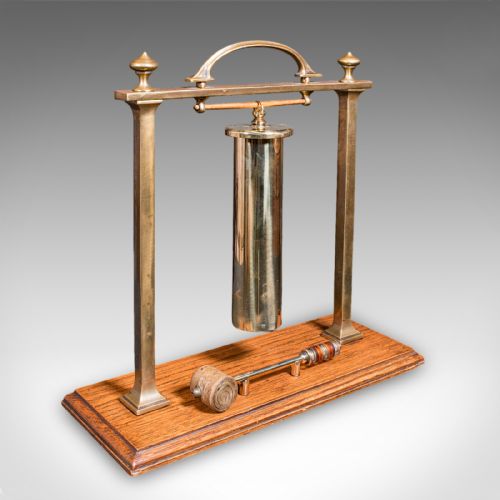
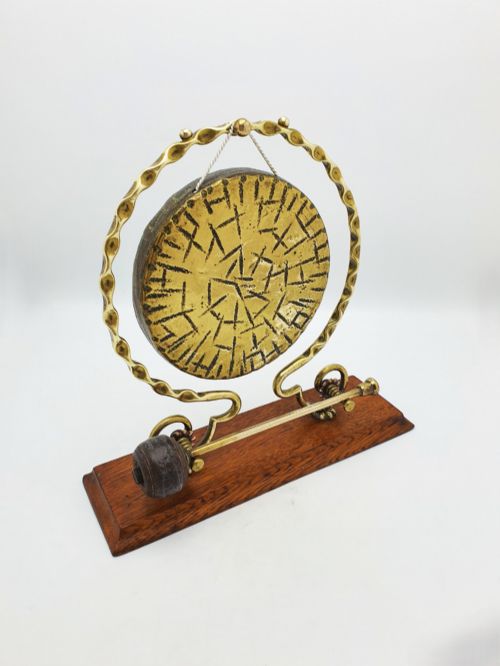
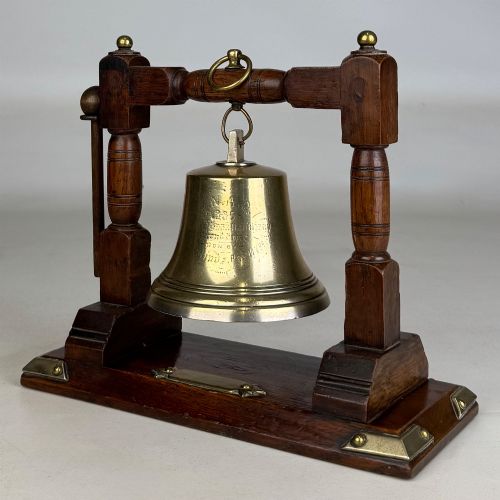
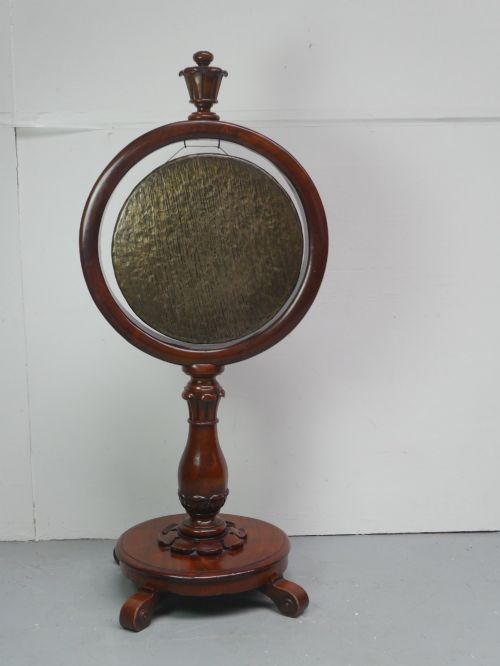
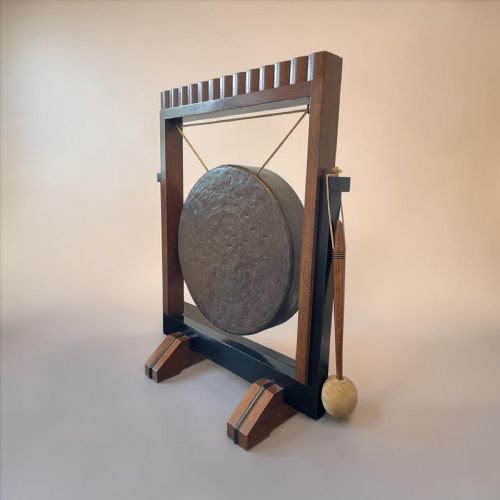
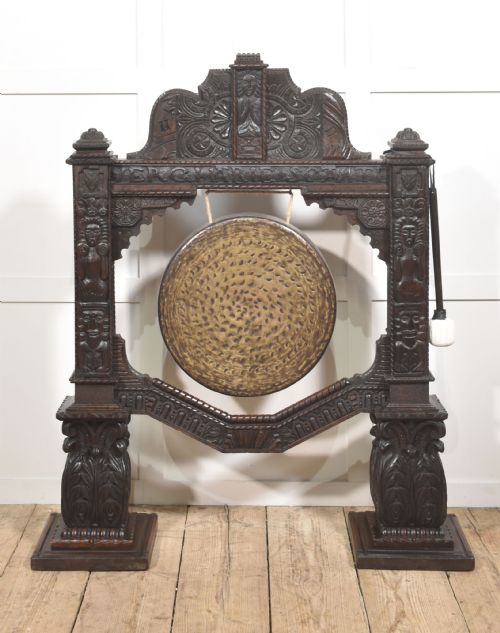
A vintage brass dinner gong combines a resonant metal disc or bell with a supporting stand, historically used in country houses and large households to announce meals. The most common version met on this page pairs a brass or bronze gong suspended by cord within a wooden frame, frequently fashioned from oak or walnut.
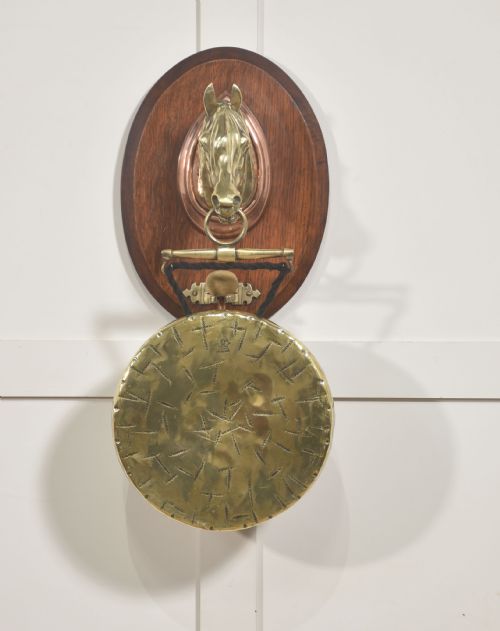
The selections span various eras from the nineteenth century through to the Edwardian period and the 1930s. Alongside standard table gongs, the forms include wall-hanging varieties, floor standing pieces, and supper bells designed for veranda or afternoon tea use.
Stylistic influences vary widely across the inventory, taking cues from Victorian and Gothic Revival designs, Arts and Crafts workmanship, Aesthetic Movement details, and Art Nouveau curves. Pieces also draw upon Chinese export traditions and Burmese motifs, offering carved stands alongside more utilitarian British designs.
How they were made
Makers utilised cast and beaten brass, bronze, and silver plate for the sounding vessels, hanging them securely from frames using sturdy cord or metal attachments. The supporting structures rely heavily on carved hardwoods such as oak, mahogany, and walnut, occasionally incorporating wrought iron, copper, or cow horn.
Materials recorded across the inventory include brass, oak, bronze, hardwood, metal, silver plate, cord, and cow horn.
What varies in quality
Quality rests upon the resonance of the metal and the integrity of the joinery within the frame. Superior examples demonstrate careful casting of the brass and rich, detailed carving on the wooden stands.
The distinction between standard production items and finer pieces lies in the harmony of materials, such as the weight of the oak base matching the pitch of the brass gong, alongside the durability of the hanging cord.
The Vintage Brass Dinner Gong Glossary
- Dinner gong
- A resonant metal plate or bowl suspended in a frame and struck with a mallet to summon guests to table. These objects became staples of nineteenth and early twentieth century domestic life.
- Striker
- The handheld mallet or beamer used to hit the gong and produce its sound. They often feature matching wooden handles.
- Aesthetic movement
- A late nineteenth century design style that emphasised visual beauty over narrative subject matter, often incorporating oriental influences. Pieces from this period display refined decorative brasswork.
- Gothic revival
- An architectural and decorative style drawing inspiration from medieval forms. Stands from this period frequently feature pointed arches and heavy carved oak.
- Table gong
- A compact version designed to sit upon a sideboard or table rather than hang from a wall or stand on the floor.
Vintage Brass Dinner Gong: Frequently Asked Questions
How do you play a dinner gong?
You strike the centre of the brass disc firmly with the handheld mallet to produce a deep, resonant tone.
The volume depends on the weight of the striker and the force applied to the metal.
Where were dinner gongs placed?
They typically stood in hallways, reception rooms, or large dining spaces so the sound carried across the house.
Wall-hanging versions were often fixed near corridors where guests gathered before a meal.
What woods were used for stands?
Oak is the most frequent timber found in these frames, often carved in the Gothic Revival or Arts and Crafts styles.
Mahogany, walnut, and general hardwoods also appear alongside occasional wrought iron or cow horn supports.
How do I date a dinner gong?
Dating relies on stylistic clues, such as Arts and Crafts hand-carving or Aesthetic Movement brass motifs, combined with construction methods.
Periods span from the nineteenth century through the Edwardian era up to the 1930s.