


Vintage Floor Gong
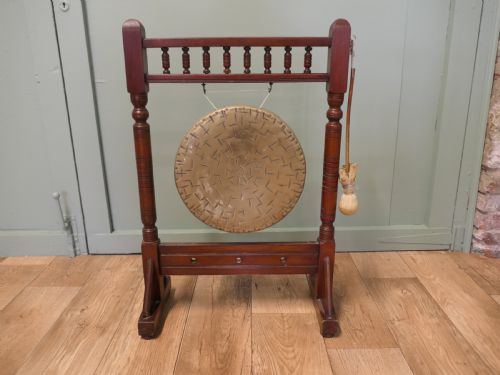
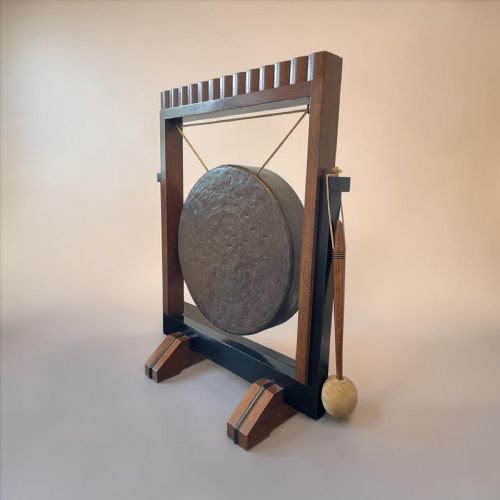
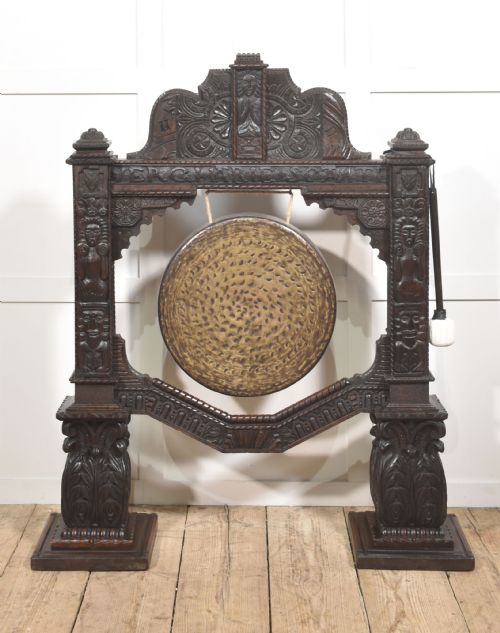
These vintage floor gong pieces bring resonant domestic calls to dining rooms, combining striking metal discs with robust timber framing.
Vintage Floor Gong
When you search for a vintage floor gong, you are looking at substantial freestanding sound-making apparatuses designed to summon household members. The pieces you meet on this page span the Victorian era, the Edwardian period, and the 1930s Art Deco movement.
Most examples you encounter feature a striking metal plate suspended within a solid wood frame. Oak, mahogany, and walnut provide the structural support, paired with brass or bronze gongs and hanging cords.
Forms range from simple domestic dinner gongs to monumental carved oak designs and gothic revival interpretations. You also find variants such as wrought iron frames and related striking instruments like the oak-cased glockenspiel.
How they were made
The sound-producing elements utilise cast brass or bronze for the suspended discs, hung securely by cord, rope, or fabric attachments. These materials ensure durability while delivering a resonant acoustic tone when struck.
Materials recorded across these listings include brass, oak, cord, bronze, rope, mahogany, fabric, and wrought iron.
What varies in quality
Quality reveals itself in the ambition of the woodwork, moving from plain framing to monumental carved oak structures and intricate gothic revival detailing. The choice of materials, such as solid walnut or heavy bronze, separates standard domestic items from more imposing examples.
The integration of the hanging mechanism also defines the standard of the piece. Superior construction ensures the cord, rope, or fabric properly supports the heavy metal disc while allowing clear vibration and resonance.
The Vintage Floor Gong Glossary
- Dinner Gong
- A freestanding percussion instrument utilised in large homes to announce meals. It consists of a metal disc suspended in a wooden or iron frame.
- Gothic Revival
- An architectural and decorative style drawing inspiration from medieval forms. Pieces often feature pointed arches, heavy carvings, and ecclesiastical motifs.
- Arts and Crafts
- A design movement emphasising handcraftsmanship and simple vernacular forms. Walnut and oak pieces from this tradition focus on honest material expression.
- Glockenspiel
- A percussion instrument featuring tuned metal bars struck with mallets. Listed examples include oak-cased variants sharing domestic musical functions with standard gongs.
Vintage Floor Gong: Frequently Asked Questions
What is a vintage floor gong?
A vintage floor gong is a freestanding household instrument featuring a metal disc suspended in a timber or iron frame. They were historically utilised in large homes to announce the arrival of dinner.
These pieces combine decorative woodwork from periods like the Victorian era or Arts and Crafts movement with functional acoustic design. They serve as both striking furniture items and resonant sound makers.
How do you date a floor gong?
Dating relies on identifying the prevailing stylistic cues, such as Victorian gothic revival motifs, Edwardian timber framing, or 1930s Art Deco lines. The choice of woods like mahogany, oak, and walnut also helps place the piece within a general era.
Examination of construction techniques and suspension materials provides further context. Comparing the framing style to established historical periods narrows down the exact decade of manufacture.
What materials were used?
Frames are predominantly constructed from solid hardwoods including oak, mahogany, and walnut, though wrought iron examples also appear. These timbers provide the necessary weight to support the hanging apparatus.
Suspended discs are cast in brass or bronze to produce a clear, carrying tone. Cord, rope, and fabric are utilised to hang the metal plates securely within their frames.
How do you live with one?
Living with a floor gong involves placing it in a hallway, dining room, or large living space where its sculptural timber frame can act as a focal point. Ensure the piece has adequate clearance around the suspended disc so it resonates properly when struck.
Maintenance requires basic care for the wood using appropriate polishes and gentle cleaning of the brass or bronze disc. Avoid placing the instrument in areas with high humidity to protect the hanging cords and wooden frame.