
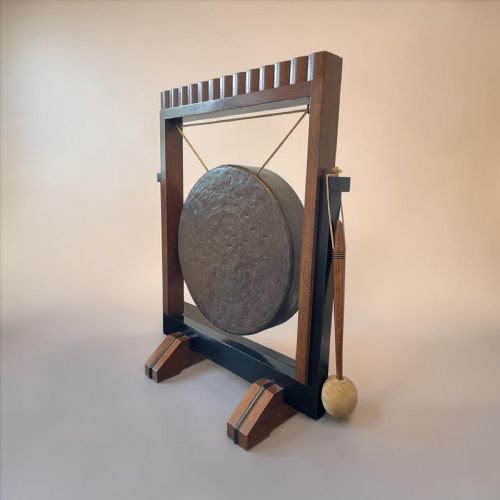


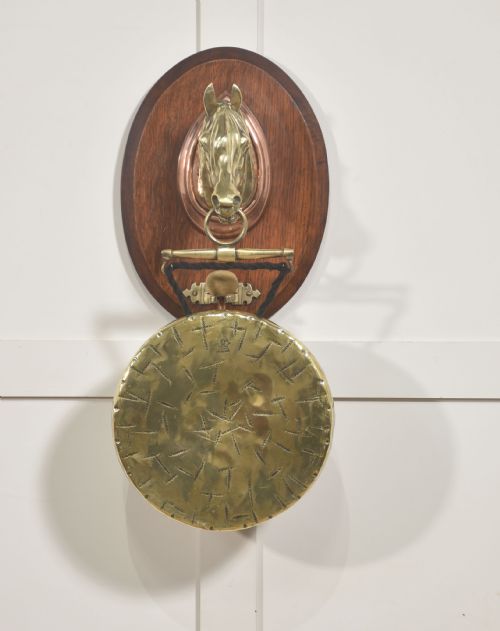


Antique Chime Gong
An antique chime gong brings resonant acoustic tone and striking decorative presence into a domestic interior, spanning dinner gongs to wall chimes.
Antique Chime Gong
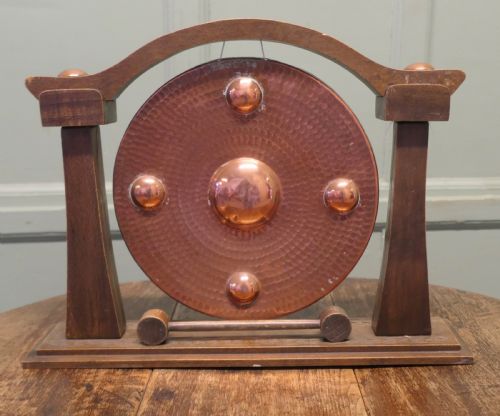
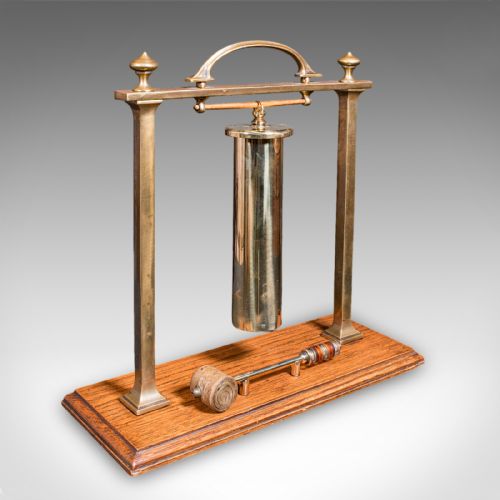
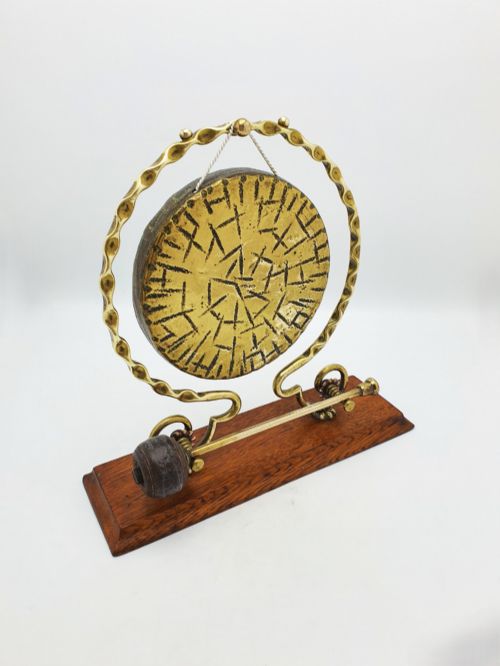
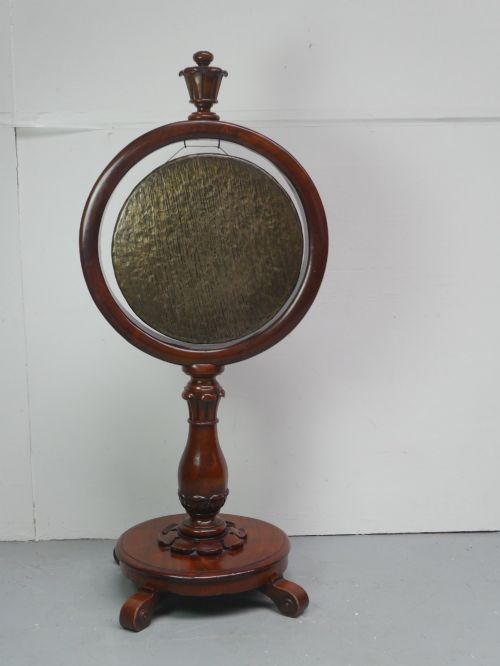
When you search for an antique chime gong, you encounter pieces designed to gather household members or punctuate domestic routines with deep acoustic resonance. These items appear primarily as dinner gongs, table gongs, and wall-hanging chimes from the nineteenth and early twentieth centuries.
The versions most commonly met on this page combine cast metal sound elements with wooden frames, ranging from compact tabletop models to monumental floor-standing and wall-mounted arrangements. Styles extend from Gothic Revival and Arts and Crafts designs to Oriental export pieces influenced by aesthetic movements.
Originating across British country houses, Scottish shooting lodges, and international workshops, these gongs serve both a functional acoustic purpose and a distinct decorative role. They reflect the diverse taste of past domestic interiors through varied mountings and striking implements.
How They Were Made
Makers utilised resonant metals such as brass, bronze, and silver plate for the primary sound-producing gongs, bells, and chimes. These were cast or beaten to achieve specific acoustic properties.
Mountings and frames rely heavily on hardwoods like oak, walnut, fruitwood, and bamboo, frequently augmented by carved animal elements like cattle horn and horse heads. Cord suspends the metal gongs within these frames to allow free vibration when struck.
Listings feature woods spanning oak, walnut, bamboo, fruitwood, and mango wood, alongside brass, bronze, and cattle horn.
What Varies in Quality
The distinction between ordinary and superior pieces rests on the depth and purity of the tone produced by the metal chime, alongside the ambition of the supporting woodwork. Hand-carved mounts featuring intricate dragons or Gothic tracery elevate an object far beyond standard turned frames.
Materials selection dictates the upper tier of the range, where heavy cast bronze or fine brass hangs from substantial walnut or oak structures rather than lesser softwoods. The integrity of the original hanging cord and the presence of a matching handheld striker also determine overall coherence.
Winterhalder and Hofmeier·Wm. Gilbert U.S.A.
The Antique Chime Gong Glossary
- Dinner Gong
- A suspended metal disc or bowl struck with a mallet to summon guests to a meal. These pieces frequently feature elaborate wooden or iron framing designed for display in country house halls.
- Table Gong
- A scaled-down version intended for placement on a sideboard or table rather than hanging on a wall or standing on the floor. They utilise similar brass or bronze chimes on compact wooden bases.
- Lithophone
- A musical instrument consisting of pieces of stone or metal struck to produce tones. In this context, it describes specific fine cast bronze sounding plates.
- Aesthetic Movement
- A late nineteenth-century design style emphasising visual beauty over narrative function. Pieces from this movement often incorporate Japanese or broader Oriental motifs.
- Gothic Revival
- An architectural and decorative style drawing inspiration from medieval forms. Gongs in this style display pointed arches, heavy tracery, and dark carved oak.
Antique Chime Gong: Frequently Asked Questions
How do I hang a wall gong safely?
Heavy oak and bronze wall gongs require secure wall anchors capable of supporting substantial weight, particularly given the vibration caused during striking. Ensure the mounting bracket fastens directly into structural timber or masonry.
allow adequate clearance behind the suspended metal chime so the acoustic vibration remains unimpeded by the wall surface.
What is the difference between a table gong and a dinner gong?
Table gongs are smaller domestic pieces designed for placement on sideboards or desks, producing a lighter tone suited to intimate rooms. Dinner gongs are substantially larger, intended for mounting in entrance halls or dining rooms to project sound across a large house.
Both items operate on the same hanging-metal principle but serve different acoustic scales and spatial requirements.
How should I clean the brass or bronze chime?
Metal chimes benefit from gentle dusting with a soft dry cloth to preserve their historic surface appearance. Avoid aggressive metal polishes that strip away age-related patination.
Ensure moisture does not linger on the wooden support frames during any maintenance of the adjacent metal elements.
Were these gongs used only in British homes?
While many pieces originate from British country houses and shooting lodges, a significant proportion includes imported Oriental items such as Japanese bronze gongs and Chinese carved dragon stands. These international pieces arrived through nineteenth-century trade and export.
Victorian households enthusiastically incorporated both domestic revival styles and foreign export wares into their halls.