


Vintage Brass Canterbury
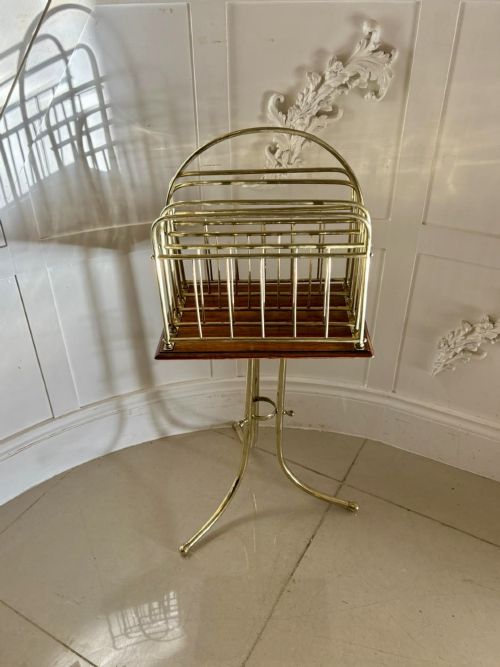
These vintage brass canterbury pieces are classic stands for sheet music and periodicals that bring both structure and metallic warmth to a room.
Vintage Brass Canterbury
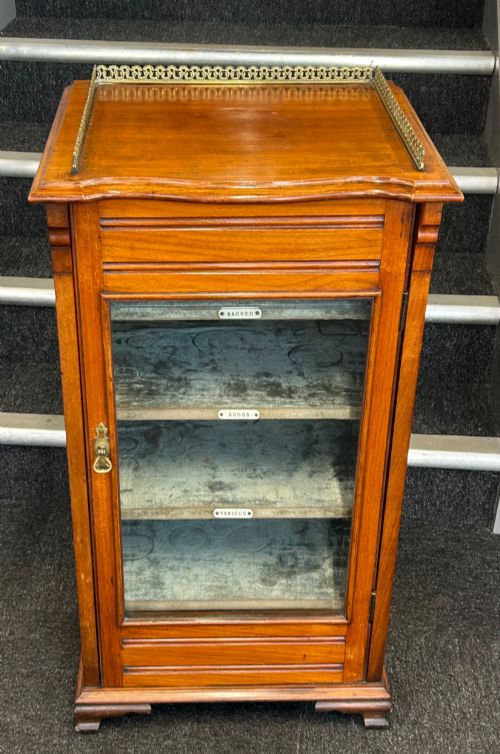
When you search for a vintage brass canterbury, you are looking at compartmentalised stands designed to hold sheet music, newspapers, and magazines. The examples you meet on this page span several periods including Regency, Victorian, and Edwardian, alongside Arts and Crafts designs.
The primary forms take shape as traditional four-division frames, boat-shaped carriers, and revolving stands or lamp tables. Materials range from solid mahogany, rosewood, walnut, and oak to combinations featuring copper and glass.
Origins stretch from English country houses to French workshops, reflecting diverse functional demands from music rooms to sitting spaces. Some pieces double as folio stands or incorporate lamp standards to suit varied domestic interiors.
What varies in quality
The distinction between standard and superior pieces rests on the choice of cabinet timber and the crispness of the turning on the legs and uprights. Richly figured veneers, burr walnut, and intricate inlay separate ordinary items from exceptional ones.
Metal components also dictate the grade of the piece, where heavy-gauge brass rods, robust revolving actions, and solid cast feet demonstrate superior craftsmanship. The balance between the wooden frame and the metallic hardware determines the overall stability and presence.
Some nineteenth-century makers clearly anticipated modern reading habits, building stands sturdy enough to double as miniature libraries on castors.
The Vintage Brass Canterbury Glossary
- Folio stand
- A large rack designed for holding oversized books, prints, or portfolios of paper. These often appear in grand proportions suited to country house libraries.
- Revolving
- A construction feature allowing the upper rack or bookcase to turn smoothly on a central pivot and stand. This mechanism provides easy access from multiple seating positions.
- Inlay
- A decorative technique where contrasting pieces of wood, metal, or other materials are inserted into a recessed surface to form patterns. It adds visual refinement to cabinet tops and panels.
Vintage Brass Canterbury: Frequently Asked Questions
What is a canterbury used for?
These pieces were originally built to hold sheet music near pianos in the home. Over time, their partitioned divisions made them equally useful for storing newspapers, journals, and modern magazines.
Today, they serve as practical living room storage that keeps reading material organised while adding period character to a space.
How do I style a canterbury in a modern room?
Place a canterbury beside a sofa or an armchair where its partitioned sections can hold current periodicals and books. Models that incorporate lamp tables or revolving stands also function well as occasional surfaces for lighting or small objects.
The combination of polished timber and warm brass allows these stands to anchor both traditional and contemporary seating arrangements.
How do I tell Regency from Victorian pieces?
Regency canterburys often feature cleaner architectural lines, tapered or ring-turned legs, and classical mahogany proportions. They frequently date from the early nineteenth century and lean towards restrained elegance.
Victorian and later Edwardian examples tend to introduce richer inlay, burr walnut veneers, or heavier brass detailing like revolving frames. Looking at the timber grain and turning style usually reveals the period.
Are all canterburys made of wood?
While the primary frames and partitions are constructed from timbers like mahogany, walnut, and oak, metal plays a major structural and decorative role. Brass and copper are widely used for carrying handles, division rods, and revolving mechanisms.
Certain Arts and Crafts examples place a heavier visual emphasis on hammered copper and exposed brass framework alongside the wooden base.