

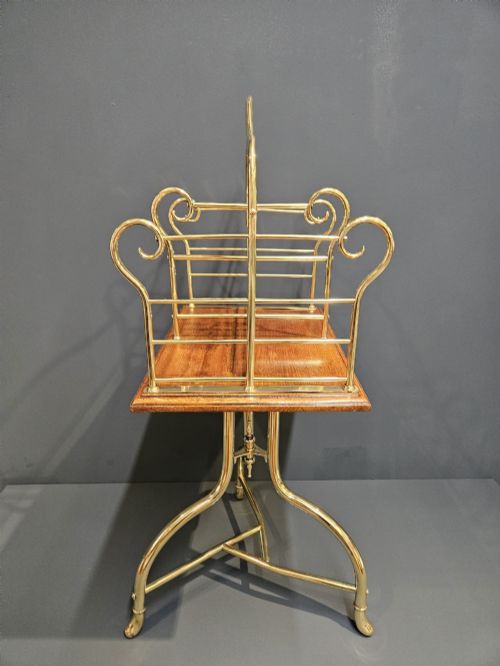
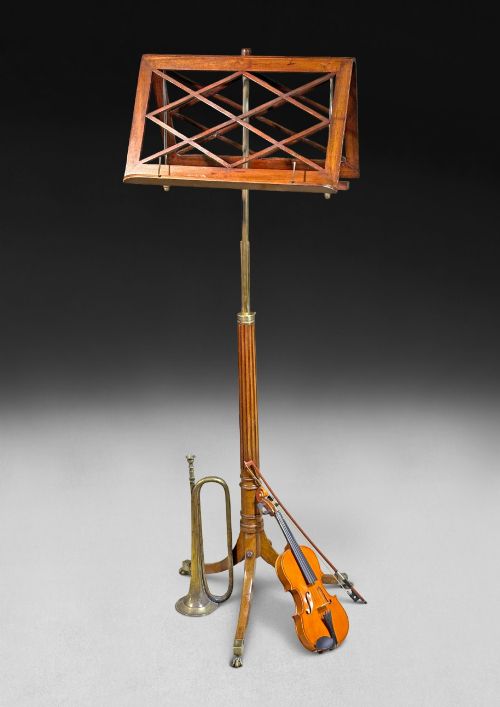
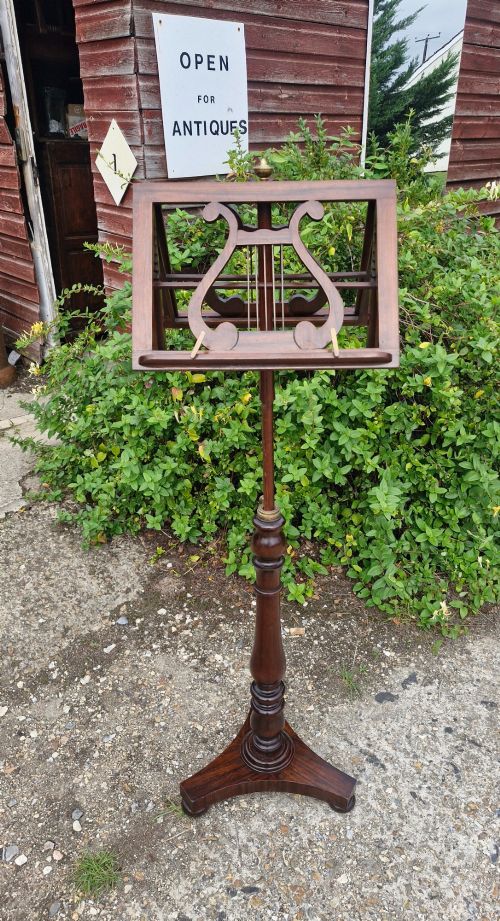
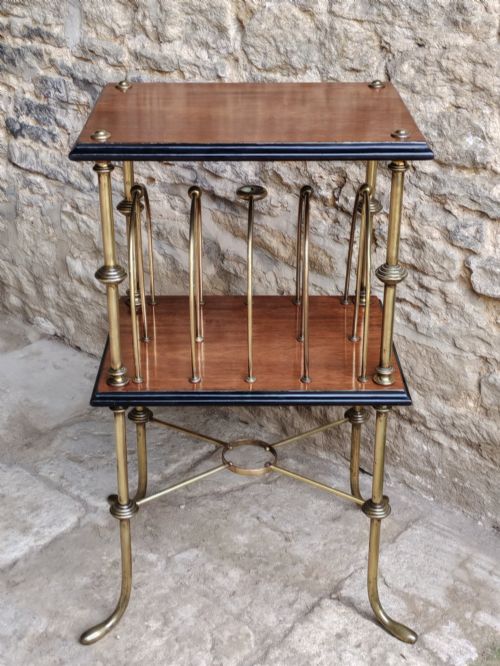
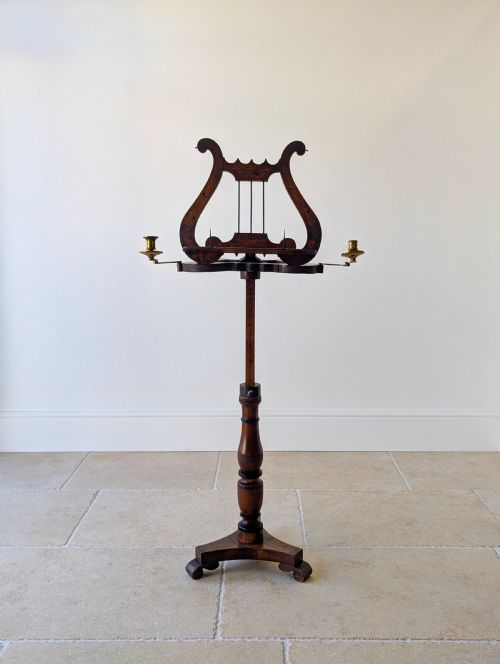


Brass Reading Rack
A brass reading rack organises texts and papers with solid metal framework and timber shelving, bringing practical utility and period character to any room.
Brass Reading Rack
A brass reading rack combines durable metal fittings with timber forms to hold books, magazines, and newspapers. The selections here encompass magazine racks, music stands, bookends, book stands, and reading stands alongside occasional tables.
Makers shaped these items across several eras, ranging from Regency and William IV pieces to Victorian, Edwardian, and 1930s examples. Mahogany, walnut, oak, rosewood, and marble appear alongside brass mounts, inlays, and bone details.
Buyers encounter revolving magazine stands, revolving bookcases, and fitted tables designed for domestic studies, libraries, and drawing rooms. Each variant offers a specific method for keeping volumes and periodicals close at hand.
How they were made
Craftsmen joined solid hardwoods like mahogany, walnut, and oak with substantial brass components, creating sturdy frames for daily use. Metal hinges, rotating mechanisms, and decorative mounts required precise casting and fitting.
Surfaces frequently feature fine wood veneers, intricate brass inlay work, and occasional marble tops that demand specialist cabinetmaking skills. Turning and carving shaped the wooden uprights, lyre forms, and revolving columns.
Brass Reading Rack Retail Price Guide 2026
Typical asking prices for brass reading rack among the pieces listed under this phrase on Sellingantiques today, from the lower quarter to the upper quarter. They describe what is for sale here now, not the wider market.
Current listings feature pieces spanning the Regency period through the 1930s, utilising brass, mahogany, walnut, oak, rosewood, and marble.
What varies in quality
The sophistication of the timber selection and the weight of the brass work distinguish standard pieces from finer productions. Heavier gauge metal and selected figured hardwoods indicate higher standards of manufacture.
Details such as precision-turned revolving actions, crisp brass inlay, and integrated marble surfaces elevate certain items. The integration of functional compartments and refined proportions separates everyday utility objects from exceptional furnishings.
Harrods
The Brass Reading Rack Glossary
- Canterbury
- A low multi-tiered stand fitted with partitions for holding sheet music, newspapers, or periodicals. This form often incorporates slender legs and carrying handles.
- Lyre-form
- A decorative upright shape styled after the ancient musical instrument, frequently utilised in the construction of music stands and reading racks. It showcases curved timber frames resembling strings or soundboxes.
- Revolving
- A pivoting mechanism that allows a bookstand, bookcase, or magazine rack to turn smoothly on a central base. This feature provides access to stored items from multiple seating positions.
- Inlay
- A decorative technique where contrasting materials such as brass or lighter woods are set flush into the surface of a primary timber. This adornment outlines panels and tabletops.
- Reading stand
- An adjustable lectern or support designed to hold a book at a comfortable angle for the reader. These pieces often feature pivoting ledges and extendable stems.
Brass Reading Rack: Frequently Asked Questions
What is a brass reading rack?
A brass reading rack is a domestic furnishing designed to support books, music scores, or periodicals using a combination of metal frameworks and wooden shelves or panels.
These pieces range from revolving stands and desktop bookends to music tables and magazine racks created during the nineteenth and early twentieth centuries.
Where were these pieces used?
These items belonged in domestic libraries, drawing rooms, music rooms, and studies where books and periodicals needed orderly storage and easy access.
Revolving stands allowed readers to consult multiple volumes or newspapers without leaving their chairs.
How do I care for timber and brass?
Maintain the wood surfaces by dusting regularly and applying occasional appropriate wax polish to preserve the finish and prevent the timber from drying out.
Brass components benefit from gentle cleaning to maintain their lustre without stripping historical patination from the metal.