


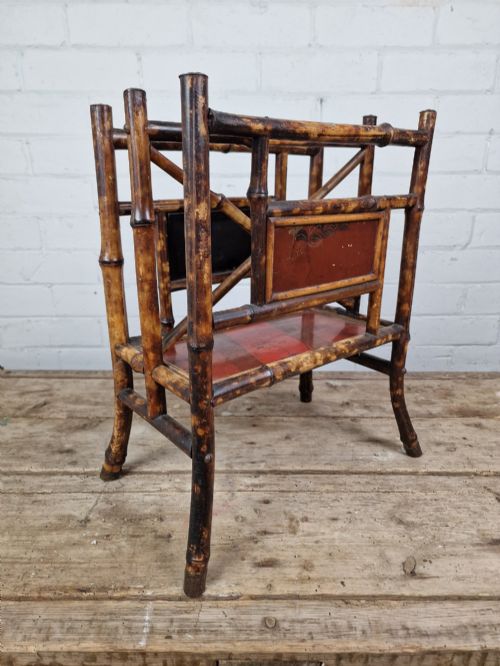


Victorian Newspaper Stand
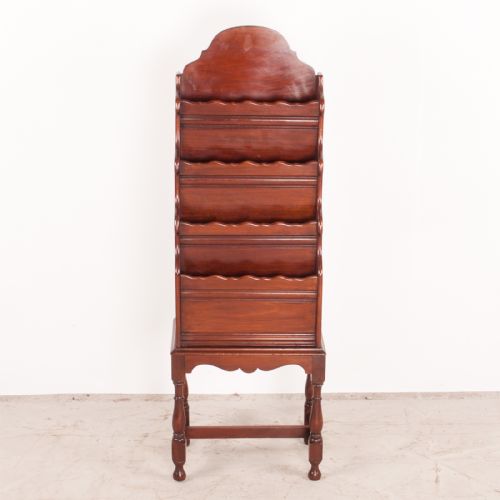
A victorian newspaper stand organises the daily papers and journals with upright divisions or revolving tiers, bringing period utility to any room.
Victorian Newspaper Stand
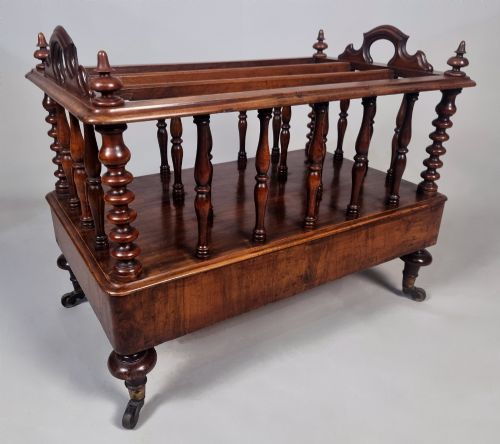
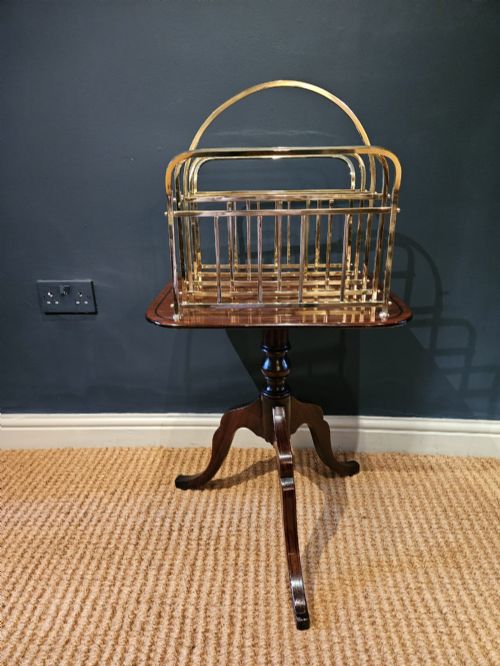
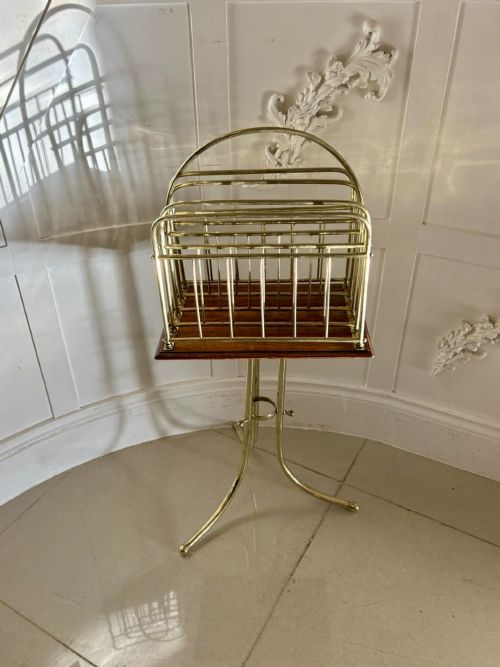
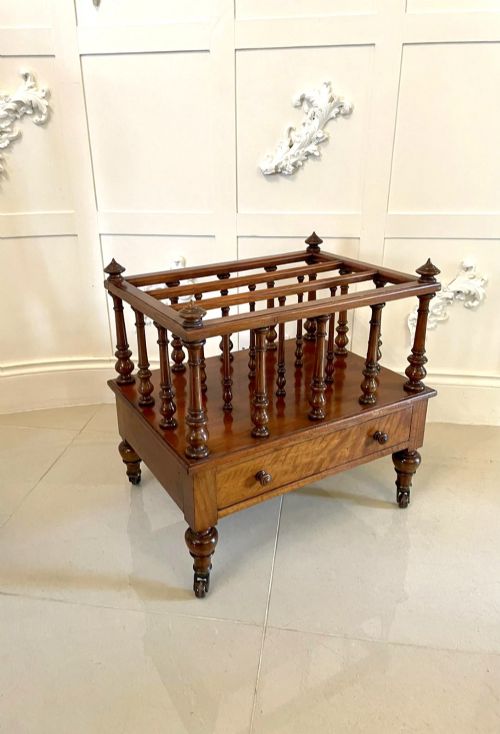
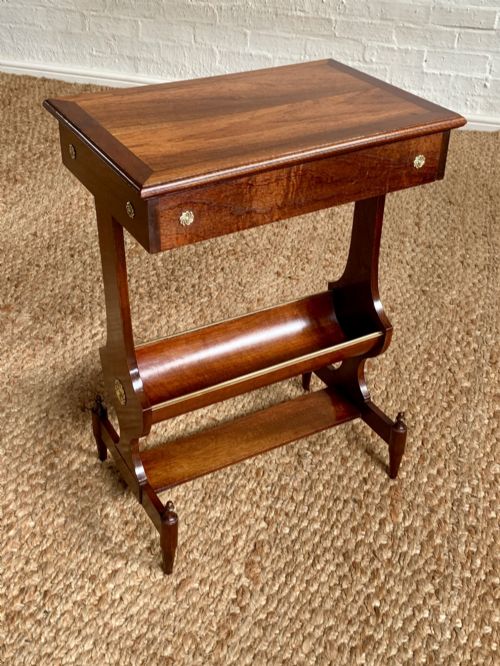
When searching for a victorian newspaper stand, buyers encounter pieces designed to hold periodicals, sheets of music and folded sheets. The selection spans freestanding formats, side tables combined with storage compartments, and revolving brass or timber frameworks.
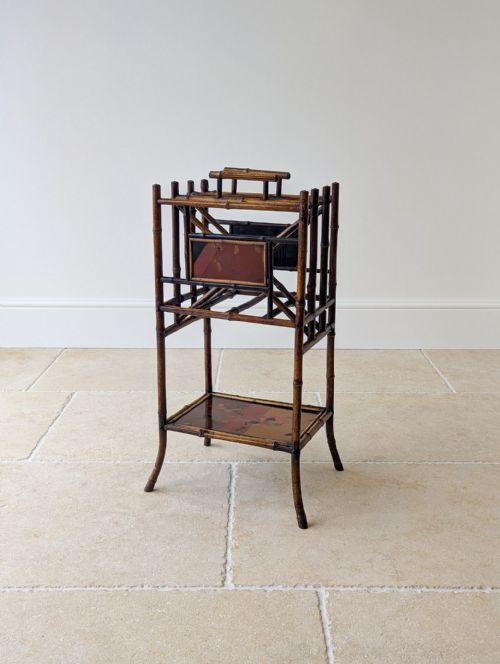
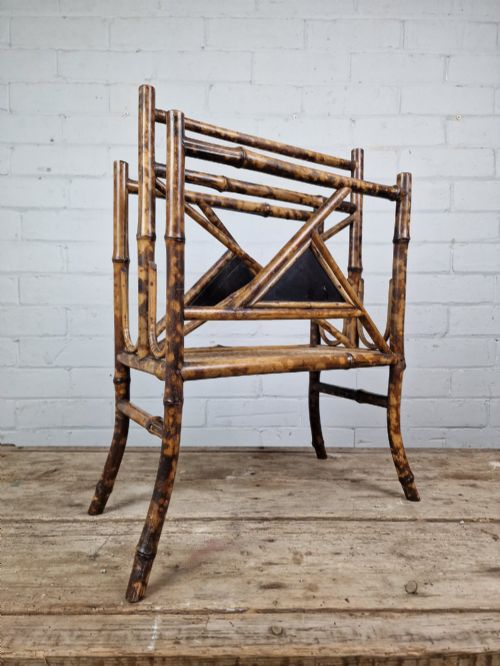
The most common formats on this page are traditional timber canterburys alongside later revolving designs and bamboo stands. These pieces reflect diverse stylistic revivals, ranging from William IV to the Aesthetic Movement and Arts and Crafts.
How they were made
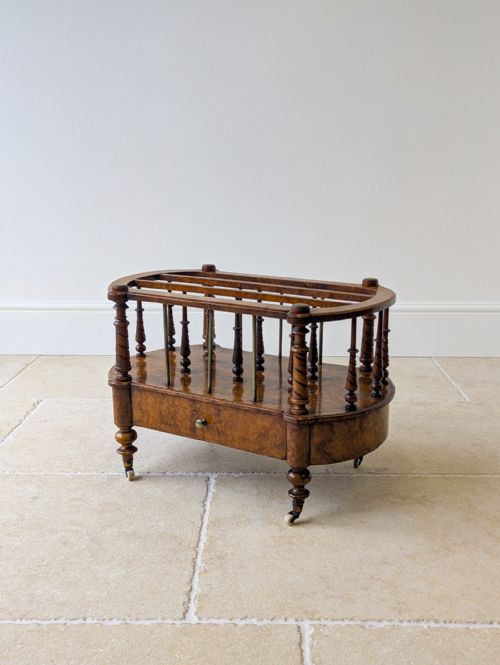
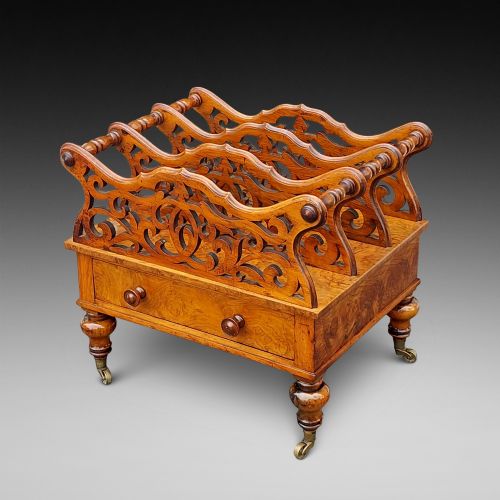
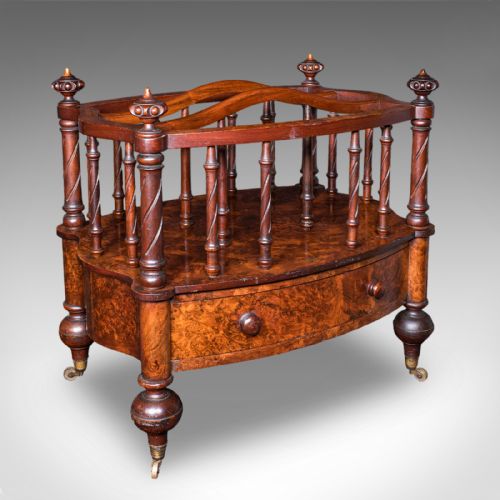
Cabinetmakers utilised dense hardwoods including mahogany, walnut, burr walnut, rosewood and fruitwood, often shaping them with pierced scroll divisions or turning structural supports by hand. Oak and bamboo also form significant parts of the construction, sometimes paired with lacquered finishes or hand-painted details.
Metalwork plays a key structural and decorative role, featuring heavily in revolving stands, corner mounts and frames made from brass, copper and tubular brass. These mixed media constructions combine solid timber frames with durable metallic components designed for frequent rotation or handling.
Victorian Newspaper Stand Retail Price Guide 2026
Typical asking prices for victorian newspaper stand among the pieces listed under this phrase on Sellingantiques today, from the lower quarter to the upper quarter. They describe what is for sale here now, not the wider market.
Some nineteenth-century readers apparently needed wheeled furniture just to roll their morning papers across the carpet.
What varies in quality
The standard of timber selection and cabinetmaking determines the upper tier of pieces, evident in figured veneers such as burr walnut and finely turned uprights. Superior examples display crisp joinery in the pierced divisions and integrated drawers, whereas simpler utility stands rely on plain timber boards or basic bamboo lashings.
Metal components also define the range, distinguishing simple riveted joints from robust revolving brass mechanisms that operate smoothly. Finer items incorporate cast brass fittings and decorative handles that retain their original finish and structural integrity.
Edwards and Roberts·Howard and Sons·Shoolbred·William Tonks and Sons
The Victorian Newspaper Stand Glossary
- Canterbury
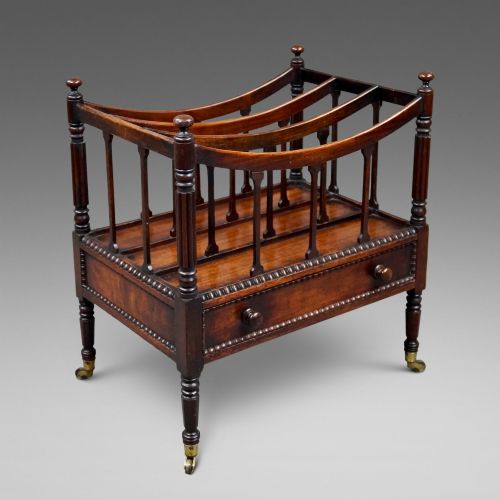
- A low stand with divisions for holding sheet music, newspapers or magazines, often fitted with a drawer and small castors. This form originated in the late eighteenth century and remained popular throughout the Victorian era.
- Whatnot
- A set of open shelves supported by pillars, used for displaying or storing small objects and occasionally combined with a lower rack for periodicals. These tiered pieces often feature turned columns and fine wood veneers.
- Revolving stand
- A centralised framework mounted on a stable base that turns on a pivot to allow access to compartments from any angle. Such stands frequently utilise tubular brass and oak or mahogany.
- Aesthetic Movement
- A late nineteenth-century design style that emphasised artistic visual values, often incorporating Japanese-inspired bamboo, lacquer and painted motifs. Pieces from this period typically showcase lighter materials and exotic influences.
Victorian Newspaper Stand: Frequently Asked Questions
What is a canterbury?
A canterbury is a low compartmentalised stand originally built to hold sheet music and newspapers. These items typically feature vertical partitions and often rest on small castor wheels.
Cabinetmakers produced them in various timbers like mahogany and rosewood, sometimes adding a single drawer beneath the main rack for smaller items.
How were revolving stands used?
Revolving stands allowed readers to access multiple newspapers or journals from a seated position without moving the entire piece of furniture. Their pivoting mechanisms made them practical additions to studies and drawing rooms.
These versions frequently combined brass frameworks with oak or mahogany tiers to support heavy daily publications.
Are bamboo stands authentic?
Bamboo newspaper stands date primarily from the late nineteenth century during the height of the Aesthetic Movement and Chinoiserie revivals. Makers imported prepared tiger bamboo and painted varieties to satisfy contemporary tastes for exotic furnishings.
These lighter pieces served as fashionable alternatives to traditional heavy mahogany and walnut furniture.