




Victorian Brass Newspaper Holder
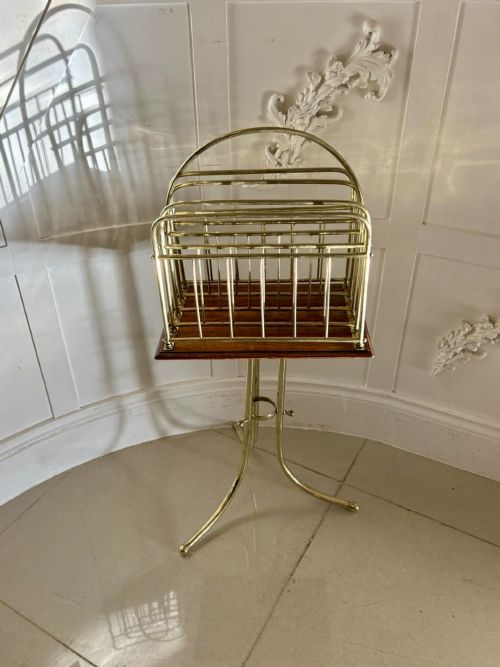
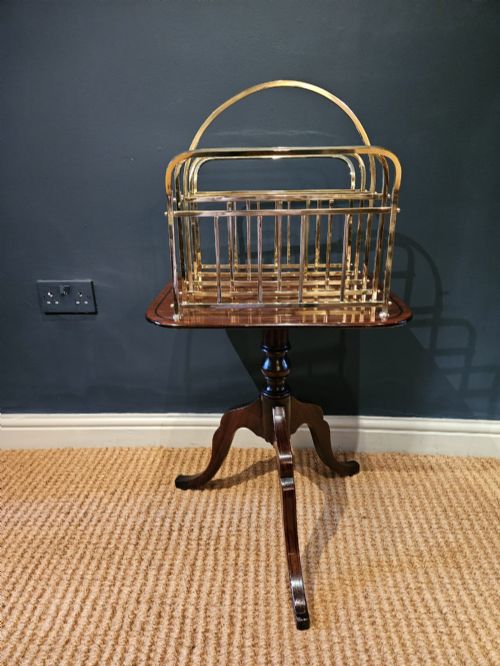
A victorian brass newspaper holder organises the daily post and periodicals with solid metalwork and polished timber.
Victorian Brass Newspaper Holder
A victorian brass newspaper holder combines metal framework with timber storage to keep daily reading within arm's reach. These pieces take various forms including revolving magazine stands, traditional canterburys, wall pockets, and book stands.
The materials span brass, copper, and tubular metal combined with woods like mahogany, rosewood, oak, and walnut. Pieces originate across the nineteenth century and extend into Edwardian and Arts and Crafts periods.
Buyers frequently encounter magazine racks and revolving stands that utilise brass alongside mahogany or oak. The selection also includes wall pockets and floor-standing book stands designed for domestic sitting rooms.
How they were made
Makers combined cast and sheet brass with tubular brass frameworks to build sturdy upright structures. These metal components were frequently paired with turned or polished hardwood bases and partitions.
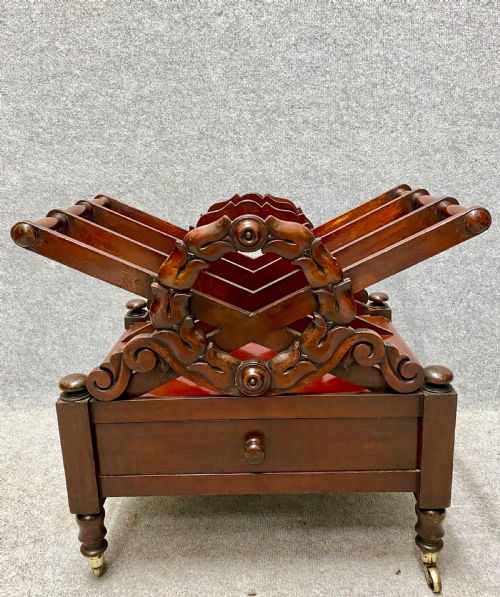
Carpenters constructed canterburys and book stands in mahogany, rosewood, oak, and walnut, incorporating brass carrying handles and finials. Wall pockets utilised cast sheet brass with detailed surface ornamentation.
Victorian Brass Newspaper Holder Retail Price Guide 2026
Typical asking prices for victorian brass newspaper holder among the pieces listed under this phrase on Sellingantiques today, from the lower quarter to the upper quarter. They describe what is for sale here now, not the wider market.
Listings feature items spanning the nineteenth century alongside Edwardian, Arts and Crafts, and Regency revival styles.
What varies in quality
The distinction between standard items and superior examples lies in the heaviness of the brass casting and the selection of timber. Heavier tubular brass and figured mahogany or rosewood indicate higher workshop standards.
Detailing on the metalwork, such as ornate cast decoration or commemorative plaques, separates ordinary racks from distinguished pieces. Construction integrity in revolving mechanisms and wood joinery also defines the grade.
J.C.Loudon
The Victorian Brass Newspaper Holder Glossary
- Canterbury
- A low wooden stand with vertical partitions, traditionally used for holding sheet music or newspapers. These pieces often feature brass carry handles and slender legs.
- Revolving magazine stand
- A rotating floor-standing fixture designed to display periodicals on multiple sides. They usually combine a brass spindle or frame with a timber base.
- Wall pocket
- A hanging receptacle designed to hold letters, newspapers, or small documents against a vertical surface. Examples frequently employ cast sheet brass.
- Tubular brass
- Hollow metal tubing utilised in nineteenth-century frames to provide structural strength without excessive weight. This technique allowed for lighter portable stands.
Victorian Brass Newspaper Holder: Frequently Asked Questions
What is a canterbury?
A canterbury is a compartmentalised stand originally built for sheet music and periodicals. They sit on small legs and often incorporate carrying handles.
These pieces transitioned into general newspaper holders as domestic reading habits changed during the nineteenth century.
How do revolving stands work?
Revolving stands use a central pivot mechanism that allows the entire tier of compartments to turn smoothly. This lets users access different periodicals without moving the base.
They combine brass uprights with wooden frames to support multiple sections.
Where were wall pockets placed?
Wall pockets were hung in hallways, studies, or parlours to hold incoming post and daily newspapers. Their flat backs allowed secure mounting against wooden panelling or plaster walls.
They frequently feature decorative sheet brass designs commemorating naval themes or historical events.
What woods were used?
Makers constructed the wooden components using mahogany, rosewood, oak, and walnut. These timbers were chosen for their grain and durability.
Woods were often polished to contrast against the bright finish of brass rods and panels.
How to identify Victorian pieces?
Victorian newspaper holders show period specific construction methods, such as hand-turned wooden partitions and traditional joinery. The metalwork relies on cast and tubular brass rather than modern extruded alloys.
Stylistic influences span from standard Victorian design to later Arts and Crafts and Regency revival forms.