



Edwardian Brass Magazine Rack
An edwardian brass magazine rack brings period utility to a room, combining gleaming metalwork with native timbers for daily papers and journals.
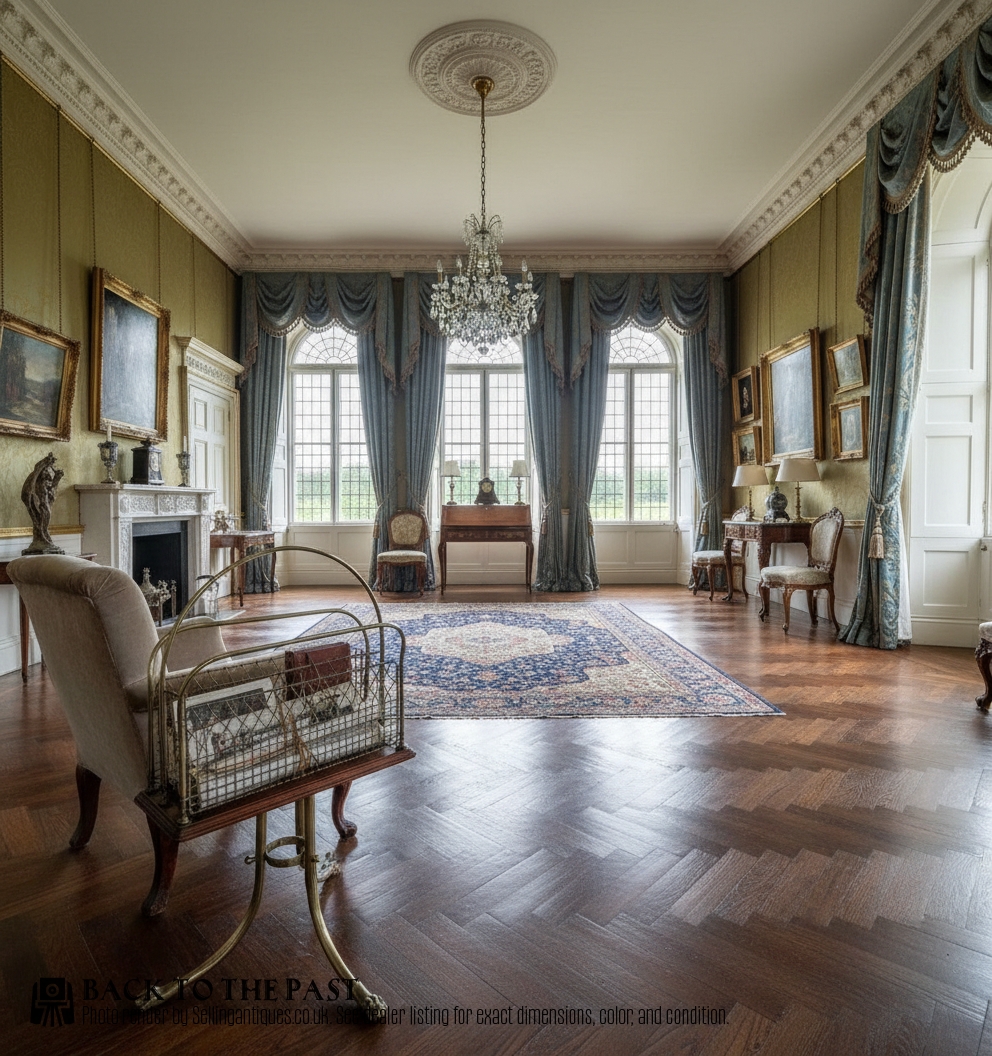
Edwardian Brass Magazine Rack
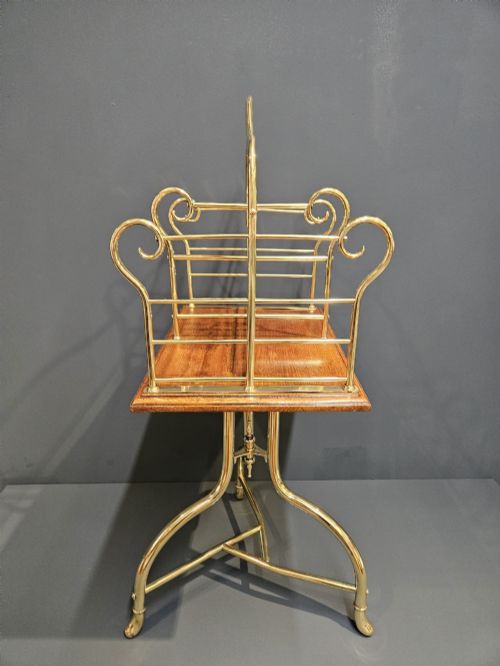
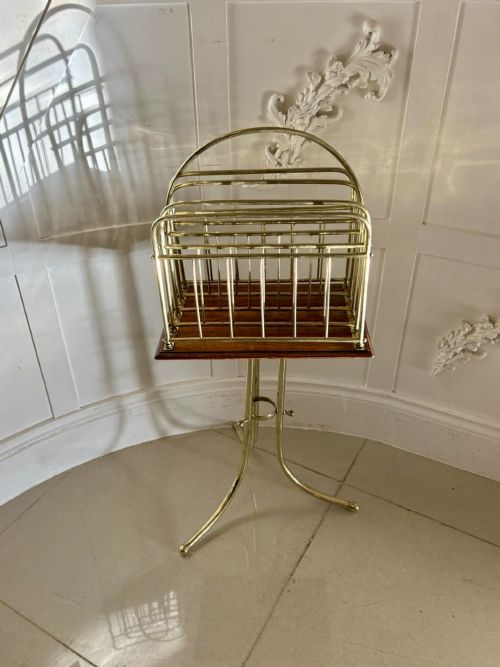
When you search for an edwardian brass magazine rack, you encounter compact furnishings designed to keep periodicals tidy beside a drawing room chair. The pieces span fixed stands, folding three tier holders, and revolving models that turn on a central spindle.
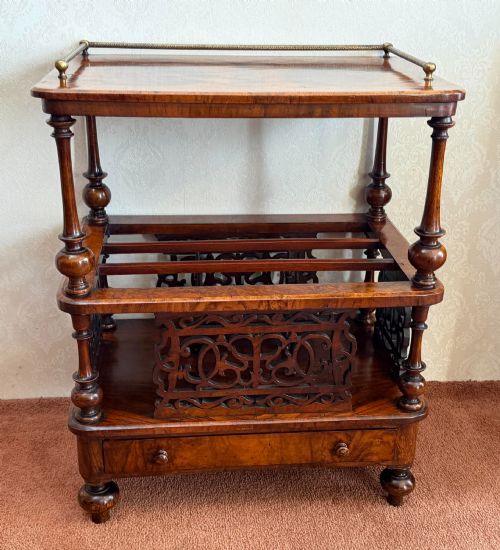
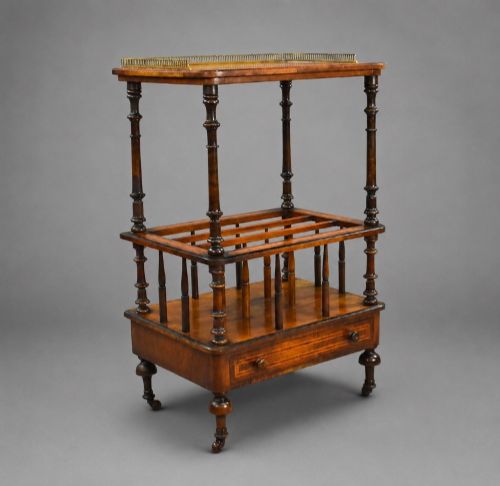
While the archive shows older Victorian canterburys in burr walnut and rosewood, the specific Edwardian examples lean towards polished brass combined with oak or mahogany. These smaller domestic items reflect the growing volume of daily newspapers and illustrated weeklies published at the turn of the century.
The form bridges nineteenth century heavy timber furniture and lighter twentieth century living. Collectors often find simpler floor standing frames alongside revolving stands that allow access to multiple compartments from a seated position.
How they were made
Makers built the structural frames from solid hardwoods like oak and mahogany, often incorporating turned spindles and corner pillars to hold the weight of paper. Tubed brass formed the arched dividers and carrying handles, joined to the timber base with countersunk screws.
Revolving mechanisms relied on internal metal bearings beneath a cruciform or circular platform to ensure a smooth turn. Folding versions utilised hinged brass side frames that allowed the tiers to collapse flat when not in use.
Edwardian Brass Magazine Rack Retail Price Guide 2026
Typical asking prices for edwardian brass magazine rack among the pieces listed under this phrase on Sellingantiques today, from the lower quarter to the upper quarter. They describe what is for sale here now, not the wider market.
Some folding Edwardian models collapsed entirely flat, presumably for when guests arrived and the daily broadsheets needed to vanish.
What varies in quality
Quality rests on the gauge of the brass and the solidity of the timber frame rather than surface polish alone. Superior pieces feature heavier gauge metal dividers that resist bending under the weight of heavy volumes, coupled with well seasoned oak or mahogany bases.
The sophistication of the turning on the uprights and the smoothness of the revolving mechanism separate standard production items from finer workshop pieces. Attention to the joinery in the wooden base ensures the stand remains stable over decades of daily use.
Hall Birmingham
The Edwardian Brass Magazine Rack Glossary
- Canterbury
- A low wooden stand with slatted partitions, originally designed for sheet music and later adapted for newspapers and magazines.
- Revolving rack
- A stand mounted on a central pivot that turns easily to display reading material from multiple sides.
- Tubular brass
- Hollow metal tubing used to form lightweight yet rigid structural dividers and carrying handles.
- Inlay
- The technique of inserting contrasting strips of wood or mother of pearl into the primary timber surface for decoration.
Edwardian Brass Magazine Rack: Frequently Asked Questions
How were these racks used?
These stands sat beside reading chairs in libraries and drawing rooms to keep current newspapers, journals and sheet music within arm reach. They offered a neat alternative to folding papers over chair arms or leaving them on side tables.
As domestic life grew more informal in the early twentieth century, households placed them in hallways and parlours where guests gathered. The revolving designs let visitors select a periodical without standing up.
Can I polish the brass?
You can clean the metal components with a gentle brass cleaner, though many collectors prefer a mellow, aged patina. Regular dusting with a soft cloth keeps the finish bright without removing the character accumulated over a century.
Take care to avoid letting liquid polish seep into the surrounding timber base or joints, as this can stain the grain. Using a barrier mask near the wood helps protect the oak or mahogany.
How do I tell Edwardian from Victorian pieces?
Edwardian examples tend to use brighter, lighter timbers like oak alongside polished brass, often featuring simpler, more streamlined frames. Victorian pieces frequently employ darker, dense woods such as rosewood and burr walnut with heavier carved details.
Earlier nineteenth century canterburys also incorporate solid wood divisions rather than the tubular brass wire frames that became popular towards nineteen hundred. Check the construction methods and wood choices to help date an unmarked item.
Where should I place one at home?
A revolving stand works well beside a sofa or armchair where its turning action allows easy access from multiple seating angles. Floor standing racks fit neatly into unused corners of a study or sitting room.
Keep wooden items away from direct heat sources and strong sunlight to prevent the timber from drying out or warping. The narrow footprint makes them practical additions to smaller spaces.