
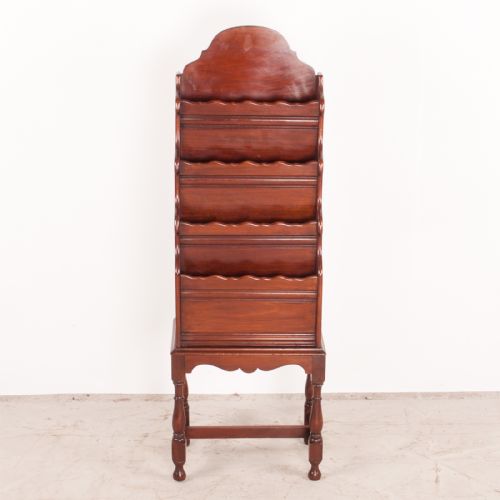
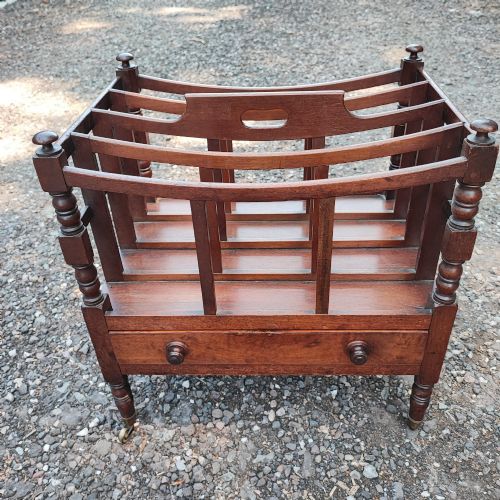
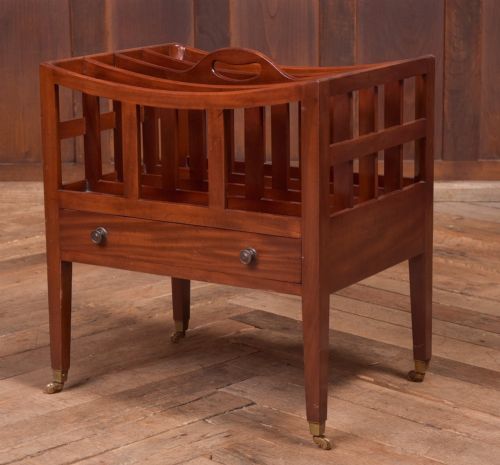
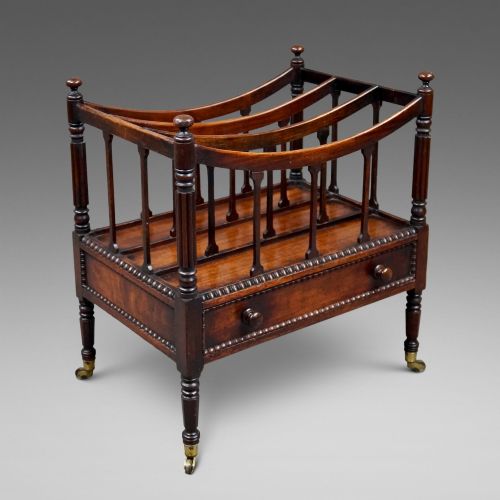
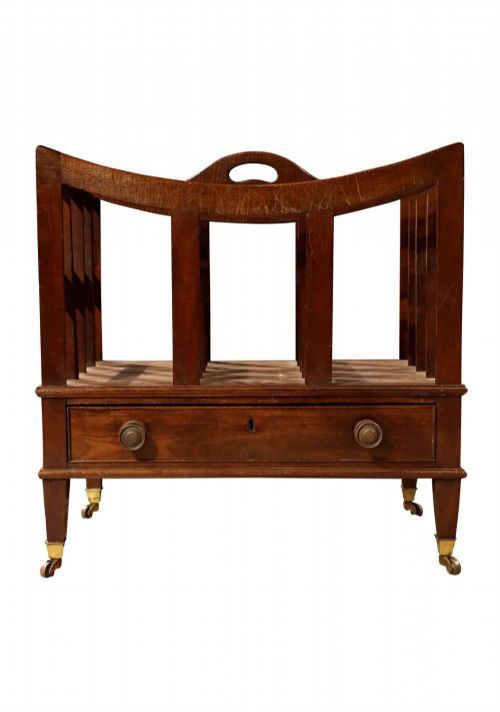


Mahogany Newspaper Stand
A mahogany newspaper stand is a practical piece designed to hold papers and periodicals, combining useful division with timber craftsmanship.
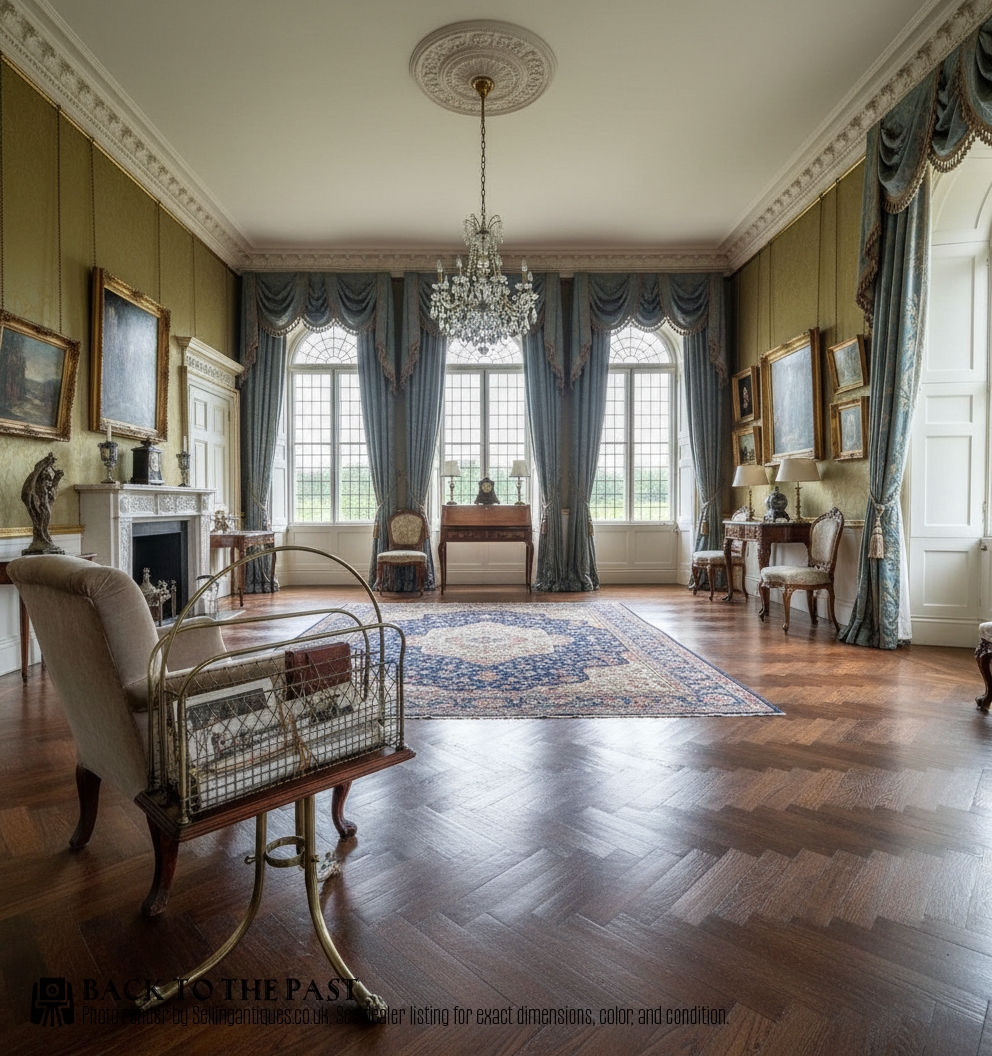
Mahogany Newspaper Stand
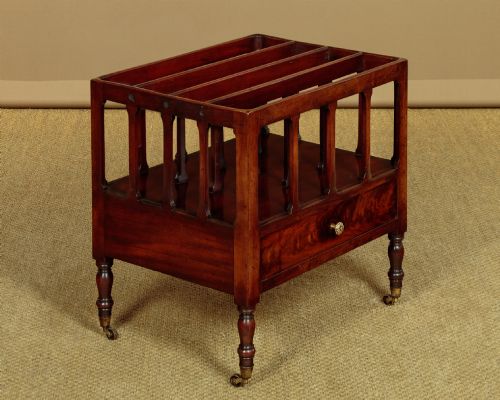
A mahogany newspaper stand, frequently found as a Canterbury or magazine rack, serves to organise periodicals and sheets within a room. These pieces appear across multiple periods, including the Georgian, Regency, William IV, and Edwardian eras, reflecting changing domestic habits.
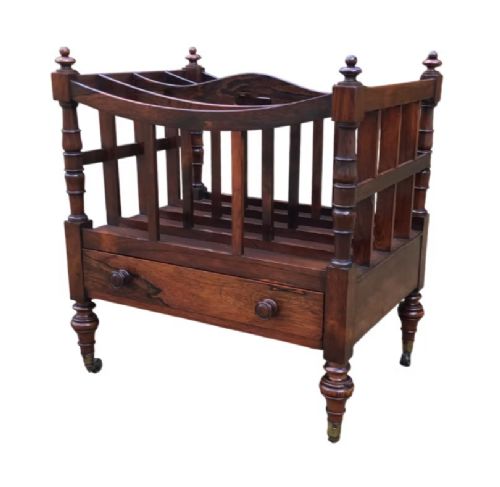
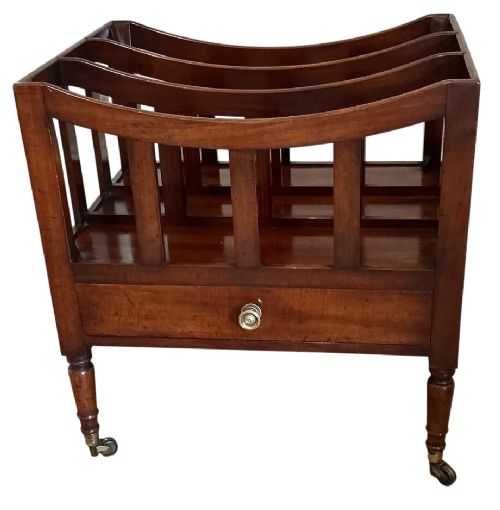
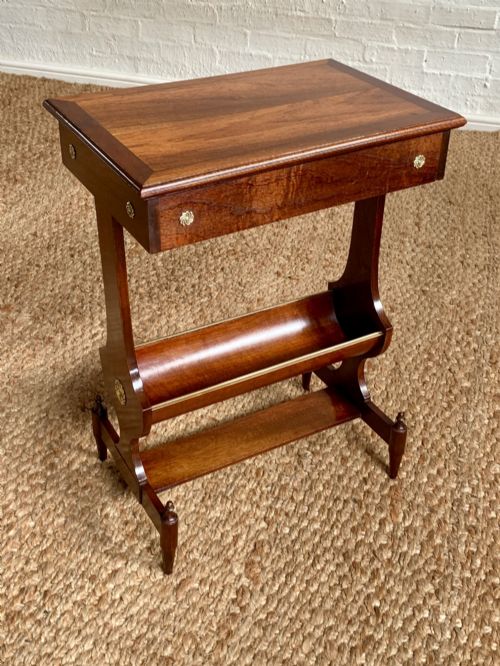
Most examples take the form of structured divisions mounted on legs or castors, sometimes incorporating a drawer below. The form ranges from boat-shaped designs to tiered racks and revolving stands.
Makers produced these stands in mahogany, occasionally accented with rosewood, satinwood inlay, or brass details. The pieces available here demonstrate the enduring utility of this specific furniture type in various traditional styles.
How they were made
Carpenters utilised solid mahogany and veneers, often shaping the timber into pierced scroll divisions or turned legs. Brass fittings such as castors and metal wire appear on various examples to support mobility and structure.
Decorative elements include boxwood, ebony, and satinwood inlay, adding contrast to the rich brown tones of the primary wood. Joinery techniques varied from simple pegged construction to more elaborate cabinetry found in workshop pieces.
Listings feature mahogany newspaper stands spanning the Georgian, Regency, William IV, Victorian, and Edwardian periods, constructed with brass and inlay details.
What varies in quality
The distinction between standard items and superior examples lies in the crispness of the turning on the legs, the depth of the carved scrollwork, and the precision of any inlay work. Finer pieces demonstrate careful selection of timber grain and robust joinery within the divisions.
Hardware details also differentiate the range, as heavy cast brass castors and well-fitted drawers indicate higher workshop standards than plain or replaced fittings.
Howard and Sons of London·Gillows of Lancaster
The Mahogany Newspaper Stand Glossary
- Canterbury
- A low stand with upright divisions for holding sheets of music, newspapers, or magazines. This form often includes a small drawer at the base.
- Boat-shaped
- Describing a Canterbury base or frame curved in the manner of a boat hull. This silhouette is particularly associated with the Regency period.
- Inlay
- A technique where pieces of contrasting wood, such as satinwood or ebony, are fitted into the primary mahogany surface to form decorative patterns.
- Castor
- A small wheel attached to the base of the legs to allow easy movement of the stand across the floor. They are frequently made of brass.
- Pierced scroll
- Woodwork cut through to create open scroll patterns, commonly seen on the upright dividing partitions of these stands.
Mahogany Newspaper Stand: Frequently Asked Questions
What is a Canterbury?
A Canterbury is a specific type of stand featuring upright divisions designed to hold newspapers, magazines, or sheet music. They typically include a low frame and frequently sit upon castors for movement.
Originating in the late eighteenth century, the form remained popular through the Victorian and Edwardian periods with various modifications to the divisions and base.
How do I date a mahogany newspaper stand?
Dating relies on observing stylistic details such as leg turnings, the shape of the divisions, and the presence of inlay. Regency examples often feature boat-shaped frames and sabre or turned legs, while Edwardian pieces may show lighter proportions or different banding.
Materials also offer clues, as the use of specific secondary timbers or brass hardware aligns with manufacturing methods of particular decades.
Were these stands used for newspapers?
Yes, these stands were originally designed to hold daily newspapers, journals, and unbound sheets of music in drawing rooms and libraries. The vertical divisions kept papers tidy and upright for easy selection.
Over time, as reading habits changed, the same pieces accommodated growing numbers of magazines and periodicals.
What wood was used?
Mahogany served as the primary timber for these stands due to its rich colour and durability. Cabinet makers often combined it with secondary woods and decorative veneers.
Accents in rosewood, boxwood, ebony, and satinwood inlay appear on various pieces to enhance the visual appeal of the main structure.