


Floor Standing Magazine Rack
These floor standing magazine rack options are sturdy pieces built to keep periodicals orderly and to hand.
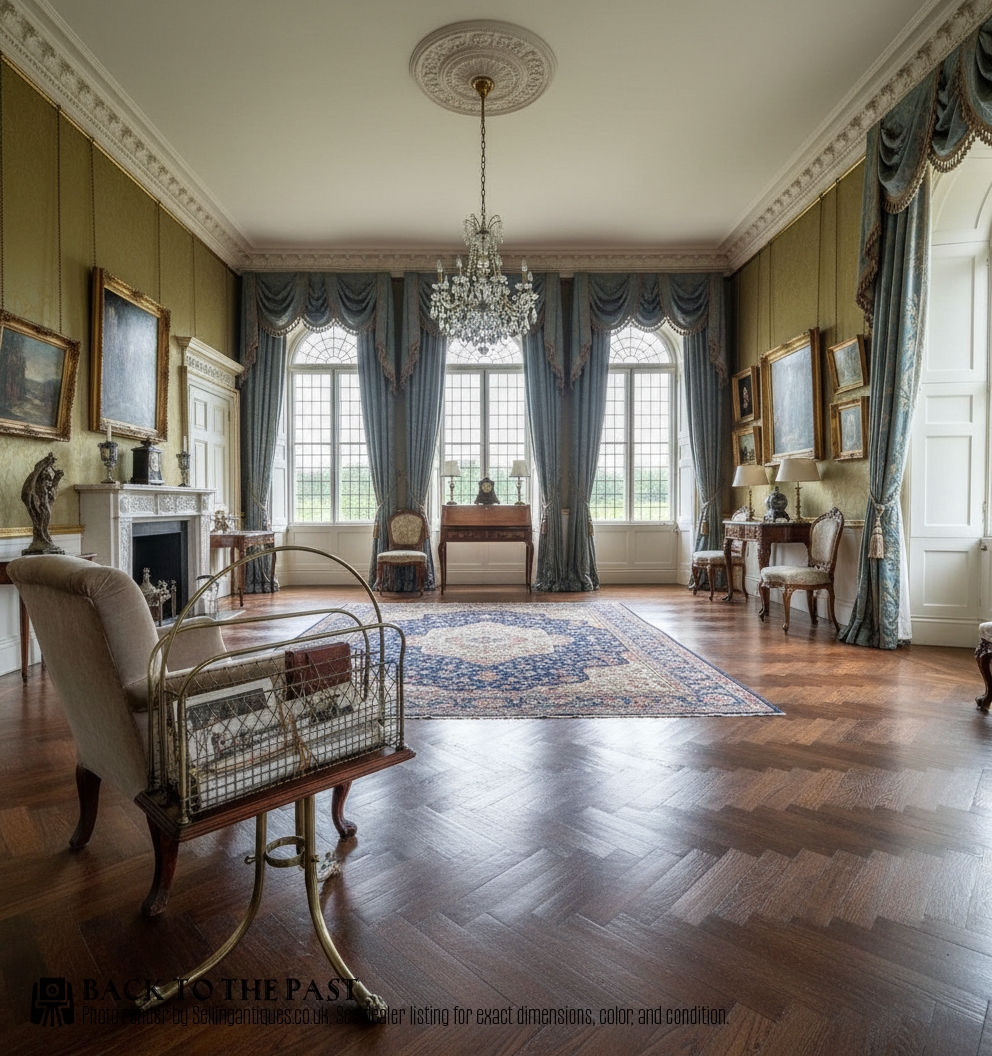
Floor Standing Magazine Rack
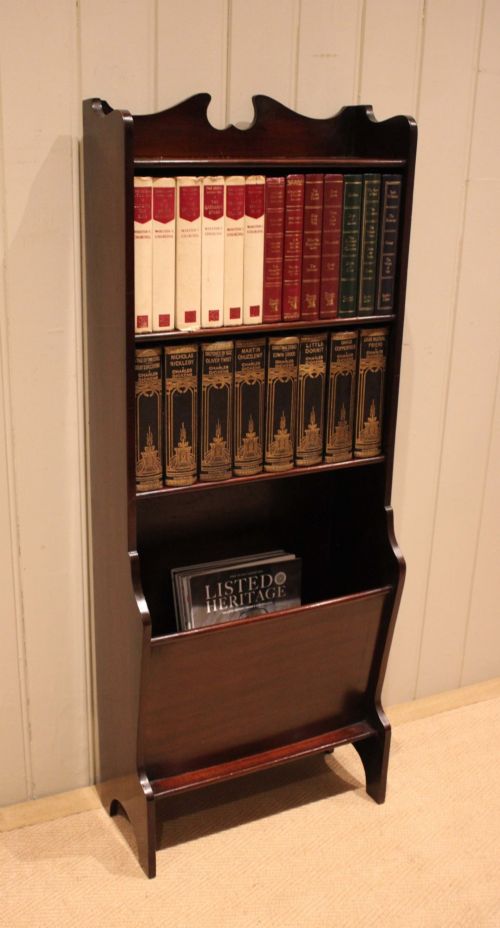
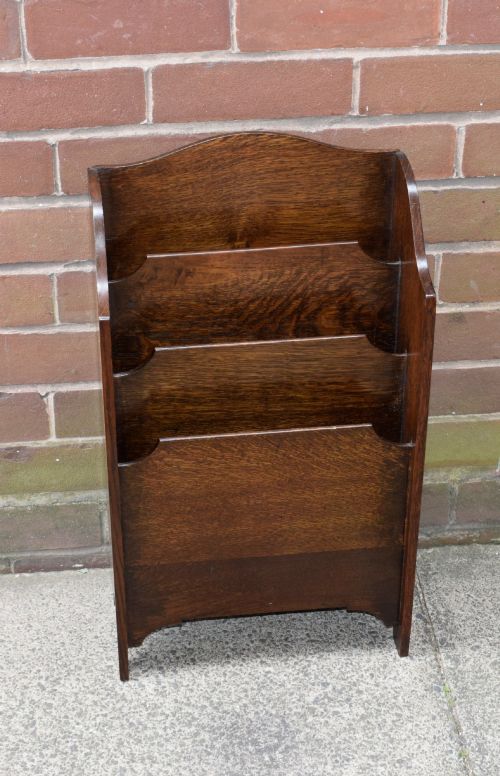
A floor standing magazine rack provides a dedicated storage solution for periodicals, newspapers, and folios in a home or library. The selection spans several decades, with Edwardian and Victorian examples forming the bulk of what is found.
Forms range from traditional canterburys and revolving stands to oak newspaper racks and combined bookcases. These items reflect the domestic habits of the nineteenth and early twentieth centuries, adapting to the growing volume of printed media.
How they were made
Cabinet makers utilised solid timbers such as mahogany and oak, often shaping them with carved details or geometric slats. Bamboo and rattan also appear, offering lighter alternatives for sunrooms and informal spaces.
Metal components, particularly brass, are combined with wood to form revolving mechanisms and sturdy upright frames. Painted wood and gilt finishes provide decorative variety across the Georgian Revival and Victorian styles.
Materials seen in this selection include brass, mahogany, oak, bamboo, rattan, metal, painted wood, and gilt.
What varies in quality
The distinction between standard utility items and superior pieces rests on the choice of timber and the precision of the joinery. Cuban mahogany and heavily carved Black Forest work demonstrate greater ambition from the maker.
Hardware and movement define the upper tier of revolving stands and canterburys. Smooth rotation and solid brass fittings indicate a higher grade of manufacture than lightweight or purely decorative constructions.
The Floor Standing Magazine Rack Glossary
- Folio stand
- An adjustable wooden frame intended to hold large prints, maps, or unbound sheets. These pieces allow large volumes to rest flat or at a readable angle.
- Revolving stand
- A tiered rack mounted on a central pivot that turns freely to display books or magazines on multiple sides. This mechanism requires stable weighting at the base to prevent tipping.
- Book trough
- A tabletop or floor standing open box with slanted sides designed to hold a small selection of active reading material. They are typically compact and easily repositioned beside a chair.
Floor Standing Magazine Rack: Frequently Asked Questions
What is a canterbury?
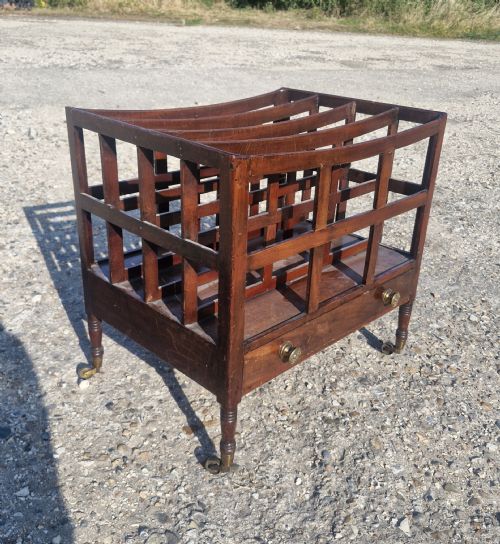
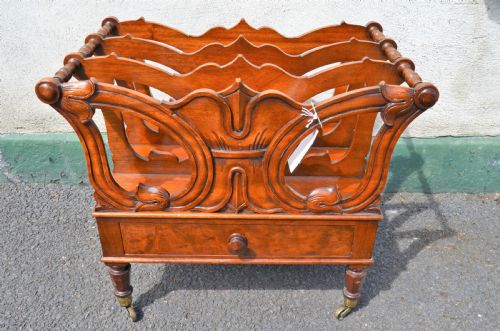
A canterbury is a partitioned wooden stand traditionally used for sheet music, folios, and magazines. It sits on legs and often includes lower drawers or slatted dividers.
They originated in the late eighteenth century and remained popular through the Victorian and Edwardian periods as domestic music and reading rooms expanded.
How do revolving stands work?
Revolving stands feature a central vertical axis with a concealed bearing that allows the upper tiers to spin 360 degrees. This design lets a reader access multiple publications without moving the base.
Most quality examples pair a heavy brass mechanism with a solid mahogany or oak superstructure to maintain stability during rotation.
Where were these racks used?
These items were placed beside armchairs, near writing desks, or within libraries to keep current newspapers and periodicals tidy. Larger folio stands found a place in studies for holding oversized books and maps.
They served both a practical storage function and a decorative role in formal reception rooms.
Are bamboo racks durable?
Bamboo and rattan furniture gained popularity during the late nineteenth century, particularly within conservatory and informal settings. While lighter than oak or mahogany, well-constructed bamboo frames provide adequate strength for holding newspapers and lighter magazines.
Their survival into the modern era demonstrates their resilience when kept away from excessive dampness.