

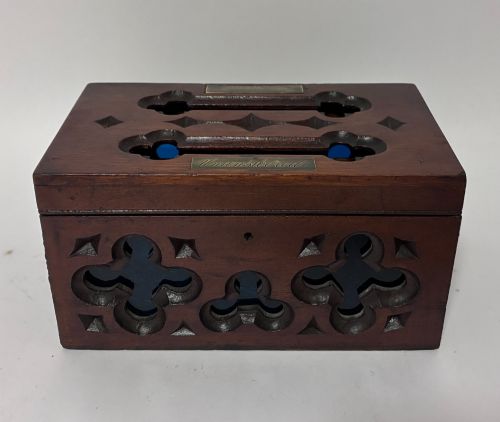
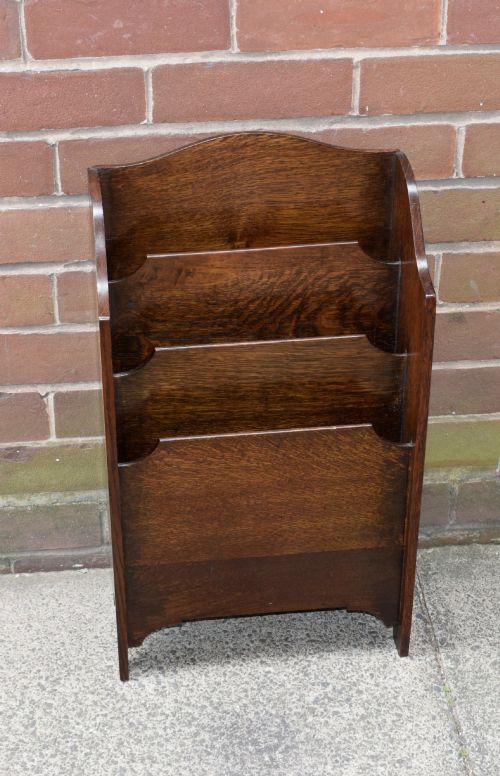

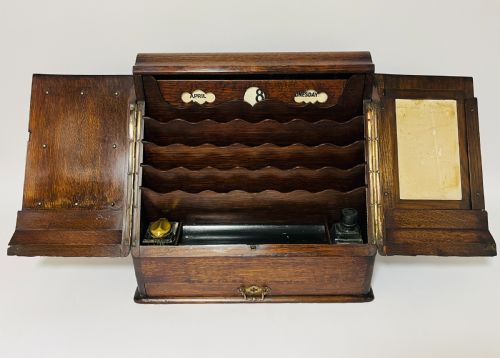


Antique Oak Letter Rack
An antique oak letter rack keeps desks ordered with sturdy timber and practical brass clips.
Antique Oak Letter Rack
When searching for an antique oak letter rack, buyers encounter a sturdy group of desktop and wall-mounted accessories designed to organise correspondence. The selection spans compact letter holders, stationery boxes, and desk tidies intended for everyday use in studies and offices.
Most examples date from the Victorian and Edwardian periods, alongside nineteenth-century and early twentieth-century pieces. Forms range from simple sloping wooden dividers to elaborate fall-front cabinets and wall organisers fitted with compartments for daily post.
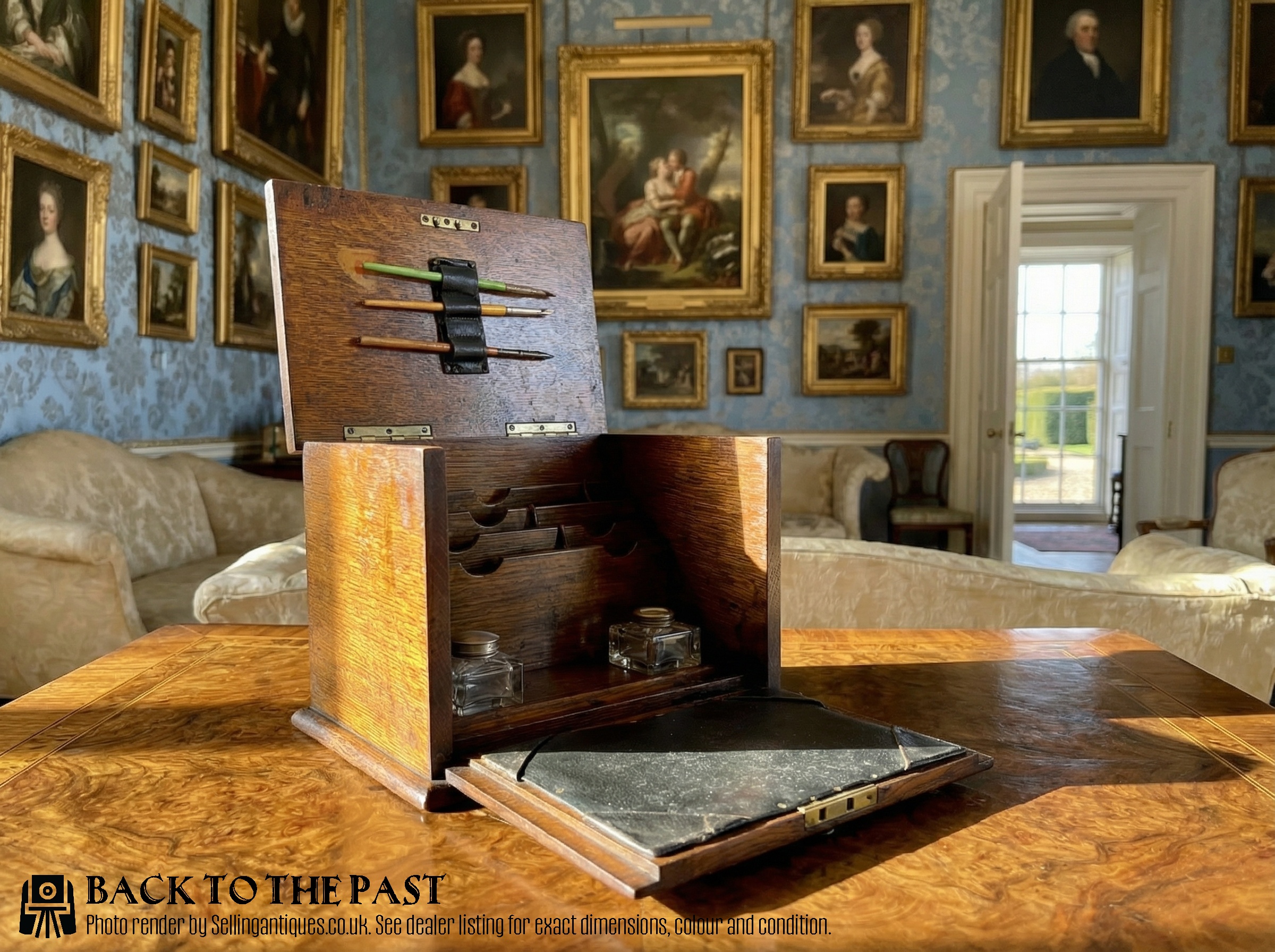
How they were made
Construction relies primarily on oak, often selected for its grain and durability, complemented by polished brass clips, rods, and mounts. Makers frequently incorporated glass ink bottles, leather linings, or satinwood stringing into desktop stationery cabinets and letter boxes.
Stylistic influences such as Arts and Crafts, Gothic Revival, and Art Nouveau appear in the metalwork motifs, cut-out brass panels, and structural joinery of the period.
Antique Oak Letter Rack Retail Price Guide 2026
Typical asking prices for oak letter rack among the pieces listed under this phrase on Sellingantiques today, from the lower quarter to the upper quarter. They describe what is for sale here now, not the wider market.
Listings feature oak combined with brass, glass, and leather across Victorian and Edwardian desk accessories.
What varies in quality
Quality rests on the weight of the timber, the crispness of the brass fittings, and the integrity of internal dividers. Finer pieces demonstrate careful dovetail joinery and thoughtful proportions that balance utility with decorative presence.
Enhanced utility, such as integrated inkwells, secret drawers, or specialist compartments for requisitions, elevates certain examples above basic desk accessories.
The Antique Oak Letter Rack Glossary
- Stationery cabinet
- A desk accessory with doors or a fall-front enclosing pigeonholes and slots for writing materials. These cabinets keep papers concealed and dust-free.
- Desk tidy
- A combined desktop holder for letters, pens, and small office supplies. It gathers disparate desk items into a single footprint.
- Standish
- A traditional desk stand incorporating inkwells, pen holders, and sometimes a slot for letters. They sit centrally on a writing surface.
- Waterfall letter rack
- A tiered holder where successive rows step backward and upward. This arrangement lets users view multiple categories of correspondence at once.
- Arts and Crafts
- A design movement favouring honest construction, visible joinery, and hand-worked materials. Pieces in this style often display simple forms with decorative brass strapwork.
Antique Oak Letter Rack: Frequently Asked Questions
What is an antique oak letter rack used for?
These pieces organise incoming and outgoing post on a desk, hall table, or bureau. They keep correspondence sorted and upright within easy reach.
Historically, they served domestic and office roles, holding letters, requisitions, and daily newspapers.
How do I date an antique oak letter rack?
Dating relies on stylistic clues, timber characteristics, and associated hardware. Victorian and Edwardian pieces often feature specific brass motifs, such as lyres, butterflies, or Gothic arches.
Construction methods like machine-cut versus hand-cut dovetails also help place a piece within the nineteenth or early twentieth century.
Are these letter racks wall-mounted or desktop?
Both formats exist within the selection. Desktop models feature flat bases or small feet to sit securely on a writing surface.
Wall organisers include hanging loops or pre-drilled backplates designed to mount securely above a desk or in an entrance hall.
What metals are typically found on oak letter racks?
Brass is the predominant metal used for clips, rods, handles, and decorative pierced panels. Silver plating and silver mounts also appear on select refined examples.
These metals provide structural support and contrast visually with the dark or golden tones of the oak timber.