

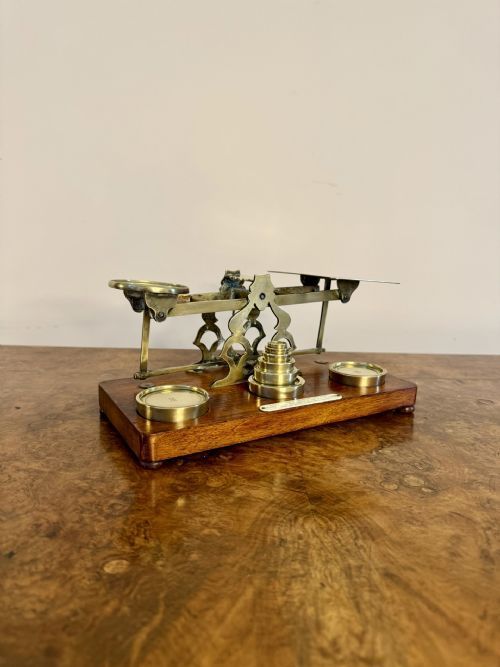


Vintage Brass Balance Scales
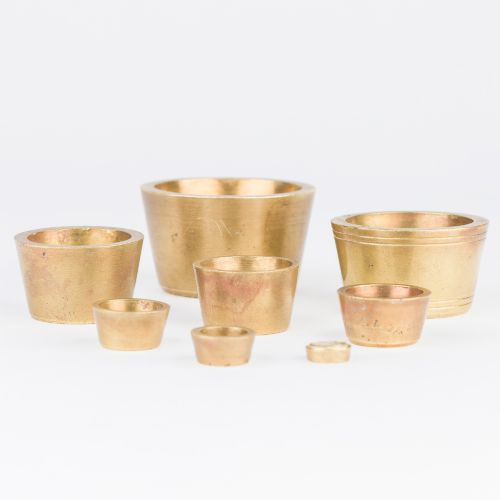
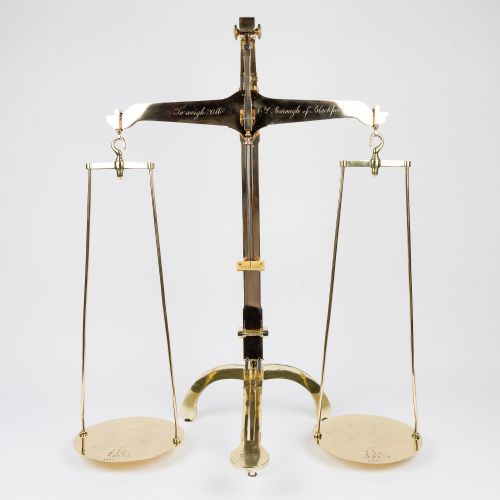
These vintage brass balance scales bring tactile precision into a room, offering a solid connection to centuries of trade and measurement.
Vintage Brass Balance Scales
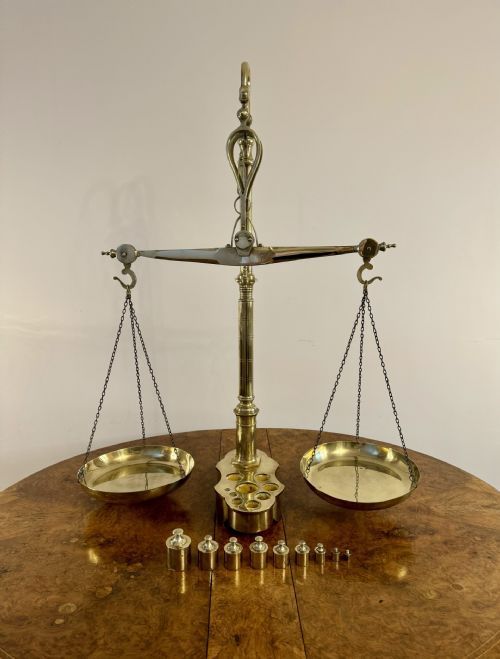
Vintage brass balance scales encompass a wide array of weighing instruments, ranging from delicate letter and postal scales to monumental butcher scales and apothecary balances. These objects originate from the nineteenth and early twentieth centuries, spanning Victorian, Edwardian, and later periods.
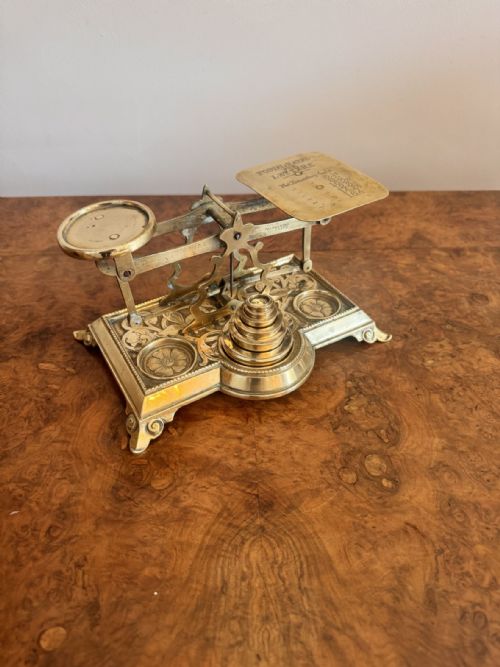
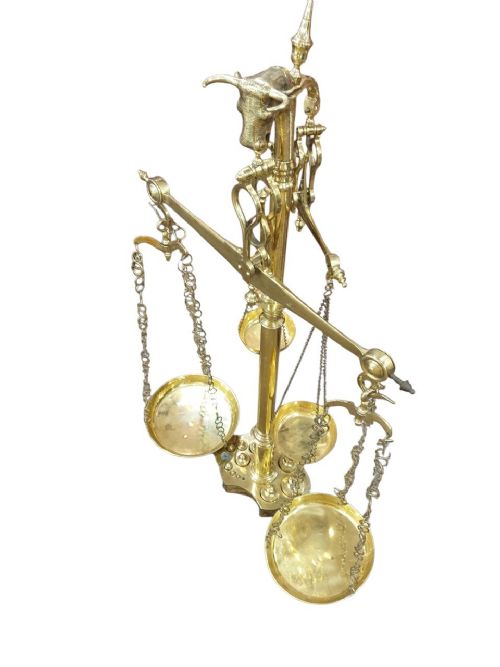
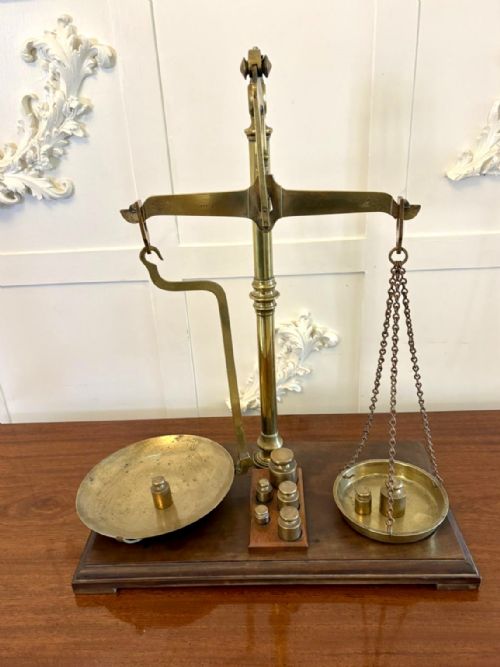
Postal and letter scales mounted on wooden bases appear frequently, often accompanied by their original sets of weights. Larger commercial examples, including grocers and butcher scales, showcase the heavy industrial and retail demands of their era.
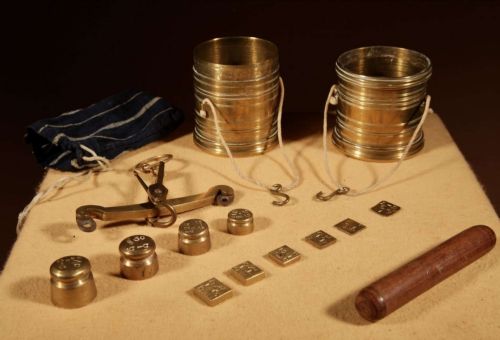
Specialised items such as personal weighing scales, gold balances, and scientific instruments also populate the category. Originating from diverse contexts like domestic desks, rural shops, and official municipal departments, each piece reflects its original practical function.
Materials and Construction
Makers fashioned these pieces primarily from bright polished brass for the beams, pans, and hardware, combining this metal with woods such as mahogany, oak, walnut, and hardwood for the mounting bases. Cast iron and wrought iron frequently provide structural support for larger floor-standing and counter-top commercial models.
Precision components often incorporate glass and marble elements, particularly in scientific and pharmaceutical contexts where clean, non-reactive surfaces were essential. Makers applied stamped maker marks, engraved inscriptions, and lead verification stamps directly onto the metal and wood components to denote ownership and legal standardisation.
Listings feature brass combined with mahogany, oak, walnut, cast iron, marble, and glass across the Victorian and Edwardian eras.
Assessing Quality and Execution
Superior examples demonstrate high integrity in the movement of the beam and the precise alignment of the pans. The weight and casting thickness of the brass components distinguish robust workshop production from lighter decorative output.
The choice of base materials and cabinet-making execution significantly influence the overall standard of the object. Complete sets retaining matching weights in fitted blocks or original mounted positions command greater historical completeness.
De Grave Short And Co·S Mordan Co London·Parnall Sons Of Bristol·Oertling·Stephen Houghton Son
The Vintage Brass Balance Scales Glossary
- Beam
- The horizontal bar of a balance from which the weighing pans are suspended. It pivots on a central fulcrum to determine equal weight.
- Apothecary
- Pertaining to the preparation and sale of medicines. Apothecary scales measured precise quantities of medical ingredients.
- Troy ounce
- A system of units of mass traditionally used for precious metals. Troy weights frequently accompany specialised assay and gold balances.
- Chondrometer
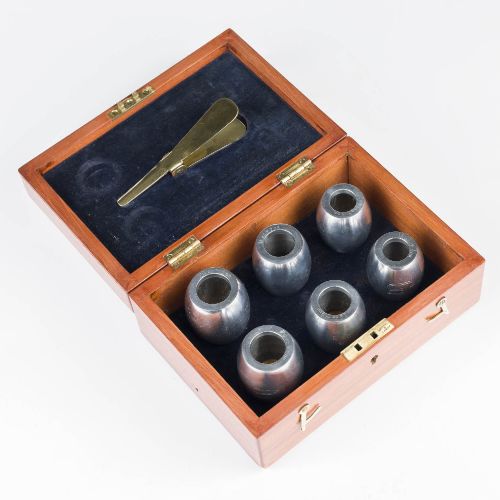
- A specialised scientific instrument used to measure the weight of grain. These cased brass and mahogany devices served agricultural trade.
Vintage Brass Balance Scales: Frequently Asked Questions
How do I clean vintage brass balance scales?
Dust the wooden bases gently with a dry cloth and leave the brass unpolished to preserve its historic patina. Aggressive metal cleaners strip away the natural ageing accumulated over decades.
Avoid using water or liquid chemicals near joints and paper labels. A soft brush clears debris from tight spaces around the beam pivot.
Can these scales still weigh accurately?
Many surviving balances retain their mechanical equilibrium and can measure small items if properly levelled. Commercial floor models require professional calibration before any practical use.
Friction in old pivot points and missing fractional weights often limit contemporary weighing accuracy. Most owners treat them as decorative objects rather than working instruments.
How do I identify a Victorian postal scale?
Victorian postal scales usually feature a flat brass platform or a small cradle mounted on a mahogany or walnut base. Stamped markings often indicate letter weight increments corresponding to postal rates.
Many incorporate a graduated brass arch behind the beam to show the correct postage tariff. Makers frequently included a fitted compartment for storing small brass weights beneath the base.
Where were these scales originally used?
Smaller postal and letter scales sat on writing desks in domestic homes and offices. Grocers, butchers, and chemists utilised larger counter and floor models for daily retail trade.
Official weights and measures inspectors also employed verification balances to test municipal standards. Specialised pocket balances served travellers and merchants dealing in gold.