
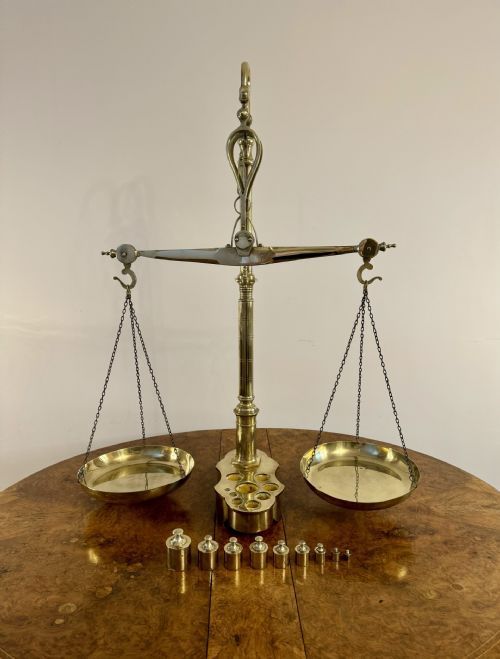


Brass Counter Scales Vintage
Brass counter scales vintage offer a tactile connection to commerce from the nineteenth and early twentieth centuries.
Brass Counter Scales Vintage
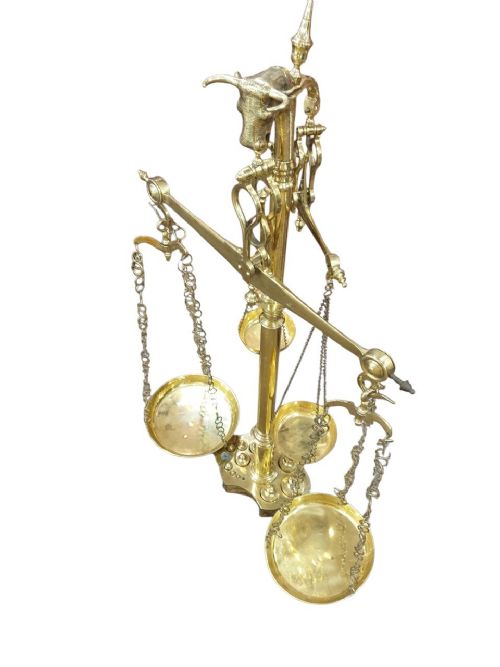
When you search for brass counter scales vintage, you are looking at functional weighing apparatus used across shops, surgeries, and offices during the Victorian, Edwardian, and early twentieth-century periods. These objects range from delicate apothecary balances housed in mahogany boxes to heavy butcher scales and grocer beams designed for daily trade.
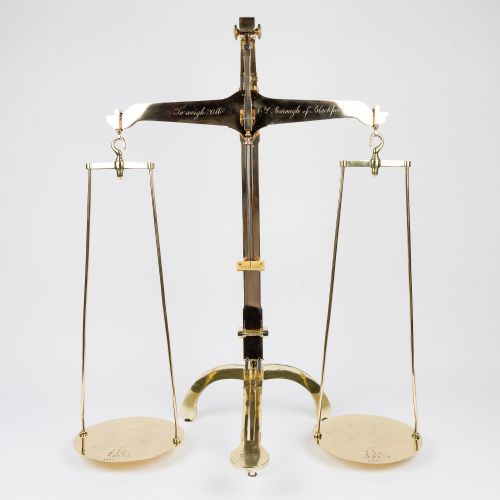
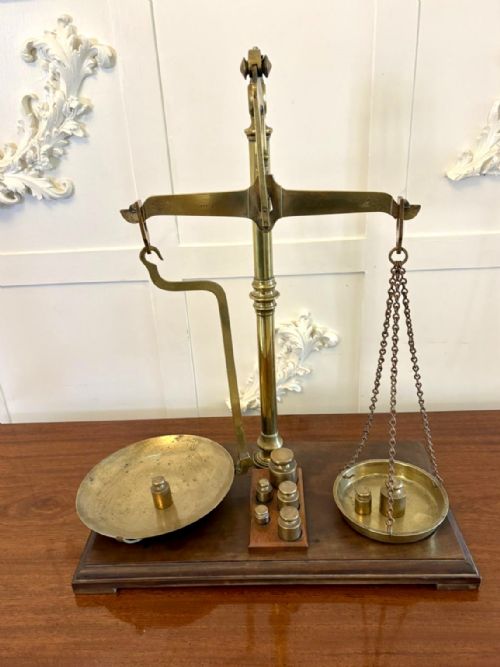
You are most likely to meet Victorian and Edwardian examples on this page, often constructed with gleaming brass pans and beams mounted on timber bases or cast iron. Many retain their original maker inscriptions, weights, or trade associations such as city boroughs and grocery cooperatives.
How they were made
Makers combined cast iron, mahogany, and marble for the structural bases and housing, providing the necessary weight and stability for accurate measurement. Brass was shaped and polished for the beams, indicators, and pans, while steel provided the hardened knife-edge pivots essential for precise movement.
Makers inscribed maker marks and verification stamps directly into the metal or wood surfaces using punch dies and engraved plates. Wooden cases and bases received hand-polished finishes to protect the timber and display the grain alongside the bright metal components.
Some butcher scales proudly advertised sausages, reminding customers that your local scale double-tasked as a marketing billboard.
What varies in quality
The distinction between standard utility items and finer examples lies in the crispness of the casting and the quality of the timber bases. Superior pieces feature heavier gauge brass, finely bevelled glass where enclosed, and robust mahogany or marble plinths rather than plain stained wood.
Quality also depends on the completeness of the set, particularly whether matching weights, original indicator needles, and legible maker signatures survive intact. Pieces made by established makers command attention through superior mechanical balance and refined finishing details.
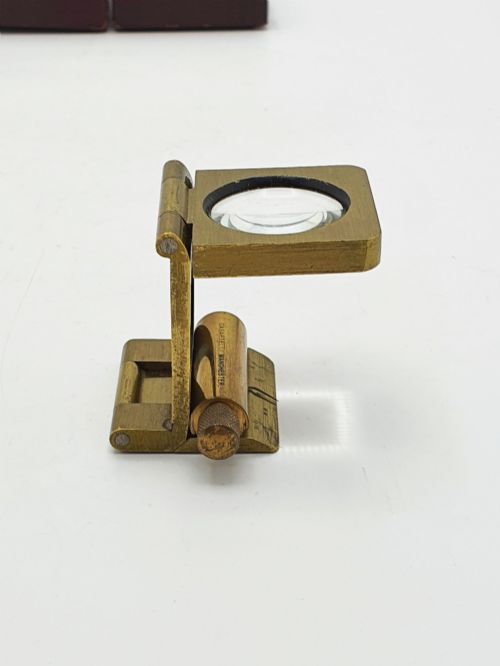
Casartelli Manchester·Day & Millward·Parnall & Sons of Bristol·De Grave·Bartlett & Sons
The Brass Counter Scales Vintage Glossary
- Beam scales
- A weighing instrument consisting of a horizontal lever suspended from a central fulcrum with equal arms. This design ensures accurate comparison between an object and known weights placed on the opposite pan.
- Apothecary balance
- A sensitive scale traditionally used by chemists and pharmacists for measuring medical ingredients. These instruments are often housed in glazed mahogany cases to protect the delicate mechanism from drafts.
- Avoirdupois
- A system of weight based on a pound of sixteen ounces used for general commerce. Many surviving shop scales and accompanying metal weights bear stamps denoting this standard.
- Knife-edge pivot
- A sharp wedge of hardened steel resting on a flat agate or steel plate within the beam mechanism. This reduces friction to allow high sensitivity and precise movement.
Brass Counter Scales Vintage: Frequently Asked Questions
Are these old scales still accurate?
Most antique scales are intended for display and decorative use rather than certified commercial weighing today. Over time, metal fatigue, wear on pivot points, and missing calibration adjustments affect their precision.
If you wish to test them, you can place small known weights on the pans to check the balance point. Minor adjustments can sometimes be made, but they are primarily appreciated for their historic mechanism and appearance.
How do I clean brass counter scales?
Dust the surfaces gently with a soft, dry cloth to remove everyday particles without scratching the metal or wood. Avoid harsh chemical polishes that strip away the aged patina accumulated over decades of use.
If the brass requires brightening, use a mild, traditional metal cleaner applied sparingly with a cotton swab. Keep moisture away from wooden bases and paper maker labels during any cleaning process.
Where can I display shop scales at home?
These robust pieces suit deep kitchen countertops, sideboards, or open shelving where their substantial weight and materials can be safely supported. Ensure the surface is completely level so the beam rests naturally in its neutral position.
Keep them away from direct heat sources and damp areas to protect the timber bases and prevent the brass from tarnishing too quickly. Allowing adequate space around the pans highlights their working form.
How do I identify a Victorian scale?
Victorian models often feature rich mahogany woodwork, cast iron frames with decorative floral or geometric moulding, and hand-engraved maker signatures. Look for stamped verification marks from inspectors, which frequently include Victorian crown ciphers and dates.
Edwardian and later twentieth-century versions tend towards simpler, more utilitarian lines with less ornate casting work. Examining the construction style and materials helps distinguish nineteenth-century examples from later reproductions.