



Vintage Blue Transferware Platter
A vintage blue transferware platter brings robust nineteenth-century narrative and rich indigo pigment directly to the dining table.
Vintage Blue Transferware Platter
A vintage blue transferware platter comprises large serving ceramics decorated with printed cobalt scenes spanning the Georgian, Regency, and Victorian periods.
Buyers encountering these items on this page will frequently see nineteenth-century meat platters, chargers, and serving dishes bearing pictorial English and exotic patterns.
The forms range from substantial ironstone meat plates to delicate earthenware trays, often accompanied by matching ceramic drainers.
Materials and transfer printing techniques
Potters produced these pieces using earthenware, ironstone, pearlware, and porcelain, applying an engraved copper plate transfer method to press the blue pigment onto the ceramic body.
A clear glaze sealed the design before firing, protecting the intricate cobalt landscapes and architectural motifs from daily wear.
Vintage Blue Transferware Platter Retail Price Guide 2026
Typical asking prices for vintage blue transferware platter among the pieces listed under this phrase on Sellingantiques today, from the lower quarter to the upper quarter. They describe what is for sale here now, not the wider market.
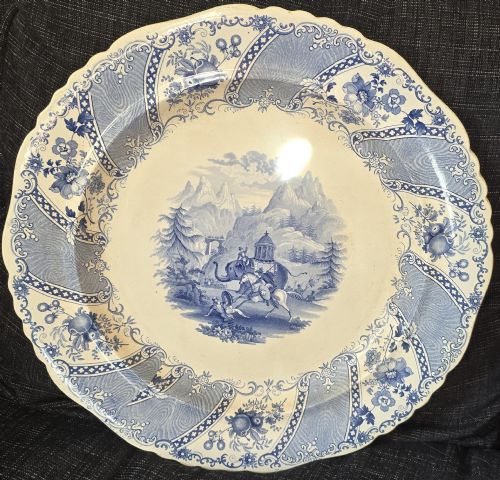
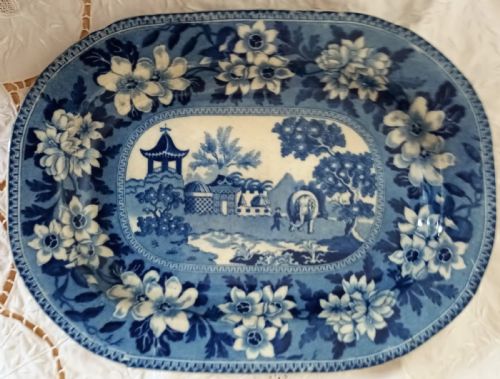
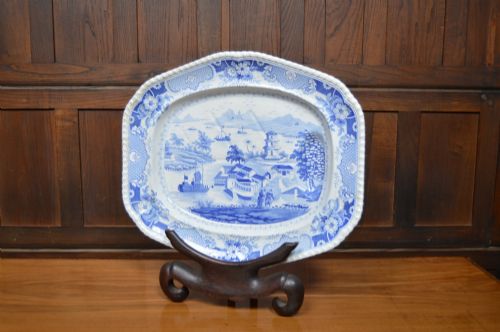
Platters often depict elephants, Indian temples, and Chinese gardens, letting nineteenth-century diners travel the world while carving the joint.
Assessing visual depth and manufacture
Quality rests in the crispness of the transfer print and the richness of the blue glaze, where finely engraved copper plates yield sharp botanical and architectural details without blurring.
The choice of ceramic body also separates standard earthenware from dense ironstone and stone china, influencing the weight and durability of the serving dish.
William Smith & Co·John Rogers & Son·Minton·Mason·Spode
The Vintage Blue Transferware Platter Glossary
- Transferware
- Pottery decorated by pressing a printed paper design from a copper plate onto the ceramic surface. This technique allowed intricate pictorial scenes to be reproduced rapidly.
- Ironstone
- A dense, durable type of earthenware patented in the nineteenth century. It resists chipping and staining better than standard pottery.
- Meat platter
- A large serving dish shaped to hold joints of meat, frequently featuring a recessed well or a separate ceramic drainer insert.
- Charger
- A large decorative plate used historically as a base for other dishes or for grand service at the table.
- Pearlware
- A refined earthenware developed in the late eighteenth century featuring a subtle bluish glaze that sat over a whiter ceramic body.
Vintage Blue Transferware Platter: Frequently Asked Questions
How were transferware platters used?
These platters served large joints of meat at nineteenth-century dining tables, catching juices in integrated wells or draining them through separate ceramic inserts.
They functioned as both utilitarian kitchenware and impressive tableside display pieces during formal meals.
How do I date a blue platter?
Dating relies on ceramic bodies such as pearlware or ironstone, alongside style markers from the Georgian, Regency, and Victorian eras.
Pictorial subjects and potters' marks stamped into the base also provide clear chronological boundaries.
Can I use these platters today?
Historic serving dishes suit modern dining tables for serving dry foods, bread, or cold meats, though hand washing preserves the nineteenth-century glaze.
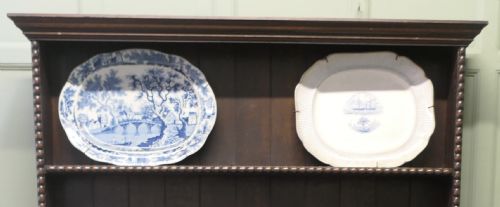
Many collectors also mount large chargers and meat plates directly onto walls as decorative artwork.
What causes the blue colour to vary?
Variations in cobalt pigment application and the specific chemistry of the ceramic glaze create shades from pale slate to deep midnight blue.
Copper plate transfer printing technology evolved significantly across the nineteenth century, altering how dense the patterns appeared.